
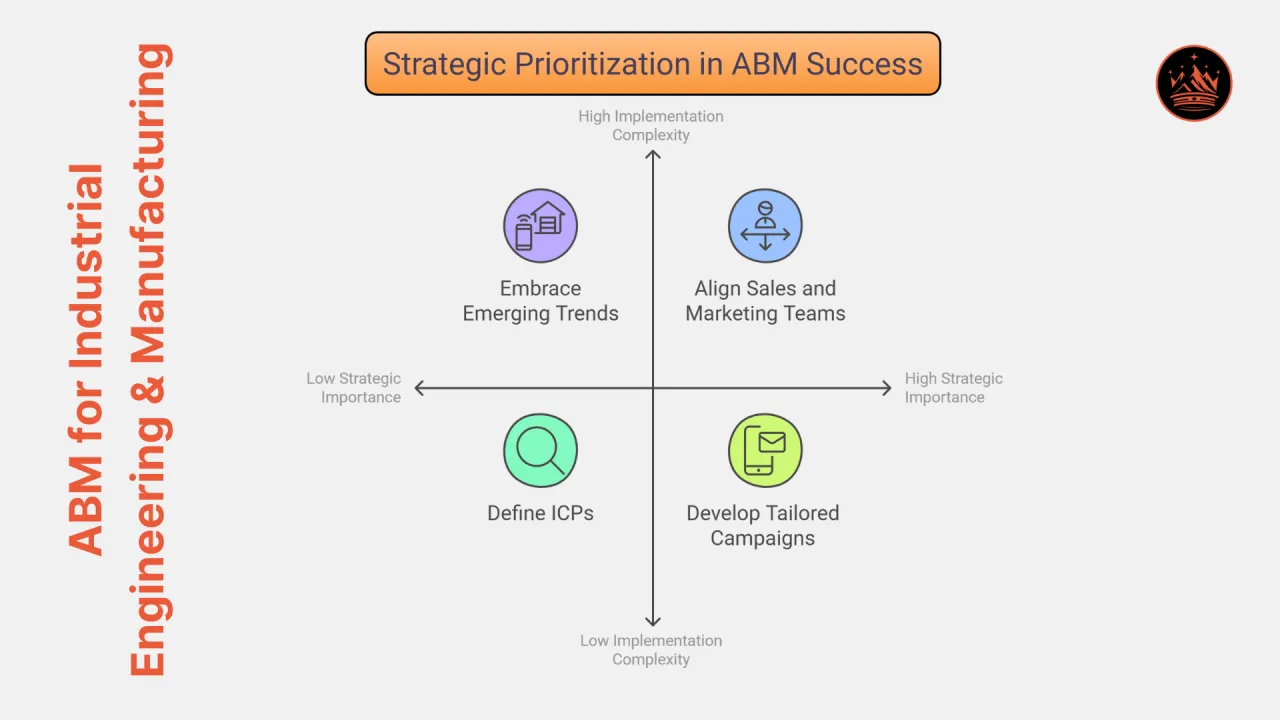
For industrial engineering manufacturers, where the sales process is often complex, long, and revolves around high-value deals, traditional marketing approaches frequently fall short. Account-Based Marketing (ABM)—is a focused, strategic approach that aligns sales and marketing to target high-value accounts with personalized, tailored campaigns.
This blog highlights two significant advantages of ABM for industrial engineering manufacturers: enhanced targeting & personalization and improved ROI & sales alignment. By understanding these benefits, you can grasp why ABM is a powerful tool for transforming your marketing and sales efforts.
A. Enhanced Targeting and Personalization
In the industrial engineering & manufacturing sector, a one-size-fits-all approach rarely works. Buyers have unique requirements, and decision-making involves multiple stakeholders, each with specific concerns. ABM addresses this by providing precise targeting and personalized engagement.
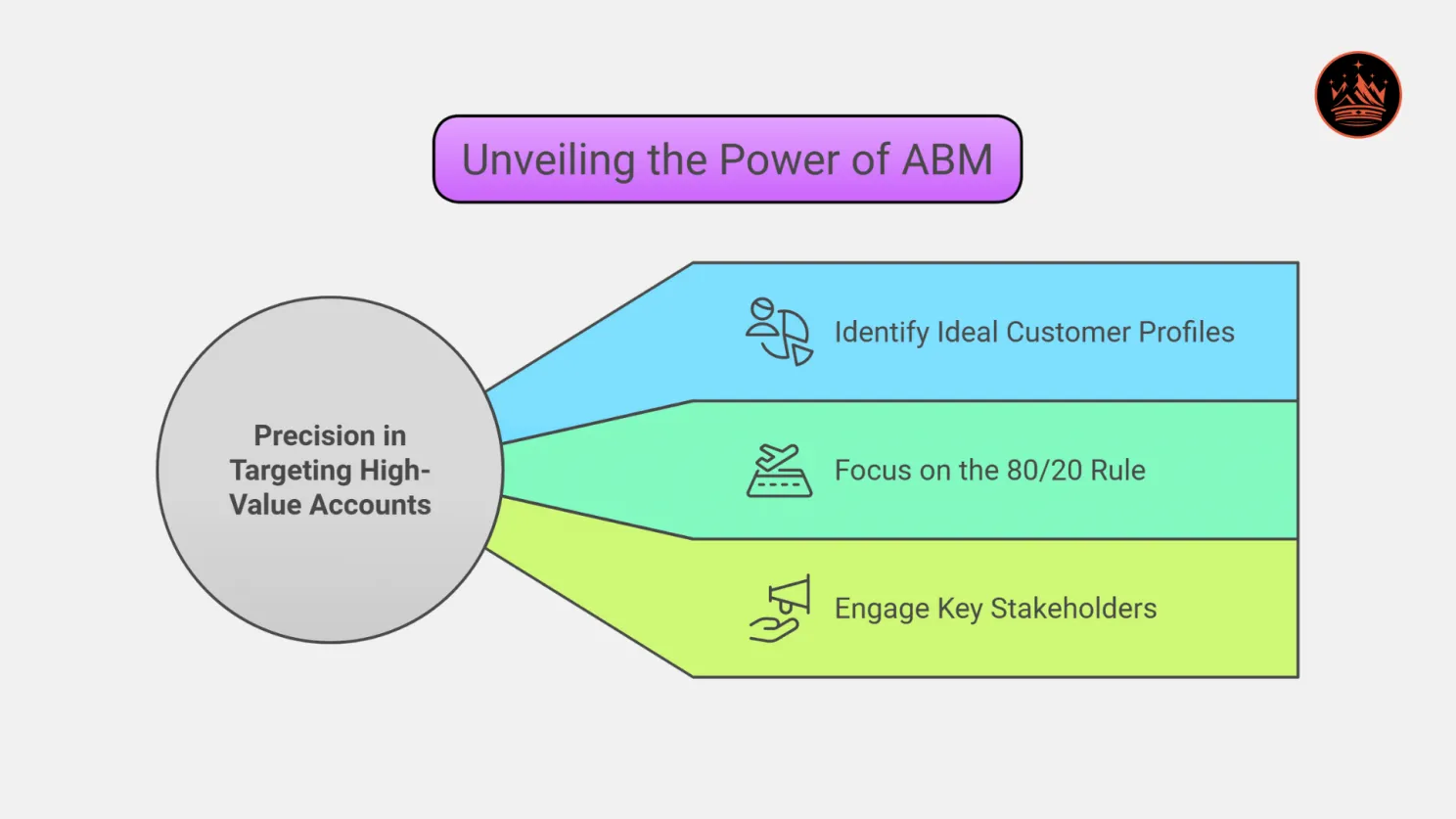
1. Precision in Targeting High-Value Accounts
Unlike traditional marketing, ABM enables businesses to:
- Identify Ideal Customer Profiles (ICP): Using data-driven insights, manufacturers can pinpoint accounts that align with their offerings based on revenue potential, industry, and operational needs.
- Focus on the 80/20 Rule: ABM allows you to prioritize the 20% of accounts that drive 80% of revenue, optimizing resource allocation.
- Engage Key Stakeholders: By identifying decision-makers within the buying committee—engineers, procurement officers, and executives—ABM ensures targeted communication.
Example: A manufacturer of precision machine tools may use ABM to target aerospace companies needing high-tolerance components. Rather than casting a wide net, the company can focus on five high-value accounts, tailoring messaging to the engineering and procurement teams.
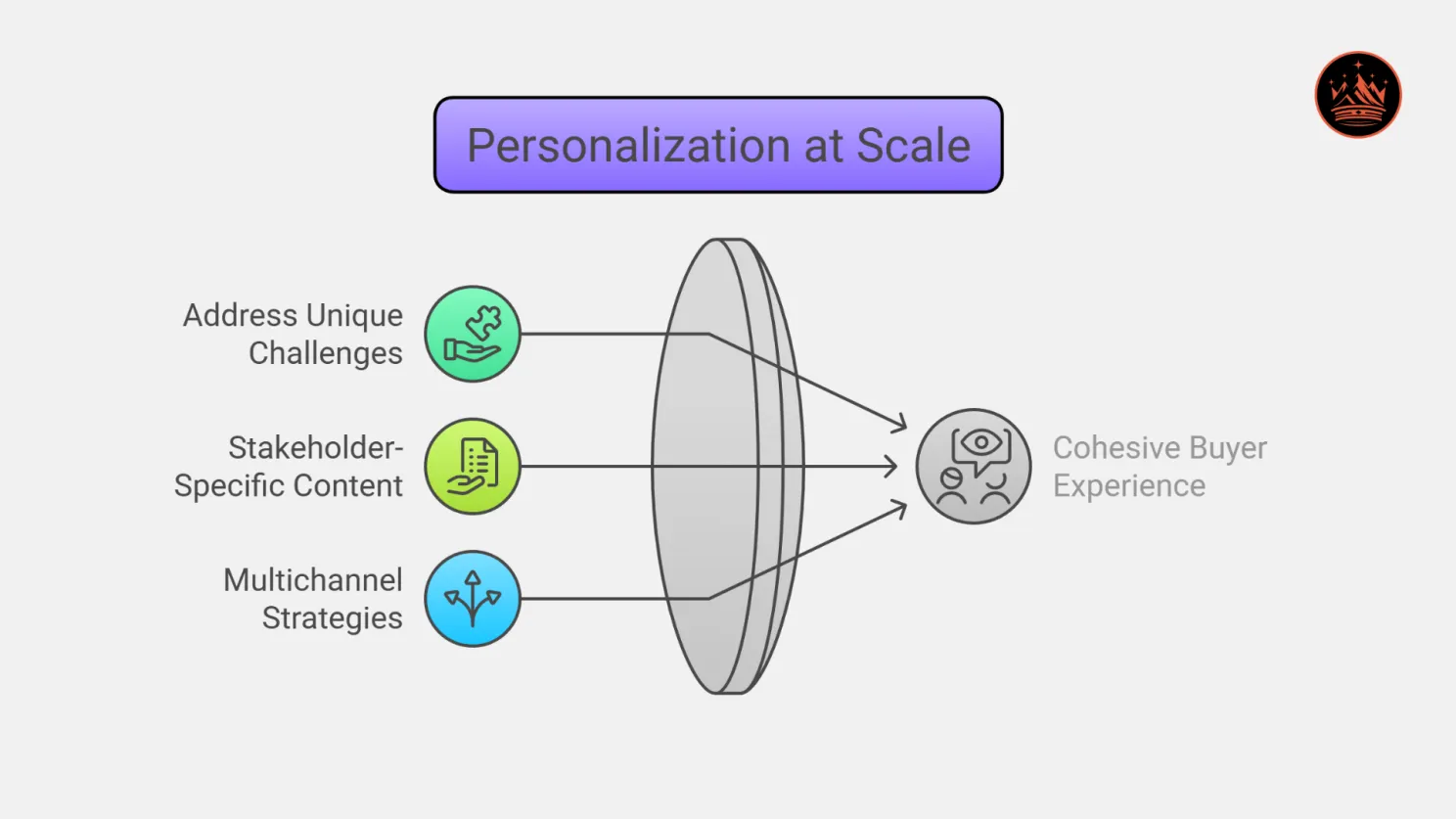
2. Personalization at Scale
Industrial buyers expect solutions tailored to their specific pain points and goals. ABM leverages personalization to:
- Address Unique Challenges: Customized campaigns speak directly to the buyer’s operational challenges, such as reducing downtime or increasing production efficiency.
- Create Stakeholder-Specific Content: Tailored messaging ensures that each stakeholder—whether a plant manager, machine operator, or CFO—receives information relevant to their role.
- Leverage Multichannel Strategies: Personalized campaigns span multiple channels, including email, LinkedIn, and webinars, creating a cohesive buyer experience.
Example: A supplier of conveyor systems could design a campaign featuring case studies relevant to automotive manufacturing for one account and packaging for another, ensuring relevance to each target.
Key Outcome → Enhanced targeting and personalization foster trust and credibility, significantly increasing the likelihood of engagement and conversion.
B. Improved ROI and Sales Alignment
Industrial Marketing budgets are always scrutinized for ROI. ABM stands out by delivering measurable results and fostering seamless collaboration between sales and marketing.
1. Measurable ROI and Efficiency
Traditional marketing often struggles to connect marketing activities to revenue. ABM, however, offers clear metrics for evaluating performance:
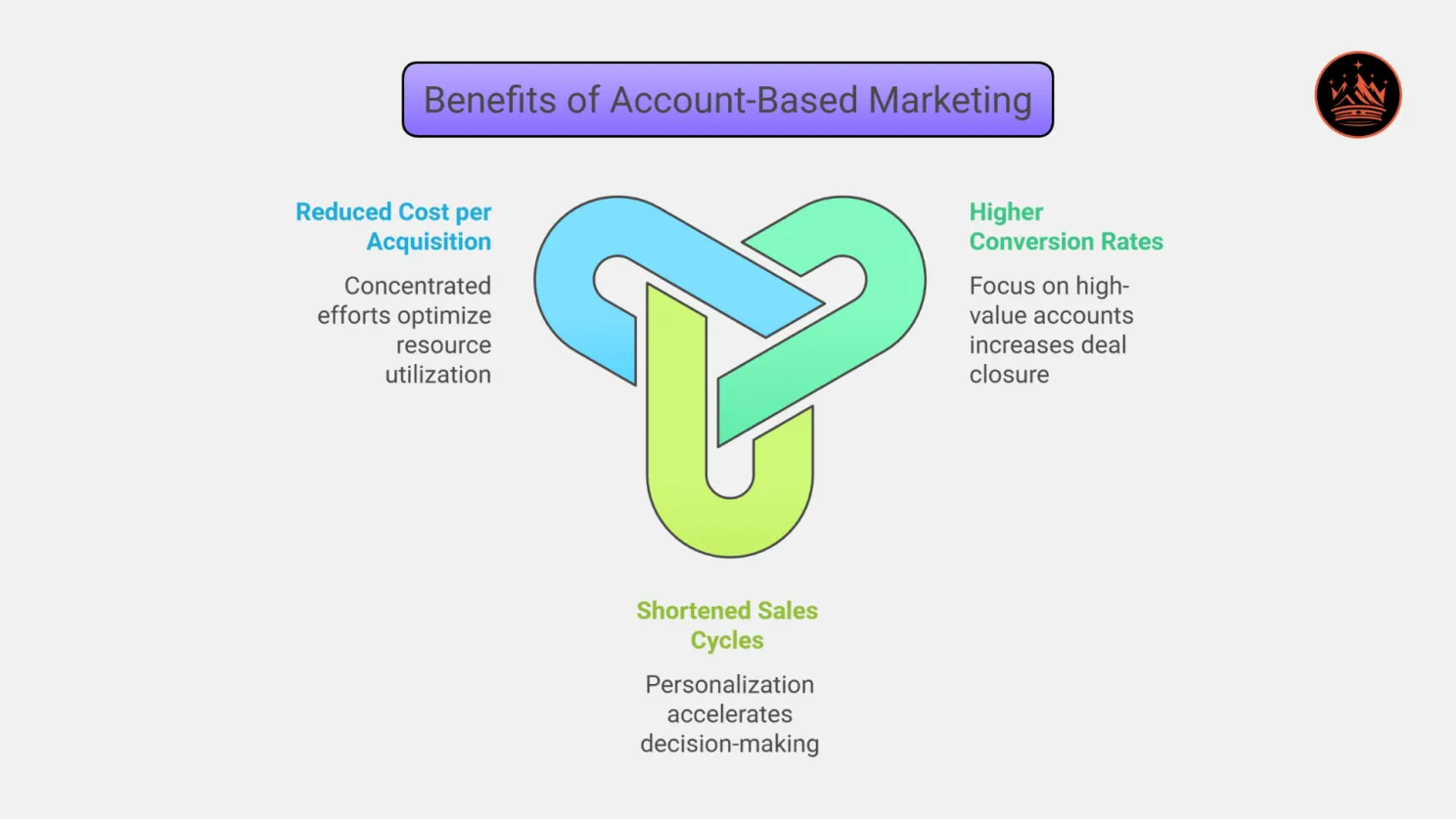
- Higher Conversion Rates: By focusing on high-value accounts, ABM reduces wasted effort and increases the likelihood of deal closure.
- Shortened Sales Cycles: Personalization ensures prospects receive relevant information, accelerating decision-making.
- Reduced Cost per Acquisition: Concentrated efforts on fewer accounts optimize resource utilization, lowering acquisition costs.
Example: A company producing industrial robotics can implement an ABM strategy targeting automotive OEMs. By aligning campaigns with specific pain points—like reducing labor costs and improving assembly line speed. The result - reduction in acquisition costs and improvement in lead-to-sale conversion rates.
2. Sales and Marketing Alignment
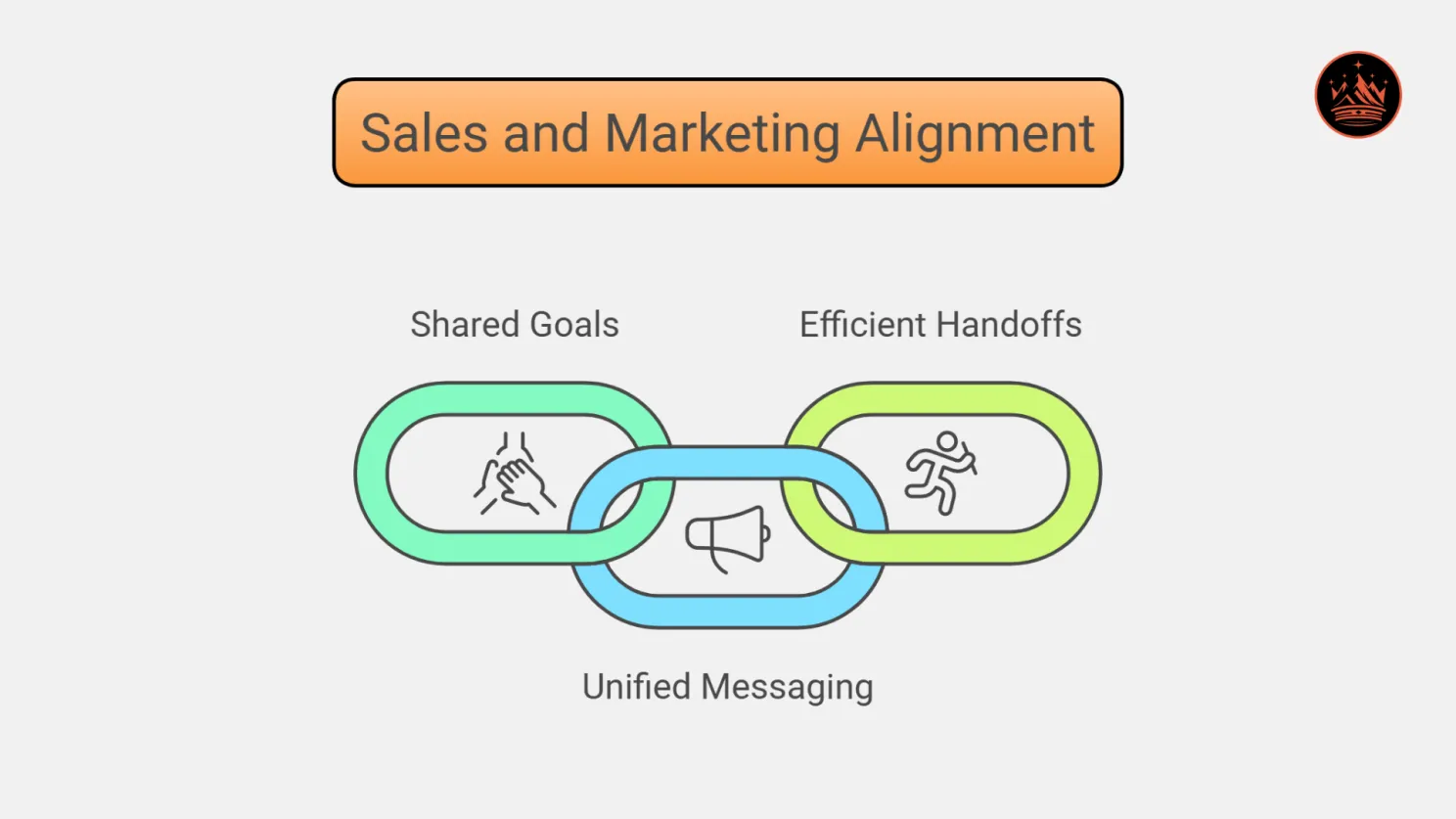
One of ABM’s most transformative benefits is its ability to align sales and marketing teams, ensuring unified goals and strategies:
- Shared Goals: Both teams collaborate to identify target accounts, create personalized campaigns, and measure success.
- Unified Messaging: Sales and marketing work together to craft consistent, account-specific narratives, avoiding mixed messages.
- Efficient Handoffs: ABM streamlines the transition from marketing to sales, ensuring leads are nurtured and qualified before sales engagement.
Example: A manufacturer of industrial pumps can align its sales and marketing teams to target pharmaceutical manufacturers. Marketing can develop personalized content, while sales can use this to engage relevant stakeholders. The result: improved engagement and a significant increase in the number of closed deals.
Key Outcome → ABM not only maximizes ROI but also fosters a collaborative culture, aligning teams to achieve shared objectives.
Why These Benefits Matter for Industrial Engineering Manufacturers?
Industrial engineering manufacturers face unique challenges that ABM directly addresses:
- Complex Buying Committees: With multiple stakeholders involved, ABM’s personalization ensures relevant messaging for each decision-maker and / or decision-influencer.
- Long Sales Cycles: Sustained engagement, driven by ABM, helps nurture relationships over extended timelines.
- High-Value Deals: Precision targeting and resource optimization are critical for pursuing deals with significant revenue potential.
Real-World Impact: ABM in Action
Consider an industrial automation company seeking to expand its market share in the pharmaceutical sector. By adopting ABM:
- It can identify 10 high-value accounts using intent data and industry research
- Marketing creates content tailored to each account, including case studies on automation in sterile manufacturing
- Sales uses these materials to engage engineering managers and procurement teams
- Result: The company secures new contracts within six to eight months of ABM implementation
This example underscores how ABM’s benefits translate into tangible business outcomes.
How to Unlock These Benefits?
1. Invest in Technology
Leverage ABM platforms and tools like CRM systems, marketing automation platforms, content hubs, intent data platforms, and analytics dashboards to streamline targeting, personalization, and measurement.
2. Foster Team Collaboration
Create joint ABM Task Forces that include both Sales and Marketing professionals, ensuring alignment from strategy to execution.
3. Focus on Continuous Improvement
Use data-driven insights to optimize ABM campaigns, refining strategies based on performance metrics and stakeholder feedback.
The Future of ABM for Industrial Engineering Manufacturers
As industries embrace digital transformation, ABM is poised to become even more impactful:
- AI and Automation: Predictive Analytics and AI will enhance targeting accuracy and campaign efficiency.
- Account-Based Experience (ABX): A holistic approach integrating sales, marketing, and customer success will elevate the customer journey.
- Sustainability-Centric Campaigns: Targeting eco-conscious accounts with personalized sustainability messaging will be key in a changing market landscape.
Key Takeaways
- Enhanced Targeting and Personalization: ABM enables industrial manufacturers to focus on high-value accounts with tailored messaging, increasing engagement and conversions.
- Improved ROI: By optimizing resource allocation and aligning teams, ABM delivers measurable results, reducing acquisition costs and boosting efficiency.
- Sales and Marketing Alignment: ABM fosters collaboration, ensuring unified strategies and seamless handoffs between teams.
- Future Potential: Digital tools and emerging trends will amplify ABM’s impact, making it a cornerstone of modern industrial marketing.
For industrial engineering manufacturers, ABM is more than just a marketing strategy—it’s a path to sustained growth and competitive advantage. By embracing enhanced targeting, personalization, and seamless team alignment, ABM addresses the unique challenges of the sector, driving meaningful engagement and measurable success.
As we move to the next part of this blog series, we’ll explore how to understand your target accounts better, including identifying Ideal Customer Profiles (ICP) and segmenting high-value accounts. Stay tuned for actionable insights to refine your ABM Strategy.
-1.png)
-1.png)