
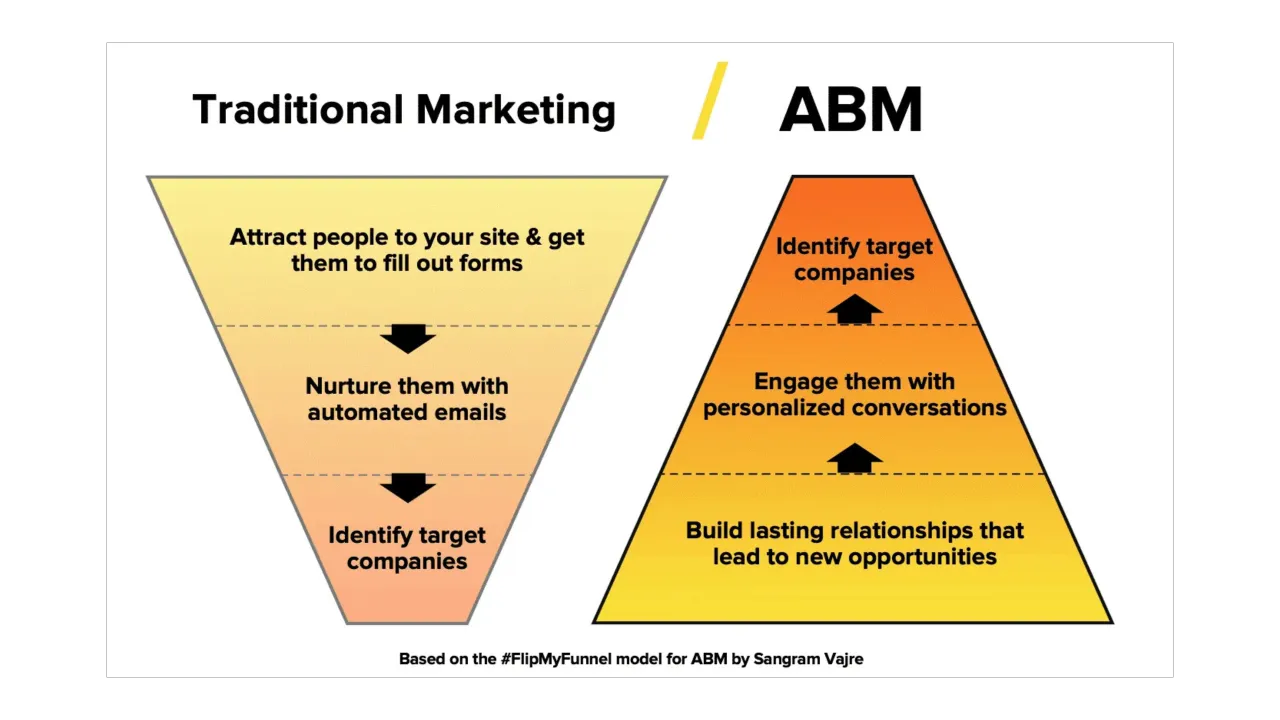
In the dynamic landscape of B2B marketing, businesses constantly seek innovative strategies to enhance customer engagement and drive revenue. One such strategy that has emerged as a game-changer is Account-Based Marketing (ABM). While traditional marketing focuses on casting a wide net to capture leads, ABM adopts a precision-targeted approach, tailored to the unique needs of high-value accounts. For industrial manufacturers and engineering leaders, ABM is not just a marketing buzzword—it’s a strategic necessity.
Recent industry data underscores the efficacy of ABM:
- Higher ROI: 76% of B2B marketers report that ABM delivers a higher return on investment compared to other marketing strategies.
- Improved Customer Relationships: Companies implementing ABM have observed an 80% improvement in customer relationships, facilitating deeper engagement with key accounts.
- Increased Deal Sizes: 58% of B2B marketers have experienced larger deal sizes through ABM efforts, highlighting its effectiveness in securing high-value contracts.
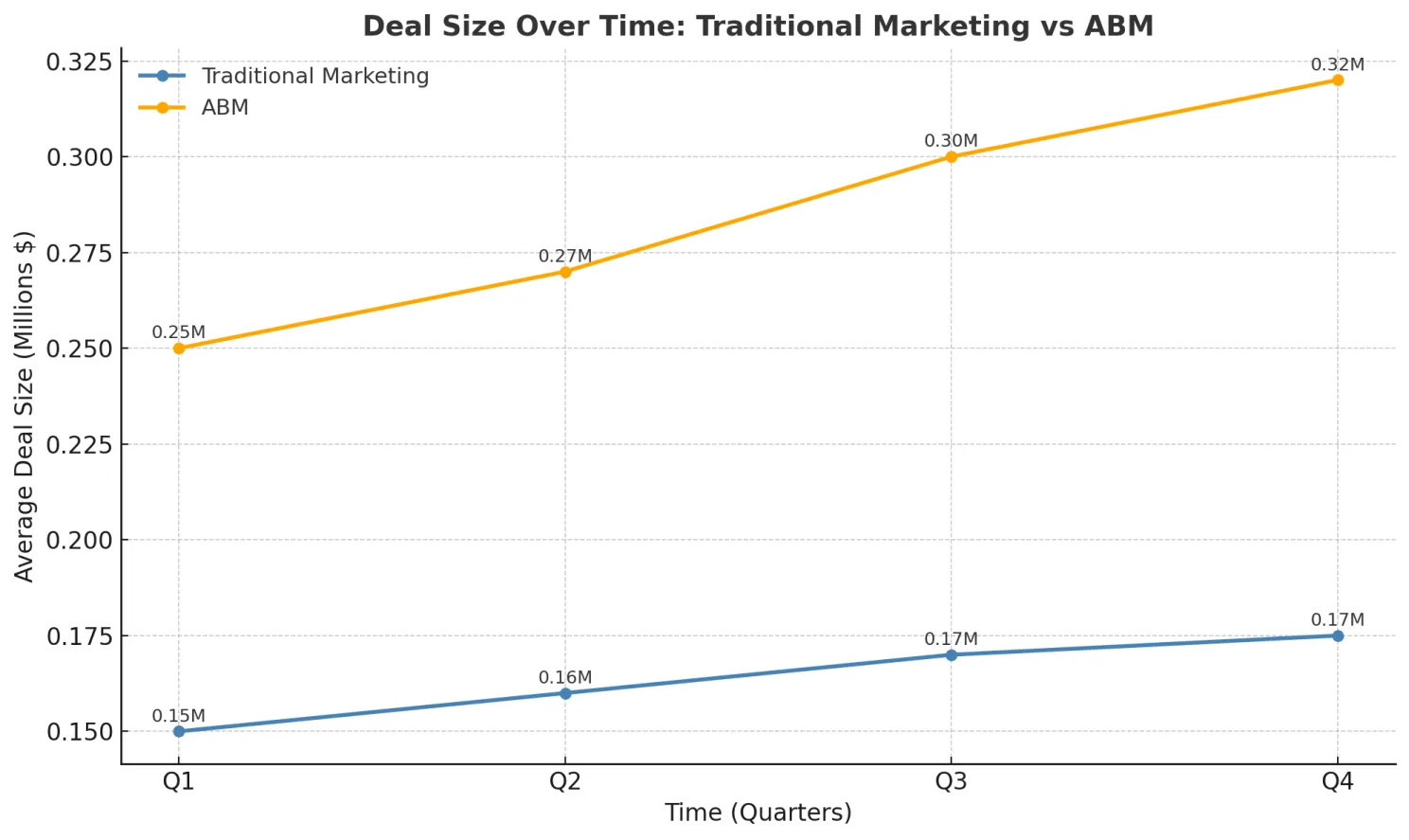
These compelling statistics highlight ABM’s potential to drive significant business growth, making it an indispensable strategy for industrial engineering manufacturers aiming to stay competitive in today’s market.
In this blog, we will delve deep into what ABM entails, its importance in the industrial engineering space, and how it fundamentally differs from traditional marketing. Our goal is to provide a clear understanding of ABM, enabling you to assess its relevance to your business and to set the stage for implementing it effectively.
What is Account-Based Marketing?
Account-Based Marketing (ABM) is a B2B marketing strategy where businesses align their sales and marketing teams to target specific, high-value accounts rather than broad market segments. The core principle of ABM is personalization—it treats individual accounts as unique markets, delivering customized campaigns that resonate with the pain points and goals of decision-makers within these accounts.
Key Characteristics of ABM:
- Precision Targeting: Instead of focusing on thousands of leads, ABM narrows the lens to a select few high-value accounts with significant revenue potential.
- Personalized Approach: Tailored messaging and campaigns are crafted based on the unique characteristics and needs of the targeted accounts.
- Collaboration Between Sales and Marketing: Both teams work in tandem, ensuring unified communication and seamless engagement.
- Focus on ROI: ABM prioritizes measurable outcomes, often yielding a higher return on investment compared to traditional marketing methods.
Importance of ABM in Industrial Engineering
In sectors like industrial engineering & manufacturing, where the sales cycles are complex, long, and often revolve around high-value deals, ABM offers unparalleled advantages:
- Enhanced Efficiency: By focusing resources on a few high-value accounts, ABM ensures better resource allocation and a higher probability of success.
- Stronger Relationships: Personalized campaigns foster trust and credibility, building long-term relationships with key decision-makers.
- Better Sales Alignment: ABM bridges the gap between sales and marketing, ensuring both teams pursue the same goals with a cohesive strategy.
Differences Between Traditional Marketing and ABM
To appreciate the transformative power of ABM, it’s essential to understand how it contrasts with traditional marketing across the below parameters -
- Targeting Approach
- Scope and Scale
- Success Metrics (KPIs)
- Content Strategy
- Sales & Marketing Alignment
- B2B Buyer Journey
1. Targeting Approach
- Traditional Marketing: Focuses on reaching as many potential leads as possible through broad segmentation and mass campaigns. Think of it as operating a high-output factory that produces parts without knowing where they’ll be installed. This approach generates high volume but often lacks the precision needed to truly meet specific demands.
- ABM: Concentrates on a select group of high-value accounts. It’s more akin to a made-to-order production facility delivering just-in-time solutions for a client’s critical equipment upgrade. ABM focuses on precision, delivering personalized and highly relevant campaigns to high-value accounts with specific needs.
2. Scope and Scale
- Traditional Marketing: Operates at scale, aiming to generate large numbers of leads across various demographics or industries.
Example: A manufacturer of industrial compressors runs a broad marketing campaign highlighting their entire product range, targeting multiple industries like food processing, pharmaceuticals, and energy. While the campaign generates a high volume of leads, many are irrelevant or lack the decision-making authority for high-value purchases.
- ABM: Operates at depth, delving into the nuances of each targeted account to provide personalized solutions.
Example: The same industrial compressor manufacturer identifies three high-value accounts in the energy sector, targeting large power plants requiring efficient compressors for cooling systems. Tailored campaigns emphasize reduced energy consumption and improved operational reliability, addressing key concerns of plant managers and procurement heads.
3. Metrics of Success
- Traditional Marketing: Success is measured by the quantity of leads generated, website traffic, or social media reach.
Example: A manufacturer of industrial boilers runs a broad digital campaign targeting sectors like food processing, pharmaceuticals, and energy. The campaign generates 40,000 website visits and 2,000 leads, but most leads are from smaller food processing units that are not yet ready for large-scale boiler installations.
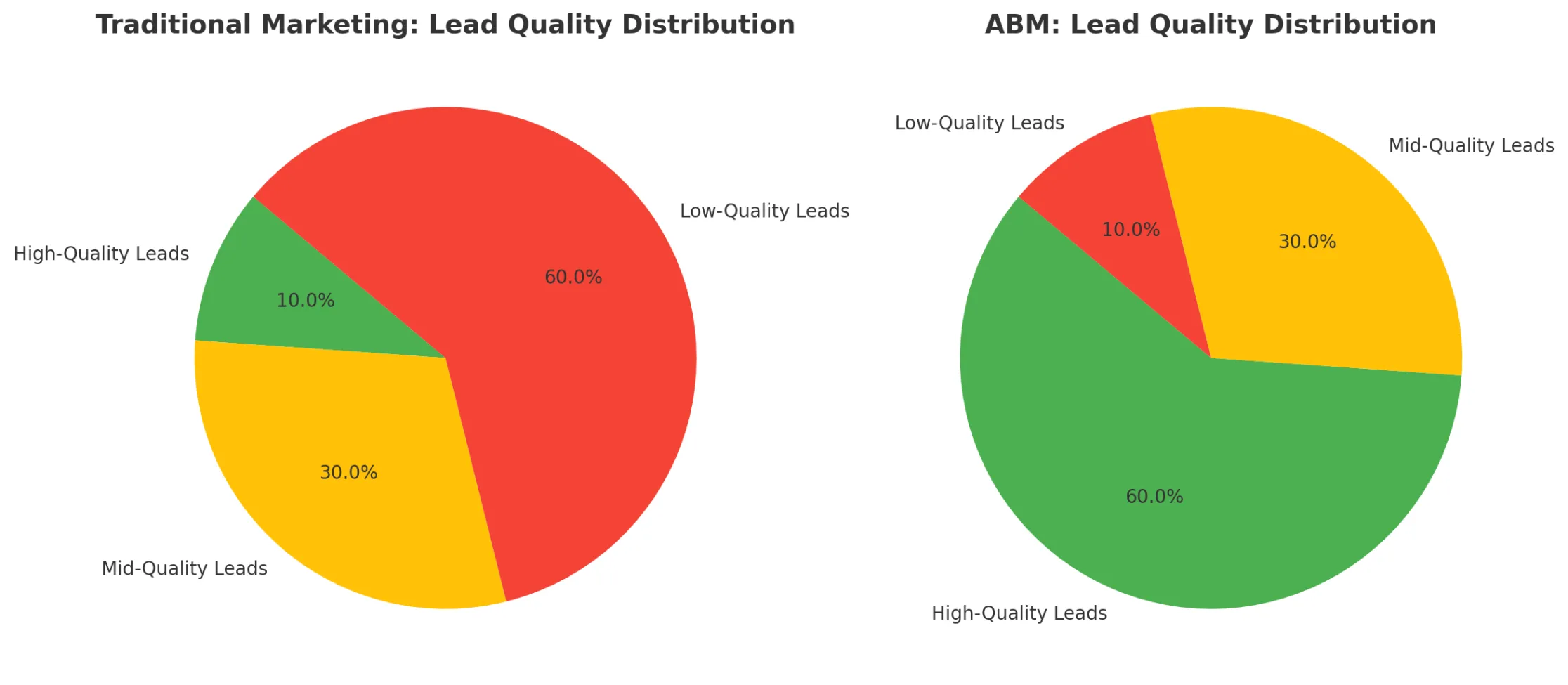
- ABM: Prioritizes quality over quantity, focusing on account engagement, pipeline acceleration, and deal closure.
Example 1: The boiler manufacturer identifies five global beverage companies expanding their production facilities. Personalized campaigns highlight how their high-capacity boilers can reduce energy consumption in large-scale brewing operations, leading to engagement from plant managers and procurement heads. This approach results in two $1.5 million pipeline opportunities.
Example 2: A conveyor systems manufacturer targets pharmaceutical companies needing specialized conveyor lines for packaging delicate vials. Tailored content, such as ROI projections and compliance certifications, directly addresses decision-makers’ needs, resulting in strong engagement and a deal closure worth $200,000.
Example 3: A manufacturer of automated welding equipment focuses on wind turbine manufacturers requiring precision welding for large structures. ABM campaigns showcase the reliability and scalability of their welding solutions, leading to long-term partnerships worth a couple million dollars.
4. Content Strategy
- Traditional Marketing: Content is often generalized, catering to a wide audience with varied interests.
Example: A manufacturer of industrial 3D printers creates a whitepaper titled “The Future of Additive Manufacturing,” targeting multiple industries like aerospace, automotive, and healthcare. While the content generates interest and downloads, it lacks specificity, leaving many potential buyers unsure how the 3D printers solve their unique challenges.
- ABM: Content is highly customized, addressing specific challenges and goals of individual accounts or key personas within them.
Example 1: The same industrial 3D printer manufacturer targets a global aerospace company facing production bottlenecks. A custom whitepaper highlights how their printer’s high-speed capabilities can optimize aerospace component prototyping, coupled with case studies showcasing similar success stories from competitors.
Example 2: A packaging machinery manufacturer targets a multinational food and beverage company. They create a personalized video demonstrating how their automated packaging line can handle diverse SKU configurations, significantly reducing downtime during product changeovers—a critical need for the buyer.
Example 3: A material handling equipment manufacturer targets logistics companies. The campaign includes an interactive ROI calculator for their advanced conveyor systems, allowing the prospective buyers to estimate savings based on their specific operational data.
5. Sales & Marketing Alignment
- Traditional Marketing: Sales and marketing often function independently, with marketing generating leads and sales working to convert them.
Example: A manufacturer of air compressors runs a broad marketing campaign highlighting their product’s energy efficiency. Marketing generates 500 leads, but the sales team finds that most leads are from small-scale businesses unable to invest in industrial-grade air compressors, leading to misalignment and wasted effort.
- ABM: Sales and marketing operate as a unified team, collaborating on everything from account selection to campaign execution.
Example 1: The air compressor manufacturer aligns their sales and marketing teams to target large-scale food processing plants that require consistent air supply for packaging lines. Marketing develops tailored campaigns featuring testimonials from similar businesses, while sales leverages this content during account-specific discussions, resulting in new business.
Example 2: A manufacturer of industrial packaging equipment collaborates across teams to target mid-sized beverage manufacturers. Marketing researches key accounts and creates a video showcasing how their packaging line reduces waste during bottle filling. Sales uses this content in client meetings, addressing specific pain points identified during earlier collaboration, leading to deal closures.
Example 3: A manufacturer of water treatment systems targets medium-scale textile manufacturers with customized campaigns. Marketing creates account-specific content highlighting how their systems help reduce wastewater discharge to comply with local regulations. Sales builds on this content during in-person meetings, aligning discussions to each manufacturer’s compliance challenges, securing multiple contracts.
6. Buyer Journey
- Traditional Marketing: Treats the buyer journey as linear, moving from awareness to purchase through predefined stages.
Linear Buyer Journey ↓
Awareness → Consideration → Intent → Evaluation → Purchase
Example: A manufacturer of industrial chillers runs a general awareness campaign targeting HVAC buyers. The campaign assumes that prospects will follow a predictable path—viewing an informational video, downloading a brochure, and then contacting the sales team. However, many prospects drop off after the initial interaction because their unique concerns (e.g., energy efficiency or specific cooling capacity requirements) are not addressed.
- ABM: Recognizes the non-linear nature of B2B buying, adapting strategies to meet buyers at different touchpoints, often simultaneously engaging multiple stakeholders in the decision-making process.
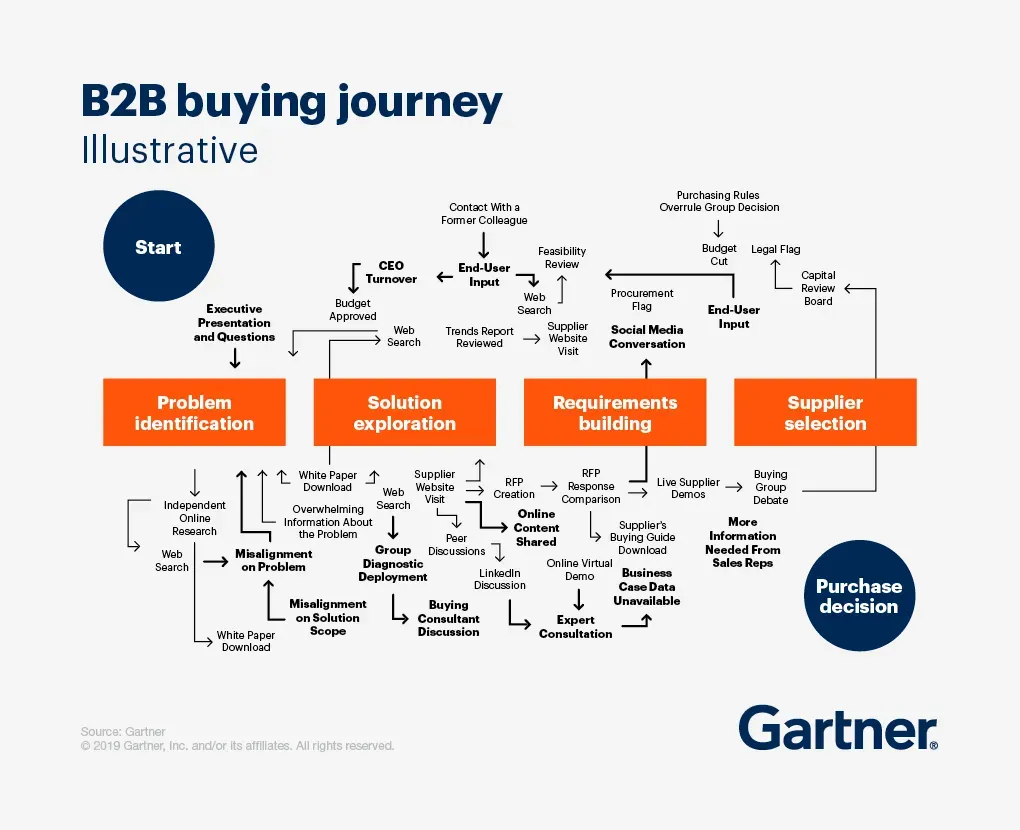
Example 1: The same industrial chiller manufacturer identifies a Tier-1 pharmaceutical company planning a facility expansion. They engage with multiple stakeholders, such as the facility manager, procurement officer, and the sustainability director, using tailored messaging:
- Facility Manager: A technical whitepaper explaining the chillers’ performance in high-demand scenarios.
- Procurement Officer: A cost-comparison infographic showing long-term savings from energy-efficient chillers.
- Sustainability Director: A webinar showcasing how the chillers align with environmental compliance standards.
This multi-touchpoint strategy ensures engagement across all key decision-makers and accelerates the purchase decision.
Example 2: A conveyor systems manufacturer targets a medium-sized food processing company. They adapt their ABM strategy to the buyer journey by:
- Engaging the operations manager with ROI calculators for improved production efficiency.
- Sharing case studies with the CEO to showcase competitive advantages gained by similar companies.
- Providing live virtual demos to operators / supervisors to highlight ease of integration with existing machinery.
This approach accommodates the non-linear interactions of the stakeholders, ensuring all concerns are addressed, leading to deal closure.
Why Traditional Marketing Falls Short in Industrial Engineering & Manufacturing?
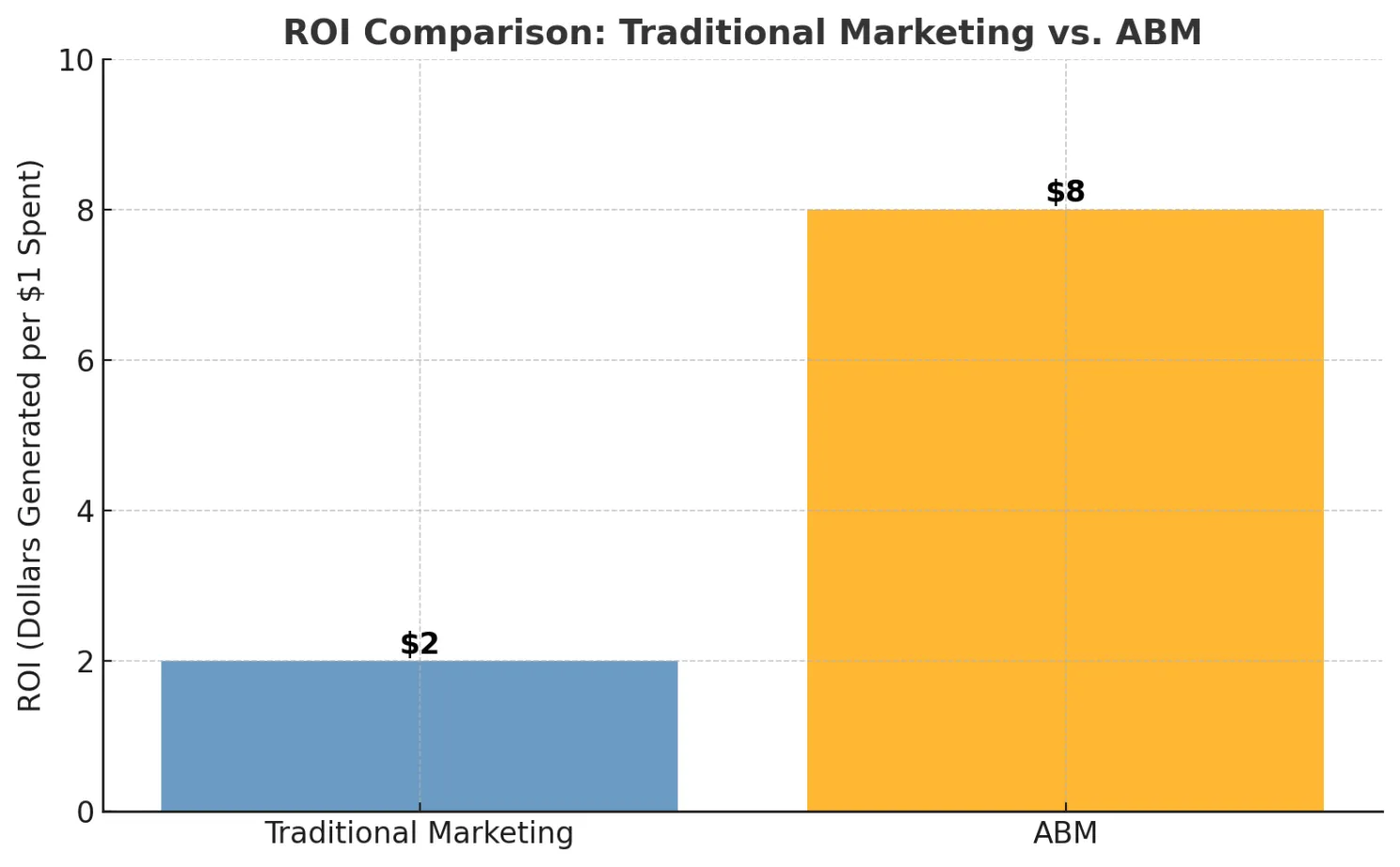
In industrial engineering & manufacturing, traditional marketing approaches often fail to address the unique challenges of the sector. These include:
- Complex Buying Committees: Industrial Engineering manufacturers typically sell to organizations with multiple decision-makers, each with distinct roles and priorities. Traditional marketing lacks the granularity needed to influence diverse stakeholders effectively.
- Long Sales Cycles: The extended duration of B2B industrial sales cycles in this sector demands sustained engagement, which traditional campaigns rarely provide.
- Highly Technical Products: Products and services in this industry often require a deep understanding of technical specifications, making generic marketing content inadequate.
ABM overcomes these challenges by providing customized, stakeholder-specific strategies that address the pain points and goals of decision-makers in industrial buying committees.
Real-World Example: Buying Committee for a Pharmaceutical Manufacturer Procuring an Automatic Packaging Line for Liquid Orals
Scenario:
A pharmaceutical manufacturer is evaluating suppliers for an Automatic Packaging Line for its liquid oral dosage production. The buying committee consists of multiple stakeholders, each with unique roles, responsibilities, and informational needs. Traditional marketing falls short in addressing these complexities.
Key Stakeholders in the Buying Committee:
- Production Manager → Role & Responsibilities: Ensures the new packaging line integrates seamlessly with existing manufacturing processes and meets production targets; Priorities: Efficiency, ease of operation, and minimal disruption during installation; Informational Needs: Detailed technical specifications, process flow diagrams, and case studies showing reduced downtime and improved productivity in similar installations.
- Quality Assurance (QA) Head → Role & Responsibilities: Validates that the packaging line complies with regulatory standards and ensures the integrity of the liquid oral products; Priorities: Adherence to Good Manufacturing Practices (GMP), sterility assurance, and accurate dosing; Informational Needs: Validation protocols, compliance certificates (e.g., FDA, EMA), and reports from prior installations confirming regulatory adherence.
- Procurement Officer → Role & Responsibilities: Manages vendor negotiations and ensures cost-effectiveness while maintaining quality; Priorities: Competitive pricing, warranty terms, and availability of spare parts; Informational Needs: Comparative cost analysis, service agreements, and a detailed breakdown of total cost of ownership (TCO).
- Maintenance Engineer → Role & Responsibilities: Evaluates the ease of maintaining the packaging line to minimize downtime; Priorities: Reliability, availability of technical support, and spare parts; Informational Needs: Maintenance schedules, Mean Time Between Failures (MTBF) data, and on-site after-sales service support.
- Chief Operating Officer (COO) → Role & Responsibilities: Oversees the alignment of the investment with broader business goals, such as operational efficiency and scalability; Priorities: ROI, scalability, and alignment with long-term business strategy; Informational Needs: High-level ROI projections, payback period analysis, and strategic alignment insights.
Why ABM Works Here?:
Traditional marketing would provide generalized content about the automatic packaging line, leaving key stakeholders’ unique needs unaddressed. An ABM strategy, on the other hand, tailors content to each stakeholder:
- Production Manager: A personalized demo showcasing integration with existing equipment.
- QA Head: Compliance documents and case studies specific to liquid oral products.
- Procurement Officer: Cost breakdowns highlighting long-term savings.
- Maintenance Engineer: Technical guides and access to 24/7 support details.
- COO: Executive summaries linking the investment to operational efficiency and market competitiveness.
By addressing the distinct concerns of every stakeholder, ABM ensures the buying committee receives targeted, relevant information, building trust and expediting the decision-making process.
ABM in Action: A Practical Example
To illustrate the power of ABM, consider an industrial manufacturer specializing in custom conveyor systems for the automotive sector. Using traditional marketing, the company might run a broad campaign highlighting its product range, generating a mix of relevant and irrelevant leads.
With ABM, the same company would:
- Identify Target Accounts: Focus on a few automotive OEMs or Tier-1 suppliers with specific needs for conveyor automation.
- Conduct Research: Gather insights on these accounts, including their current challenges, key stakeholders, and upcoming projects.
- Craft Personalized Campaigns: Develop tailored content, such as case studies demonstrating the ROI of their conveyor systems in similar applications.
- Engage Stakeholders: Use multichannel strategies—email, LinkedIn, webinars—to reach decision-makers, engineers, and procurement officers.
- Track and Optimize: Monitor engagement and adjust tactics based on data, ensuring maximum impact.
This approach not only enhances engagement but also positions the manufacturer as a trusted partner, paving the way for long-term partnership / collaboration.
The Future of Marketing for Industrial Engineering Manufacturers
The industrial engineering & manufacturing sector is undergoing a significant transformation, driven by digitalization and global competition. In this context, ABM isn’t just a strategy—it’s a necessity. By focusing on the accounts that matter most, engineering manufacturers can achieve:
- Greater Market Penetration: Reaching high-value accounts with precision.
- Stronger Differentiation: Standing out in a competitive marketplace with tailored solutions.
- Sustained Growth: Building relationships that lead to repeat business and cross-selling opportunities.
Key Takeaways
- ABM is a Strategic Imperative: For industrial engineering manufacturers, ABM addresses the unique challenges of their complex industrial sales cycles, diverse stakeholders, and technical product / solution offerings.
- Personalization is Key: Unlike traditional marketing, ABM thrives on deeply understanding and addressing the specific needs of each stakeholder at high-value accounts.
- Sales and Marketing Alignment is Non-Negotiable: A successful ABM strategy hinges on the seamless collaboration of these two teams.
- Focus on ROI: ABM prioritizes measurable outcomes, ensuring every campaign drives tangible results.
For industrial manufacturers & engineering leaders, the shift from traditional marketing to ABM is a step towards greater efficiency, relevance, and profitability. By treating accounts as markets of one, ABM empowers businesses to build stronger relationships, close larger deals, and secure a competitive edge in the market.
As we continue this blog series, we’ll explore how to implement ABM strategies tailored to the specific needs of industrial engineering manufacturers. Stay tuned as we discuss the evolution of ABM, its benefits, and actionable insights to get started.
-1.png)
-1.png)