
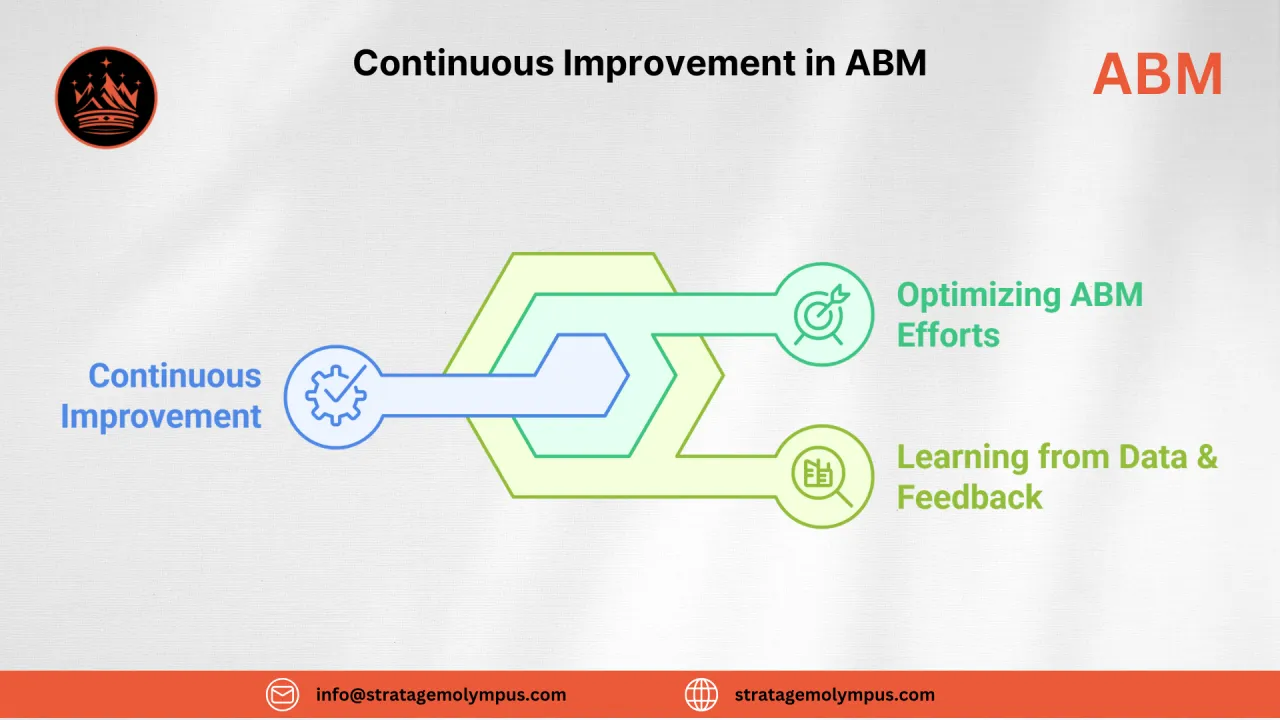
Account-Based Marketing (ABM) is not a one-time execution; it is an iterative, data-driven strategy that requires constant refinement. For industrial engineering and manufacturing businesses, where sales cycles are complex and stakeholder engagement is critical, continuous optimization is the key to maximizing ABM success.
Without a structured approach to analyzing performance, identifying gaps, and implementing improvements, ABM campaigns can stagnate, leading to missed opportunities and wasted resources.
This blog explores:
- How to optimize ABM campaigns using real-time insights
- The role of feedback loops in refining ABM strategies
- Best practices for continuous learning and improvement
Why Continuous Optimization is Critical in ABM
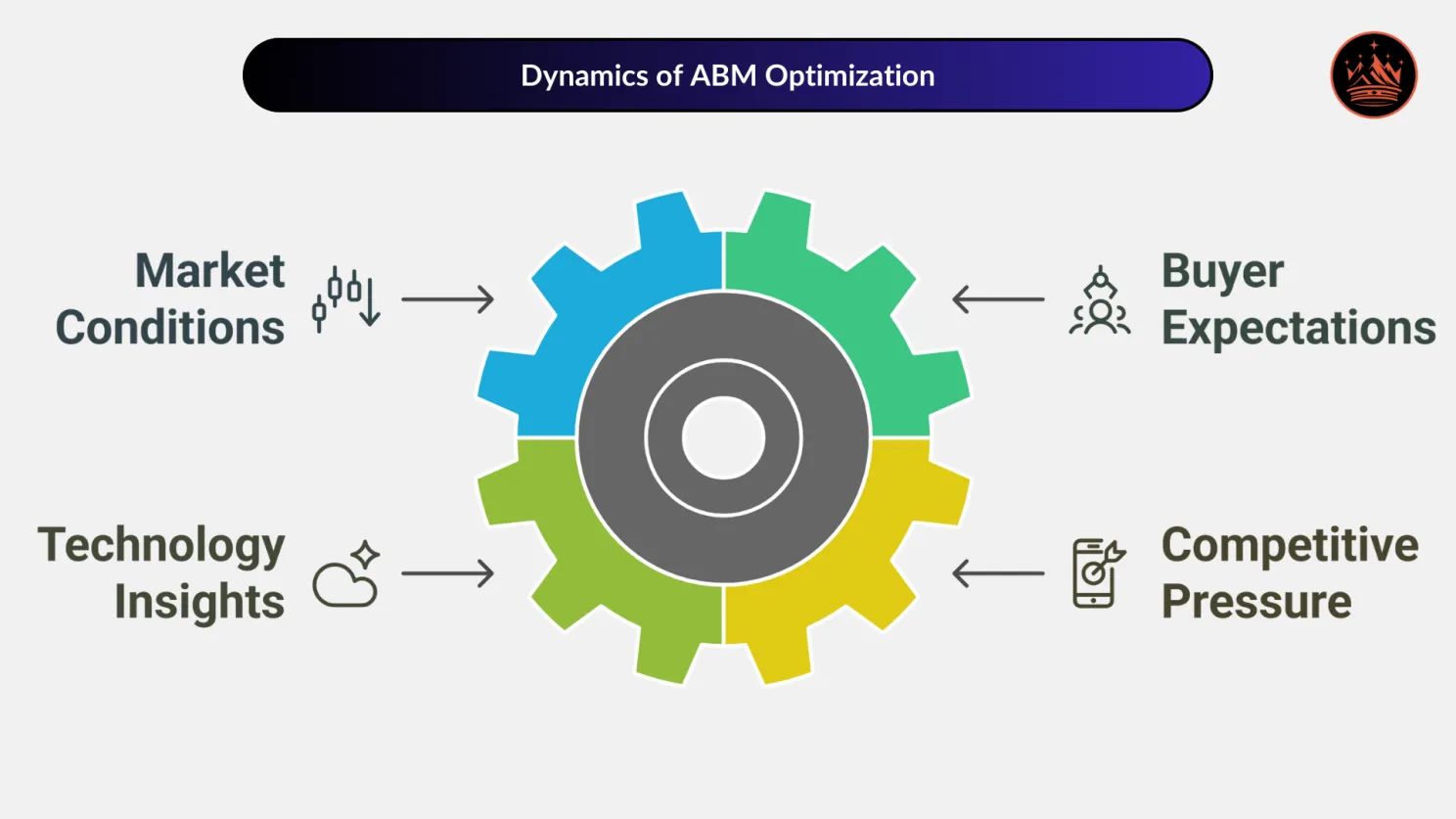
Unlike traditional marketing, where campaigns run on fixed timelines, ABM is dynamic and iterative. Buyer behavior, industry trends, and decision-making processes evolve, and ABM must adapt accordingly.
Key Reasons Why ABM Must Continuously Improve
- Market Conditions Shift Economic changes, supply chain disruptions, and evolving regulations impact how target accounts make purchasing decisions.
- Buyer Expectations Evolve Decision-makers expect more personalized engagement and data-driven insights before committing to a purchase.
- Technology and Data Insights Improve Advancements in AI, automation, and predictive analytics offer new ways to refine targeting and engagement.
- Competitors Innovate New players and improved solutions in the market force companies to stay ahead with more effective ABM tactics.
Without continuous optimization, ABM efforts can quickly become outdated and ineffective.
Strategies for Optimizing ABM Efforts
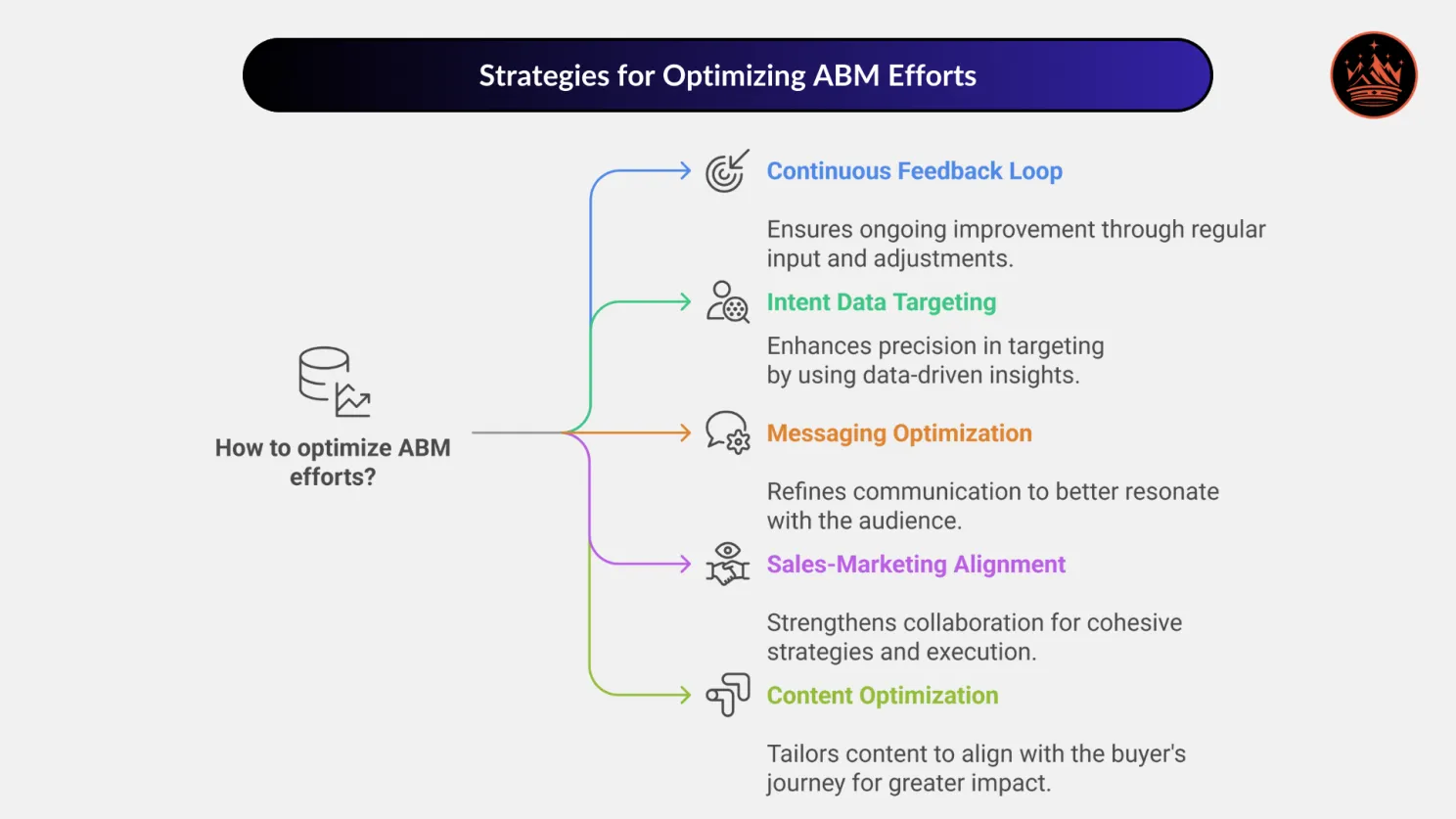
1. Implement a Continuous Feedback Loop
ABM thrives on real-time adjustments based on account engagement, sales feedback, and performance metrics. A structured feedback loop ensures ongoing refinement rather than reactive course corrections.
How to Implement a Feedback Loop:
- Marketing gathers real-time engagement data (website visits, content downloads, event attendance).
- Sales provides qualitative feedback on conversations and account interactions.
- Insights are reviewed biweekly to identify trends and gaps.
- Adjustments are made to messaging, content, and targeting based on data-driven insights.
Example:
A manufacturer of industrial HVAC systems notices that key decision-makers in their target accounts engage more with sustainability-focused content. They adjust their ABM strategy to emphasize energy efficiency and regulatory compliance, leading to better engagement and accelerated sales cycles.
2. Refine Targeting Using Intent Data
Intent data is one of the most powerful tools for optimizing ABM strategies in real-time. By analyzing digital signals, marketing and sales teams can:
- Identify accounts showing active buying intent
- Prioritize outreach based on engagement levels
- Customize messaging based on real-time insights
Best Practices for Leveraging Intent Data:
- Track website activity, content downloads, and social media interactions from target accounts.
- Use predictive analytics to identify accounts ready to move to the next stage.
- Align personalized sales outreach based on account behavior.
Example:
A supplier of precision machining equipment detects that multiple decision-makers from a target automotive manufacturer are engaging with ROI calculators on their website. The sales team immediately follows up with a customized proposal and case study, leading to a high-value deal closure.
3. Continuously Test and Optimize Messaging
Not all ABM messaging resonates equally across different stakeholders. Continuous A/B testing and content variation ensure the best-performing messages are prioritized.
How to Optimize ABM Messaging:
- Run A/B tests on email campaigns, LinkedIn ads, and landing pages.
- Analyze open rates, engagement, and conversion data.
- Refine messaging based on which version drives the highest engagement.
Example:
A manufacturer of automated material handling systems tested two subject lines in their email outreach:
- “Increase Warehouse Productivity with Smart Conveyor Systems”
- “How to Reduce Manual Labor Costs by 30%”
The second subject line generated 45% higher response rates among operations managers, leading to a shift in ABM messaging strategy.
4. Strengthen Sales and Marketing Alignment
ABM optimization isn’t just a marketing function—sales must be actively involved in refining strategies.
Ways to Improve Sales-Marketing Alignment:
- Regular Sales-Marketing Standups: Weekly discussions on account engagement and next steps.
- Shared ABM Dashboards: Real-time tracking of account interactions for seamless coordination.
- Win-Loss Analysis: Analyzing successful and unsuccessful deals to identify optimization opportunities.
Example:
A producer of specialty adhesives for industrial manufacturers noticed that procurement managers—rather than production engineers—were the primary decision-makers in high-value deals. Sales and marketing realigned their content strategy to focus on procurement pain points, leading to a 15% faster sales cycle.
5. Optimize Content Based on Buyer Journey Data
Different stakeholders in target accounts engage with different types of content depending on their role and stage in the buying journey.
How to Optimize Content for the Buyer’s Journey:
- Awareness Stage: Industry reports, whitepapers, and educational webinars.
- Consideration Stage: Product comparison guides, case studies, and ROI calculators.
- Decision Stage: Personalized demos, pricing breakdowns, and contract discussions.
Example:
A robotics manufacturer noticed that their target accounts were dropping off after the consideration stage. They introduced personalized live demos tailored to each account’s industry needs. Result? A 28% increase in deal conversions.
6. Automate Account Engagement for Faster Optimization
Marketing automation tools help scale ABM efforts while maintaining personalization.
How Automation Enhances ABM Optimization:
- Triggers automated follow-ups based on engagement signals.
- Personalizes email sequences for different stakeholders.
- Adjusts ad targeting dynamically based on buyer behavior.
Example:
A manufacturer of industrial water filtration systems used automation to track when a target account engaged with specific technical datasheets. An automated email triggered a follow-up from a sales engineer, leading to a high-value consultation.
Learning from Data & Feedback to Enhance Future Campaigns
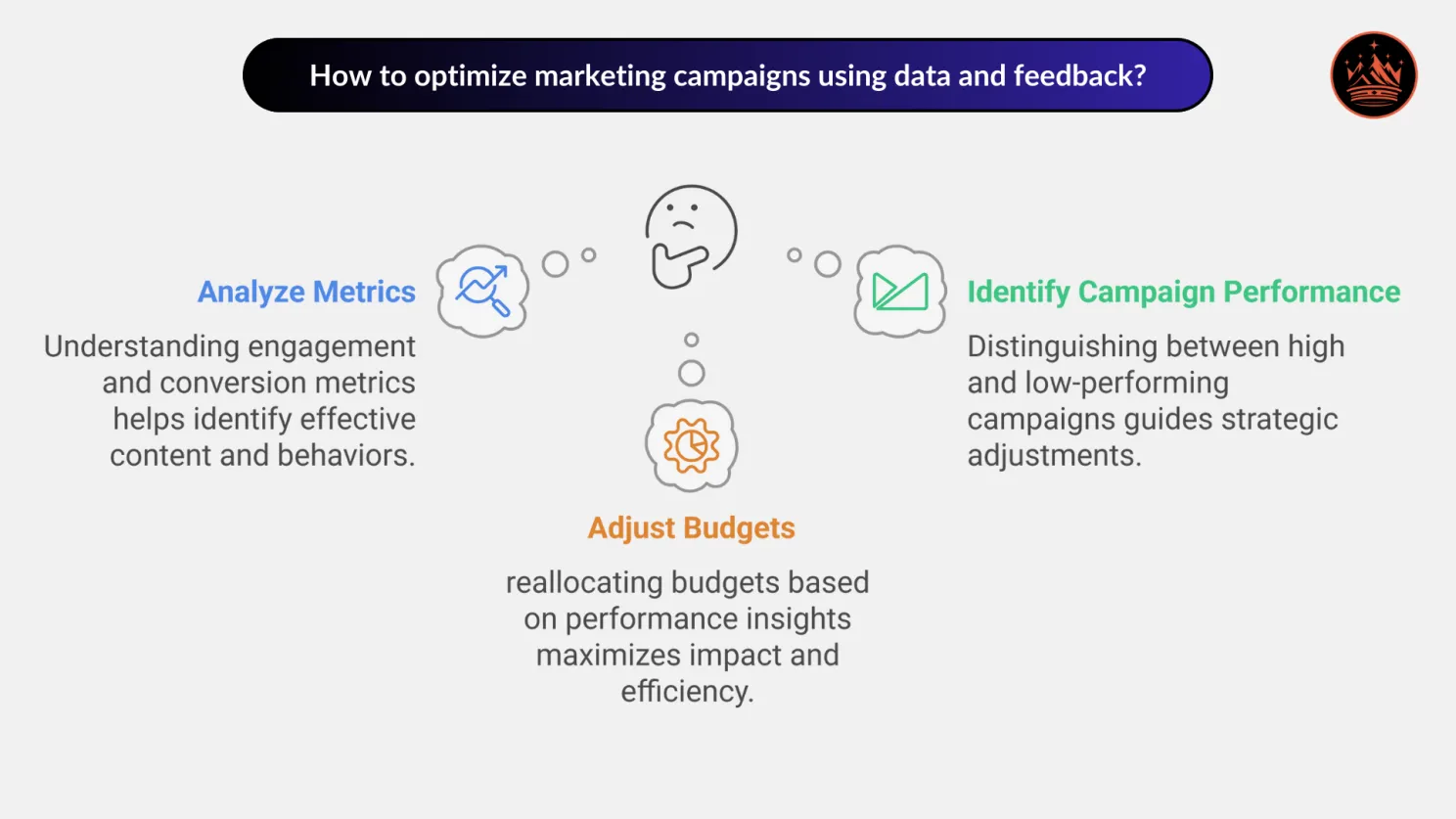
1. Analyze Engagement & Conversion Metrics
- Which content formats drive the most engagement?
- What account behaviors correlate with faster deal progression?
2. Identify High-Performing vs. Low-Performing Campaigns
- What types of ABM outreach lead to meetings and closed deals?
- Where is drop-off happening in the ABM funnel?
3. Adjust Budgets Based on Performance Insights
- Allocate more budget to high-performing channels (e.g., LinkedIn ads vs. email).
- Reduce spend on tactics that aren’t influencing pipeline acceleration.
Key Takeaways
- ABM optimization is continuous—strategies must evolve based on data, engagement trends, and feedback loops.
- Intent data and real-time analytics help refine targeting, ensuring resources focus on the most promising accounts.
- Sales and marketing collaboration is critical to ongoing ABM success—shared insights lead to better campaign adjustments.
- Testing and automation improve engagement efficiency, allowing for scalable, personalized ABM campaigns.
ABM is not a static strategy—the most successful companies continuously measure, analyze, and refine their approach. By leveraging real-time data, strengthening alignment between sales and marketing, and implementing structured feedback loops, industrial manufacturers can drive sustained ABM success.
-1.png)
-1.png)