
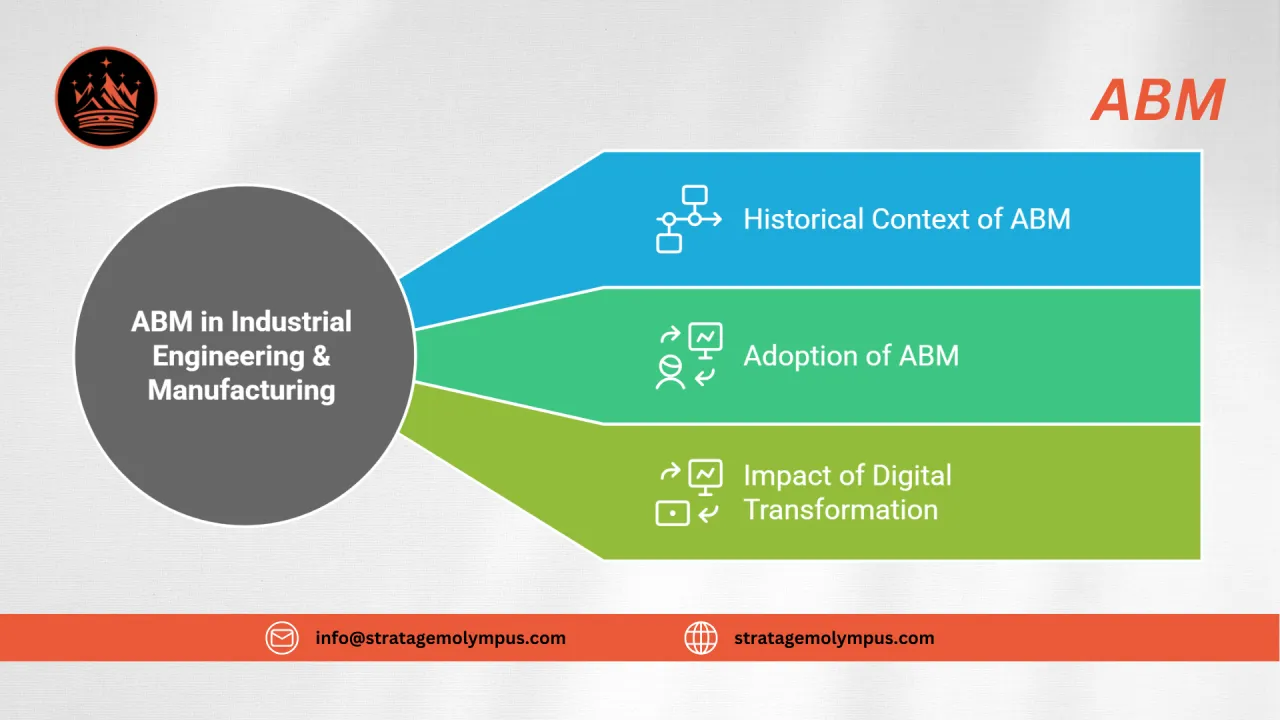
As industries continue to evolve, so do their marketing strategies. One of the most transformative shifts in B2B marketing has been the adoption of Account-Based Marketing (ABM)—a targeted approach that aligns sales and marketing teams to engage high-value accounts with personalized campaigns.
For industrial engineering manufacturers, where buying decisions involve complex committees and long sales cycles, ABM has become a strategic necessity. This blog explores the historical context of ABM, its adoption in industrial engineering & manufacturing, and the profound impact of digital transformation on ABM strategies.
Historical Context: The Emergence of ABM
The concept of personalized marketing can be traced back to the early 1990s—most notably through Don Peppers and Martha Rogers’ seminal work, The One-to-One Future, which predicted a shift toward individualized customer engagement. However, the strategic framework known today as Account-Based Marketing (ABM) was formalized in the early 2000s. In response to the inefficiencies of traditional, broad-based marketing in addressing high-value B2B accounts, the Information Technology Services Marketing Association (ITSMA) not only introduced the approach but is also credited with coining the term “account‑based marketing” circa 2004.
Why Traditional Marketing Fell Short?
- Broad Focus: Traditional marketing cast a wide net, often generating leads that lacked quality or relevance for sales teams.
- Siloed Efforts: Misalignment between sales and marketing created inconsistent messaging and poor lead conversion rates.
- Complex Buying Processes: For industries like engineering & manufacturing, generic campaigns failed to resonate with the intricate needs of buying committees.
Recognizing these challenges, forward-thinking companies began adopting ABM as a customer-centric approach, focusing on personalization, collaboration, and measurable outcomes. This early adoption set the stage for ABM to evolve into a targeted, customer-centric methodology that is especially effective in industries where buying decisions involve multiple stakeholders and extended sales cycles.
The Shift Towards ABM in Industrial Engineering & Manufacturing
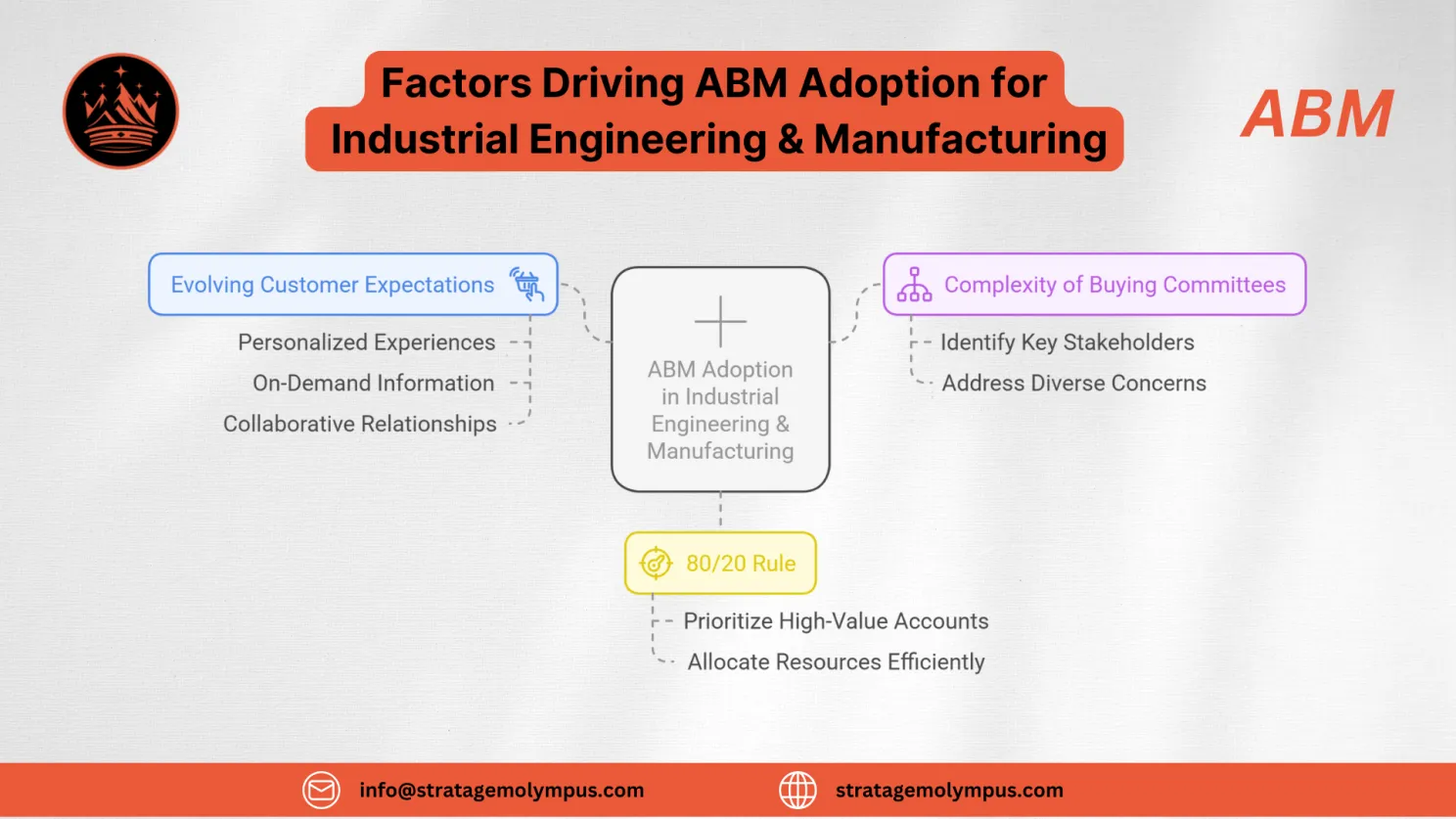
The adoption of ABM in industrial engineering & manufacturing wasn’t instantaneous. It required a shift in mindset, driven by three primary factors:
1. Evolving Customer Expectations
In the past, industrial buyers relied heavily on in-person interactions, trade shows, and catalogues. However, as digital channels gained prominence, buyers began expecting:
- Personalized Experiences: Tailored solutions that address their unique challenges.
- On-Demand Information: Access to product details, case studies, and ROI data at their fingertips.
- Collaborative Relationships: More than a supplier, buyers sought partners who understood their business goals.
2. Complexity of Buying Committees
Engineering manufacturers often sell to organizations with multi-layered decision-making processes. ABM became essential to:
- Identify and engage key stakeholders, including machine operators, procurement officers, engineers, and C-suite executives.
- Address the technical, operational, and financial concerns of diverse personas within a buying committee.
3. The 80/20 Rule
The Pareto Principle—80% of revenue comes from 20% of accounts—highlighted the need to focus on high-value clients. ABM offered a systematic way to prioritize these accounts and allocate resources efficiently.
The Role of Digital Transformation in ABM
Digital transformation has been a game changer for ABM. Advanced digital tools and platforms now empower industrial engineering manufacturers to engage their target accounts with precision. Key elements include:
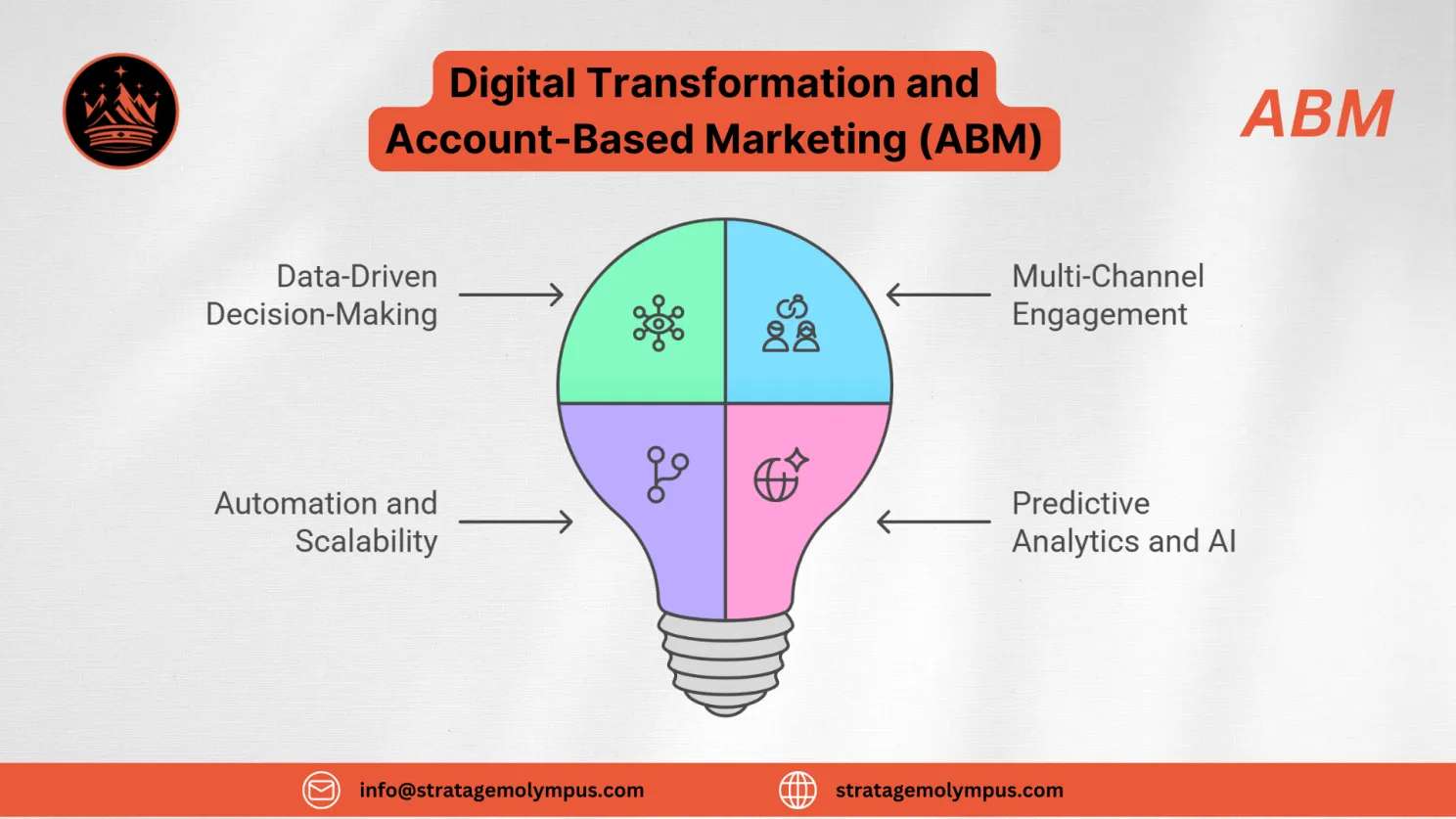
- Data-Driven Decision-Making: Modern CRM systems and intent data platforms enable companies to identify high-value accounts more accurately. Real-time analytics offer insights into buyer behaviour, ensuring that messaging is both timely and relevant.
- Multi-Channel Engagement: Today’s ABM campaigns leverage a blend of channels—from LinkedIn and email campaigns to webinars and virtual events—to reach key decision-makers consistently across multiple touchpoints.
- Automation and Scalability: Marketing automation tools now streamline workflows, reduce manual effort, and enable personalized content delivery at scale. This not only improves efficiency but also ensures that sales and marketing teams remain tightly aligned.
- Predictive Analytics and AI: With AI-driven insights, companies can implement intent-based targeting and craft persona-specific campaigns. Automated alerts help teams respond promptly when an account shows signs of buying intent, ensuring that every opportunity is maximized.
Case Study: ABM in Action for Industrial Engineering
Consider a manufacturer specializing in industrial automation for automotive production lines:
- Pre-Digital Era: The company relied on broad-based campaigns like print ads and trade shows, generating leads with low conversion rates.
- Post-Digital Transformation: Using ABM, they:
- Identify five high-value accounts, including major automotive OEMs.
- Leverage intent data to understand each account’s specific pain points, such as production delays and quality control.
- Deploy multi-channel campaigns, including LinkedIn ads targeting engineering managers and personalized webinars for procurement teams.
Result: Increased engagement with key stakeholders, more deals closed, and enhanced average deal value.
Benefits of ABM in the Digital Age
The synergy between ABM and Digital Transformation offers several distinct advantages for industrial engineering manufacturers:
- Improved Alignment: Digital platforms ensure sales and marketing teams work from the same data, creating cohesive campaigns.
- Enhanced Efficiency: Automation reduces manual tasks, allowing teams to focus on strategy and creativity.
- Stronger Insights: Real-time analytics enable continuous optimization of ABM efforts.
- Deeper Relationships: Personalized interactions foster trust and long-term loyalty with high-value accounts.
Challenges and Considerations
While digital transformation has amplified ABM’s potential, businesses must address several challenges:
- Data Quality: Inaccurate or incomplete data can undermine targeting efforts.
- Siloed Systems: Integrating legacy systems with modern ABM Platforms can be complex and resource-intensive.
- Skill Gaps: Teams must be trained to leverage advanced tools and interpret data effectively.
The Future of ABM in Industrial Engineering & Manufacturing
The evolution of ABM is far from over. As technology and buyer behaviours continue to change, the future of ABM will likely emphasize even greater personalization and integration. Anticipated trends include:
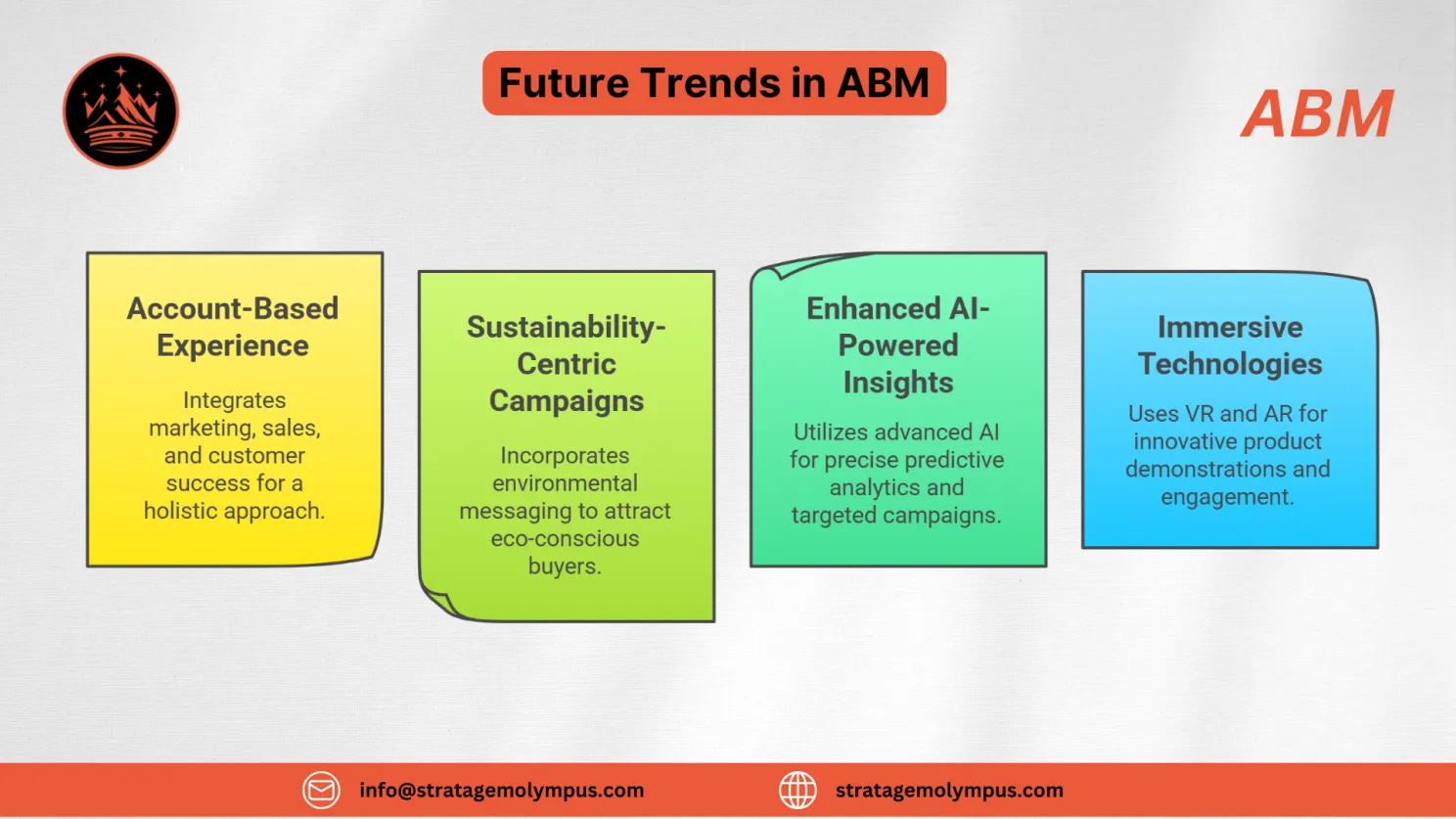
- Account-Based Experience (ABX): Moving beyond the traditional ABM framework, ABX integrates marketing, sales, and customer success into a seamless, holistic experience that spans the entire customer lifecycle.
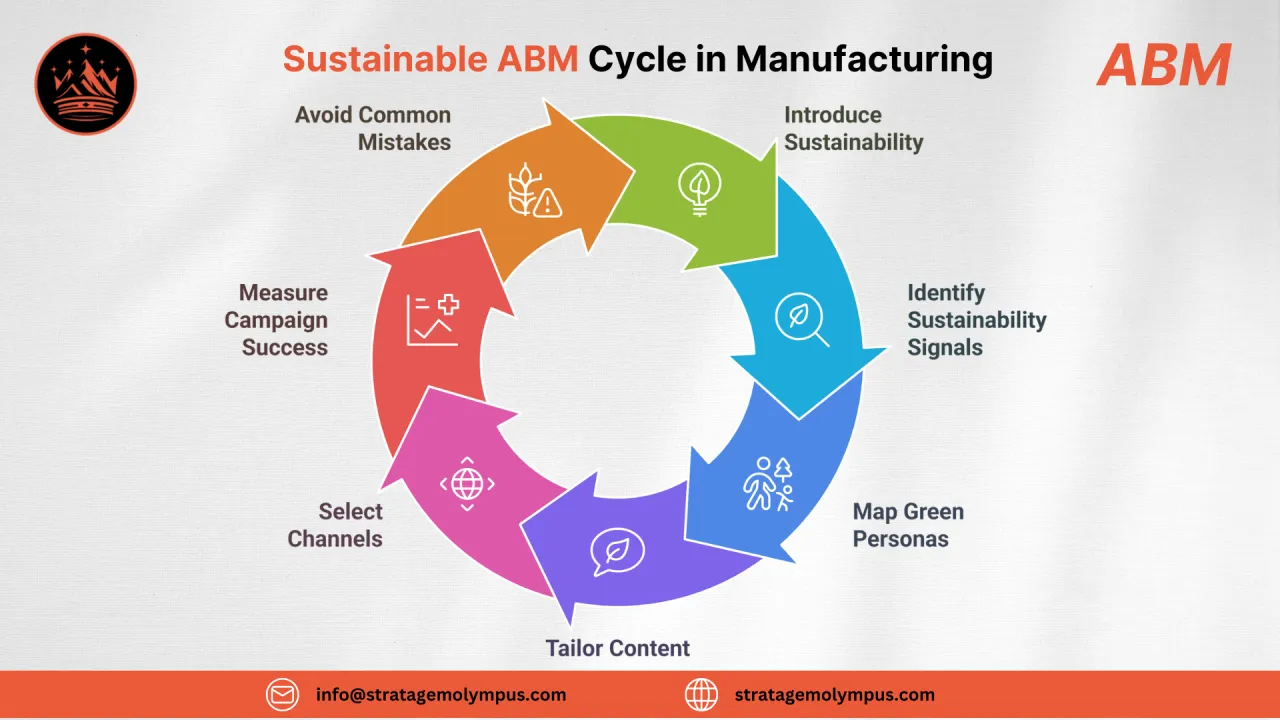
- Sustainability-Centric Campaigns: As environmental concerns grow, manufacturers are expected to incorporate sustainability messaging into their ABM strategies, appealing to eco-conscious buyers.
- Enhanced AI-Powered Insights: Further advancements in artificial intelligence will drive even more precise predictive analytics, enabling hyper-targeted campaigns that anticipate customer needs before they arise.
- Immersive Technologies (VR/AR): Virtual and augmented reality are poised to revolutionize product demonstrations and stakeholder engagement by providing immersive, remote experiences that can showcase complex industrial solutions in new and compelling ways.
Key Takeaways
- ABM’s Evolution: ABM has matured from a niche concept into a mainstream strategy, particularly for complex B2B industries like heavy engineering & manufacturing.
- Digital Transformation’s Role: The integration of data analytics, AI, and automation has made ABM more effective and scalable, allowing industrial engineering manufacturers to target high-value accounts with precision.
- Focus on Relationships: ABM emphasizes relationship-building with decision-makers across the buying committee, fostering trust and loyalty.
- Preparation is Key: Successful implementation requires high-quality data, aligned teams, and the right technology stack.
The journey of ABM in industrial engineering & manufacturing is one of adaptation and innovation. From its origins as a customer-centric approach to its current role as a digital marketing powerhouse, ABM has transformed how businesses engage with high-value accounts. By embracing digital transformation and leveraging the latest tools and techniques, industrial engineering manufacturers can position themselves for sustained growth and competitive advantage.
As we continue this series, we’ll explore the tangible benefits ABM brings to industrial engineering manufacturers, helping you understand why it’s a vital strategy for your business. Stay tuned for insights into enhanced targeting, ROI, and sales-marketing alignment in the next blogs.
-1.png)
-1.png)