
In the highly nuanced world of industrial engineering & manufacturing, one-size-fits-all messaging doesn’t resonate with decision-makers managing intricate processes and high-value operations. To effectively engage these stakeholders, personalization must be the cornerstone of your Account-Based Marketing (ABM) Campaigns. By tailoring content and communication to reflect the specific needs, challenges, and goals of each target account, engineering manufacturers can foster meaningful relationships, expedite buying decisions, and maximize ROI.
This blog explores the importance of personalized messaging and provides actionable techniques for creating tailored content that engages target accounts in the industrial manufacturing sector.
I. Why Personalized Messaging is Crucial in ABM?
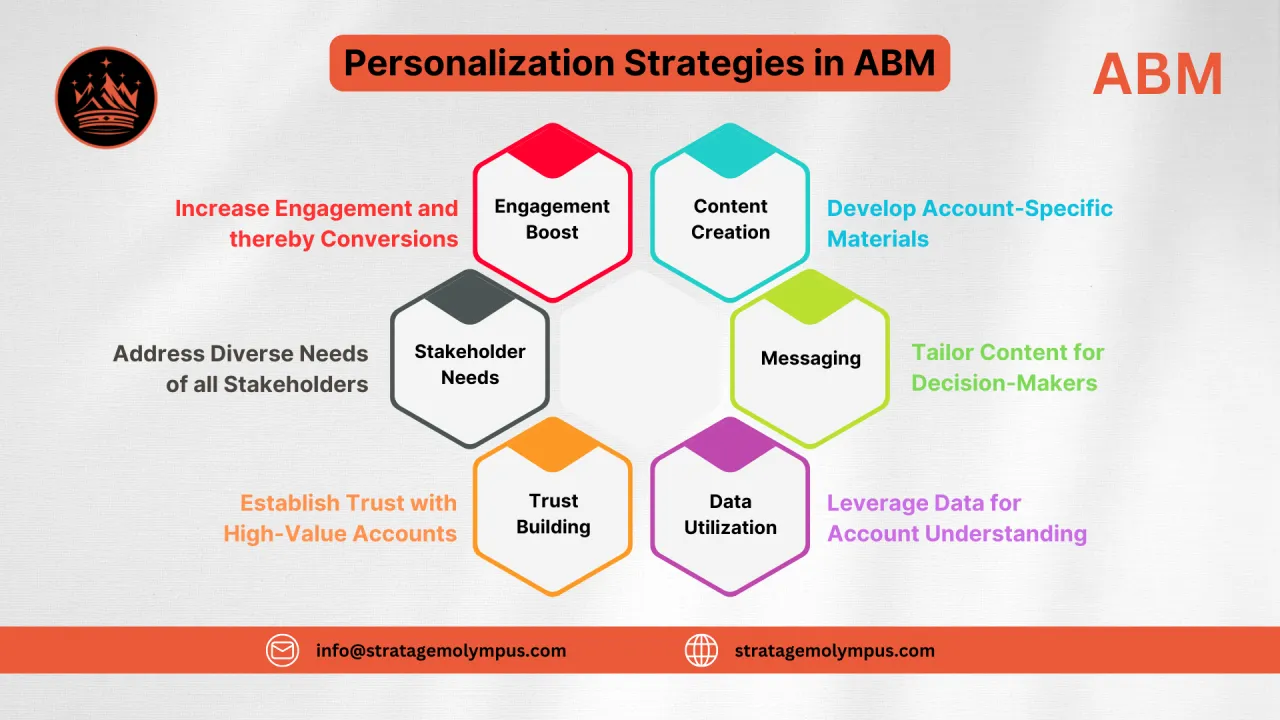
1. Building Trust with High-Value Accounts
Personalized messaging demonstrates a deep understanding of an account’s unique challenges and priorities. For industrial buyers, who often face complex decisions involving large capital investments, this builds credibility and fosters trust.
Example:
A process automation provider engages a chemical manufacturer by sharing case studies tailored to the exact production processes the manufacturer uses, showcasing proven results in similar facilities.
2. Addressing Diverse Stakeholder Needs
Industrial buying committees typically include engineers, procurement officers, and operations managers—each with different concerns. Personalization ensures each stakeholder receives information that speaks directly to their role, responsibilities, and objectives.
Example:
When targeting a food and beverage company, a packaging machinery manufacturer creates:
- For the Operations Manager: A whitepaper on reducing line downtime.
- For the CFO: An ROI calculator demonstrating long-term savings.
- For the Maintenance Team: A video showcasing ease of maintenance.
3. Improving Engagement and Conversion Rates
Generic outreach often fails to capture the attention of industrial decision-makers. Personalized campaigns, by contrast, deliver content that aligns with their immediate needs, increasing engagement and accelerating conversions.
Example:
An energy-efficient HVAC system provider targets a textile manufacturer experiencing high energy costs. By highlighting energy savings data specific to textile production environments, the provider piques interest and drives faster decision-making.
II. Techniques for Creating Tailored Content
Creating personalized ABM campaigns requires a structured approach. Here are proven techniques for crafting impactful content:
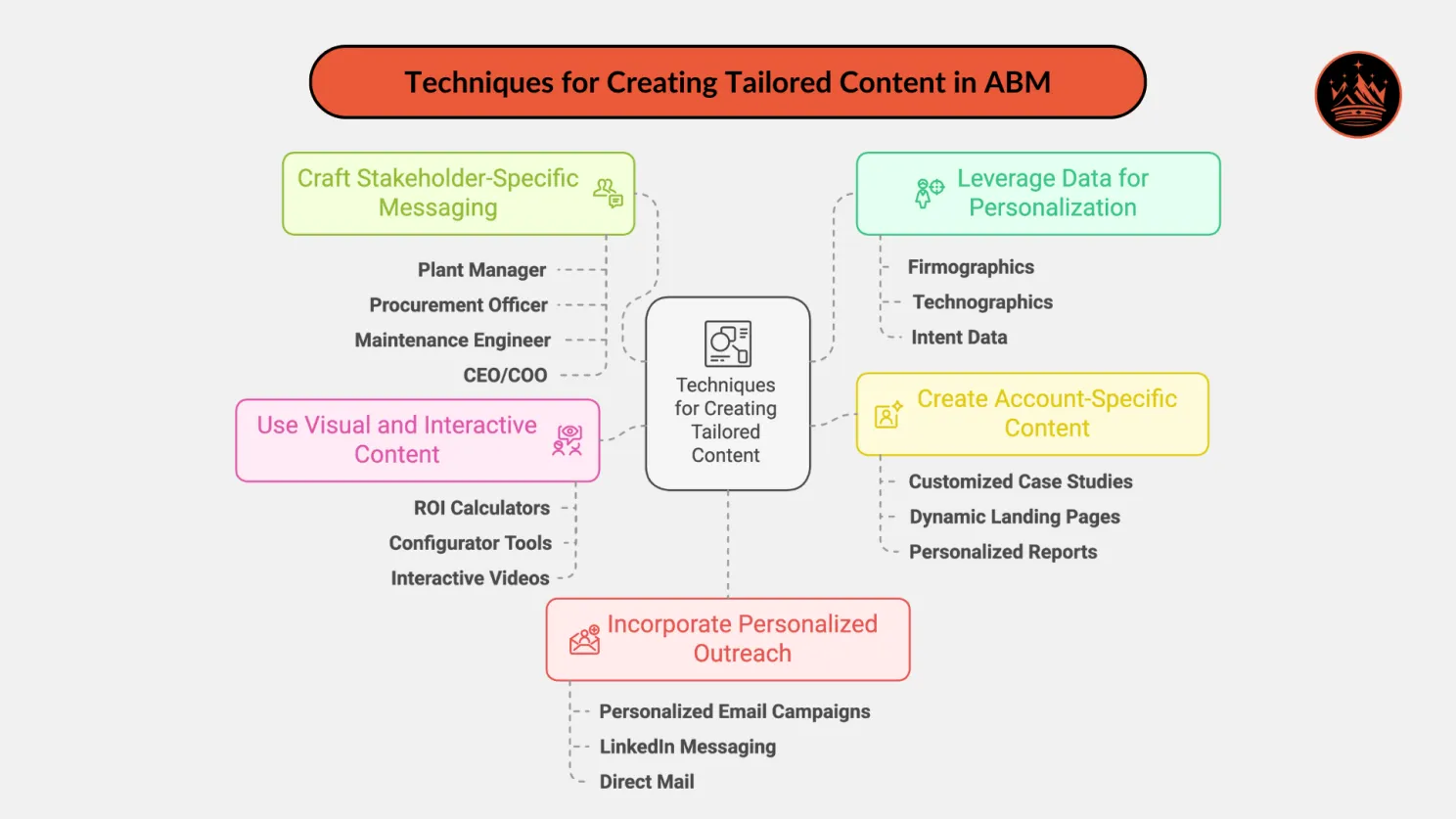
1. Leverage Data for Personalization
Data is the foundation of effective personalization. Use a combination of first-party and third-party data to gather insights about your target accounts.
Key Data Sources:
- Firmographics: Understand the account’s industry, size, revenue, and location.
- Technographics: Identify the technology stack and operational systems used by the account.
- Intent Data: Monitor behaviours such as searches for specific solutions or engagement with industry content.
Example:
A conveyor system manufacturer uses intent data to identify automotive suppliers researching “high-speed assembly line solutions” and tailors outreach to highlight its conveyor systems designed for rapid assembly.
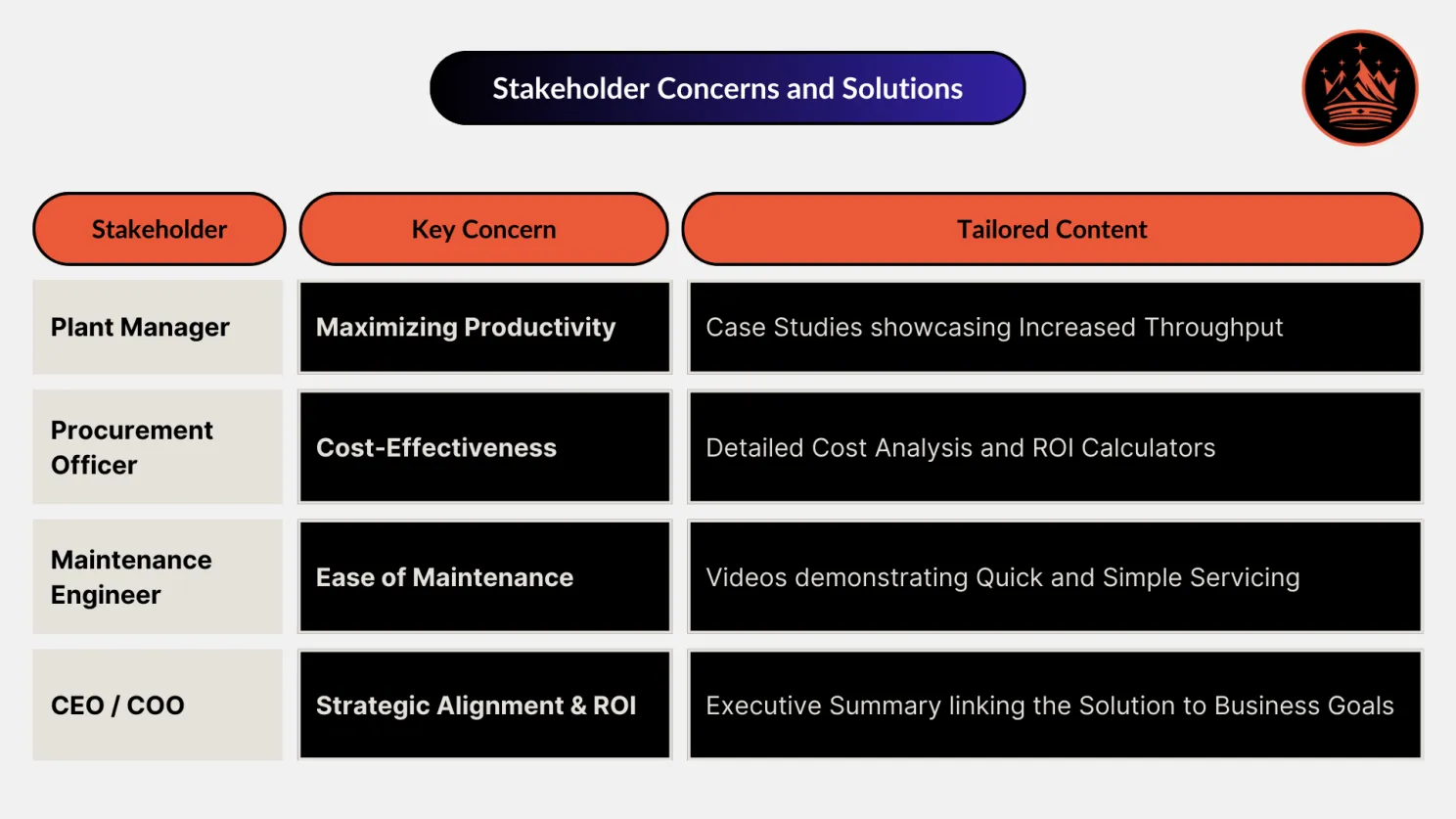
2. Craft Stakeholder-Specific Messaging
Each stakeholder within a target account has unique concerns. Tailor your content to address their priorities and decision-making criteria.
3. Create Account-Specific Content
For high-value accounts, take personalization to the next level by creating dedicated materials that address their specific challenges.
Examples of Account-Specific Content:
- Customized Case Studies: Highlight solutions implemented for companies with similar challenges.
- Dynamic Landing Pages: Create account-branded pages featuring tailored messaging, videos, and CTAs.
- Personalized Reports: Provide operational audits or performance benchmarks comparing the account’s current operations to industry best practices.
Example:
A water treatment equipment manufacturer creates a detailed proposal for a beverage company, including a tailored water usage analysis and projections for cost savings post-implementation.
4. Use Visual and Interactive Content
Interactive content can boost engagement while providing personalized insights.
Types of Interactive Content:
- ROI Calculators: Allow accounts to estimate potential savings with your solutions.
- Configurator Tools: Enable buyers to customize products based on their requirements.
- Interactive Videos: Incorporate clickable elements that guide viewers to relevant information.
Example:
A precision tooling provider creates an interactive tool where automotive manufacturers can input material specifications to see which tools are optimal for their production lines.
5. Incorporate Personalized Outreach
Personalization goes beyond content creation—it must extend to how you deliver your message.
Best Practices for Outreach:
- Personalized Email Campaigns: Reference specific pain points or recent activities of the account.
- LinkedIn Messaging: Send tailored connection requests and direct messages referencing the account’s challenges.
- Direct Mail: Send customized kits or samples that showcase how your solution fits the account’s needs.
Example:
A welding solutions provider sends a package to a construction equipment manufacturer, including a personalized video and a sample welding rod, accompanied by a handwritten note addressing the manufacturer’s production challenges.
III. Scaling Personalization Without Losing Impact
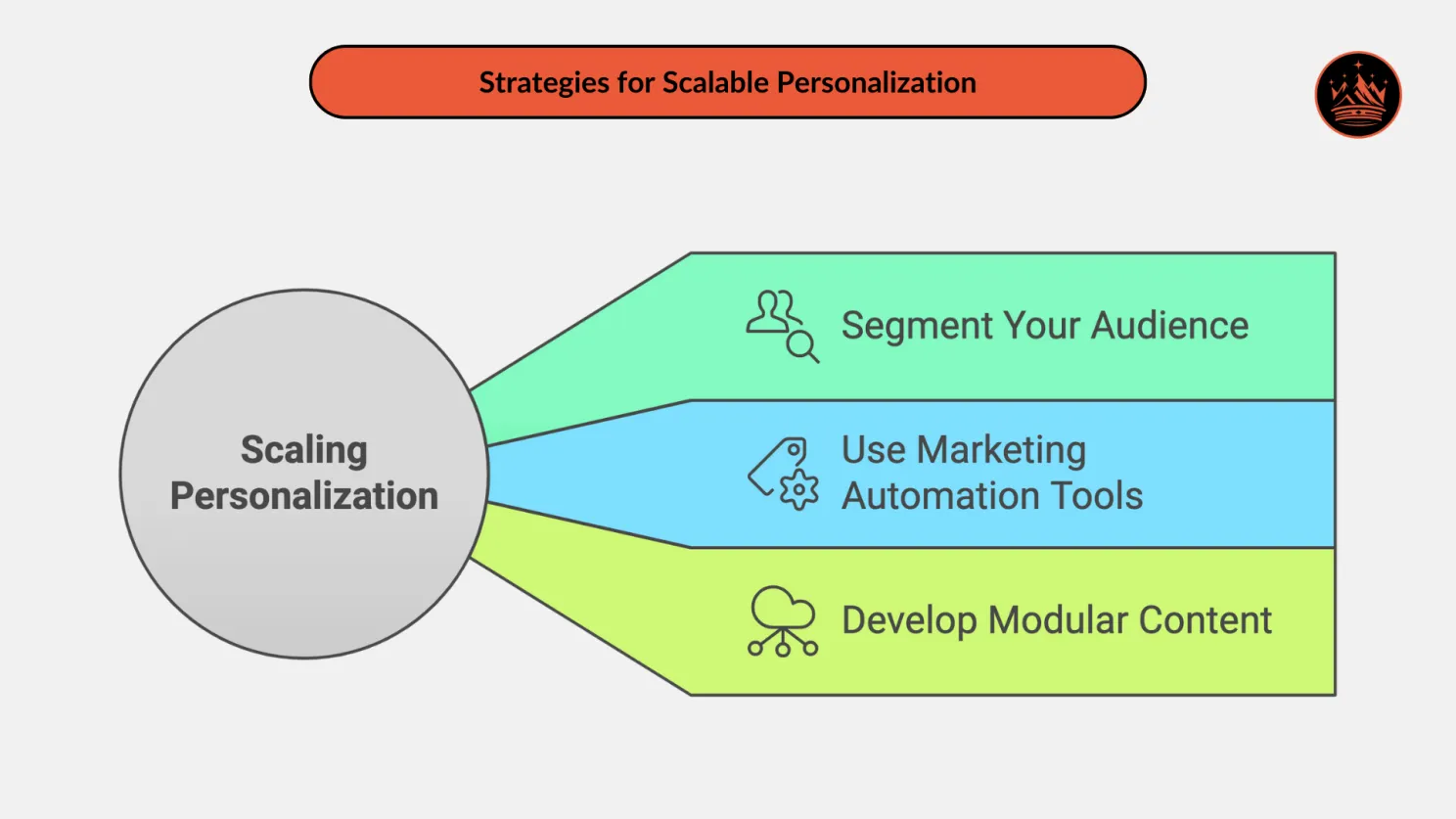
For broader campaigns targeting multiple high-value accounts, personalization must be scalable. Here’s how to do it:
1. Segment Your Audience
Divide target accounts into smaller groups with shared characteristics and create semi-personalized content for each segment.
Example:
A robotics manufacturer segments accounts by industry—automotive, aerospace, and electronics—and tailors messaging to highlight relevant use cases for each.
2. Use Marketing Automation Tools
Leverage tools to deliver personalized messaging at scale:
- CRM Systems: Track interactions and customize follow-ups.
- Email Platforms: Automate email sequences with dynamic content blocks.
- ABM Platforms: Personalize ads and landing pages based on account data.
Example:
A material handling equipment provider uses an ABM platform to display industry-specific banner ads to logistics companies exploring automation.
3. Develop Modular Content
Create reusable content components—such as templates for case studies or presentations—that can be quickly customized for individual accounts.
Example:
A manufacturer of industrial mixers uses a case study template that can be adapted for different industries, swapping out examples and technical details to match the target account.
IV. Measuring the Impact of Personalization
To ensure your personalized campaigns are delivering results, track key metrics:
- Engagement Rates: Monitor email opens, click-throughs, and webinar attendance.
- Conversion Rates: Track how many target accounts move to the next stage of the buyer’s journey.
- Account Penetration: Measure engagement across multiple stakeholders within the same account.
When every decision is high-stakes, personalization is the linchpin of successful ABM campaigns. By crafting tailored messaging and creating account-specific content, businesses can establish deeper connections with decision-makers, foster trust, and drive measurable results.
As you refine your ABM strategy, focus on understanding your accounts’ unique challenges, leveraging data for insights, and delivering content that resonates with stakeholders at every touchpoint. Stay tuned for the next blog in this series, where we’ll dive into the types of content that drive ABM success in the manufacturing sector.
-1.png)
-1.png)