
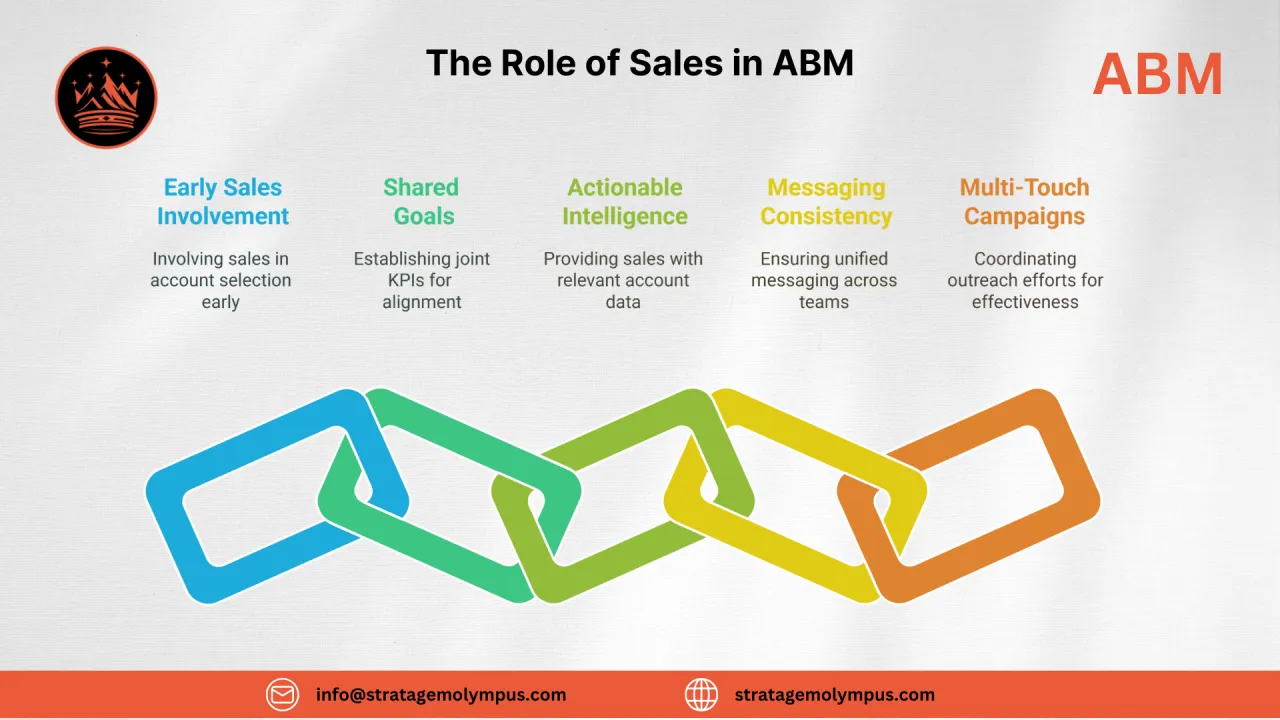
For industrial engineering and manufacturing businesses, Account-Based Marketing (ABM) isn’t just a marketing strategy—it’s a growth strategy. But here’s the truth: ABM cannot succeed without full buy-in and collaboration from the sales team.
In traditional marketing, sales teams often complain about unqualified leads, while marketers feel their efforts go to waste because sales doesn’t follow up effectively. ABM eliminates this gap by making Sales an active participant in the process—not just the recipient of marketing-generated leads.
This blog explores:
✔ How to integrate sales into the ABM process for seamless collaboration
✔ Best practices to ensure Sales and Marketing Alignment
✔ Real-world examples of successful sales-marketing partnerships in ABM
Why Sales is the Backbone of ABM in Industrial Manufacturing?
Unlike transactional B2C sales, industrial sales cycles are long, complex, and involve multiple decision-makers. This means that:
🔹 Sales reps must build relationships over months, even years, before closing a deal.
🔹 Technical buyers need deep-dive conversations before making high-value purchase decisions.
🔹 Multiple stakeholders (engineers, procurement heads, C-suite executives) must be engaged at different levels.
This is where ABM transforms the process:
✔ Instead of chasing cold leads, sales reps engage with pre-qualified, high-intent accounts.
✔ Instead of generic pitches, sales teams have access to account-specific insights that drive meaningful conversations.
✔ Instead of disconnected marketing campaigns, sales and marketing work in sync, targeting the same high-value accounts.
🚀 Example:
A manufacturer of industrial packaging equipment shifts from mass email campaigns to ABM-driven targeting. Marketing provides sales with intelligence—identifying food and beverage companies expanding operations. Sales uses this data to reach out with personalized offers, resulting in shorter sales cycles and higher deal values.
How to Integrate Sales into the ABM Process?
1. Involve Sales Early in Account Selection
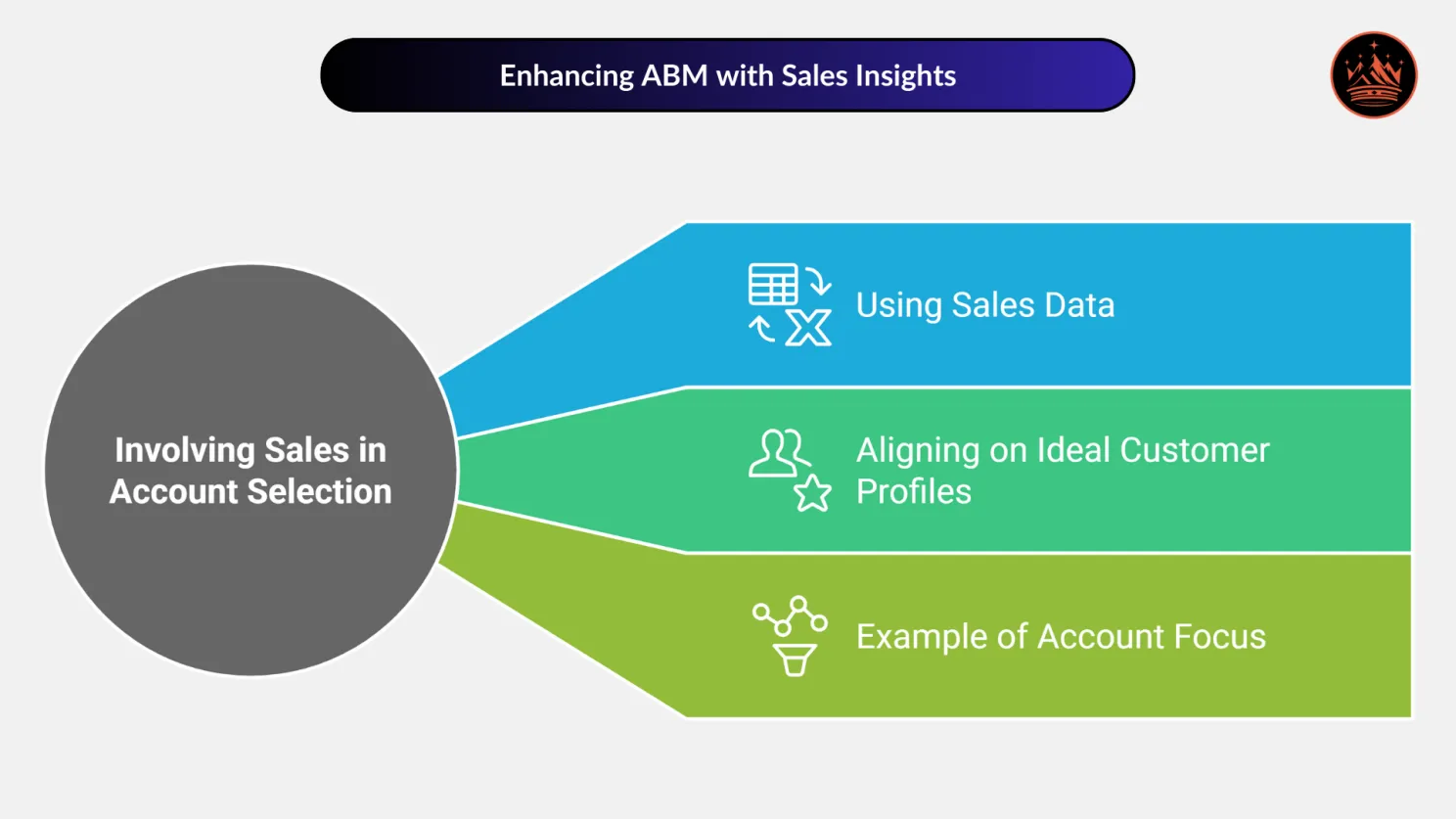
ABM is all about precision targeting—but who better to identify high-value accounts than sales teams already working in the field?
🔹 Best Practices for Sales Involvement in Account Selection:
✔ Use Sales Data for Target Account Selection:
Sales teams already know which accounts have high potential. Leverage their insights instead of relying solely on marketing data.
✔ Align on Ideal Customer Profiles (ICP):
Marketing may define an ICP, but sales can refine it based on real-world conversations and past deal wins.
✔ Example:
The Marketing team of an air compressor systems manufacturer collaborates with Sales to refine their ICP. Marketing initially targeted all mid-sized manufacturers, but Sales highlighted that food processing plants had the highest conversion rates. This insight shifts ABM focus, leading to more qualified opportunities.
2. Create Shared ABM Goals for Sales & Marketing
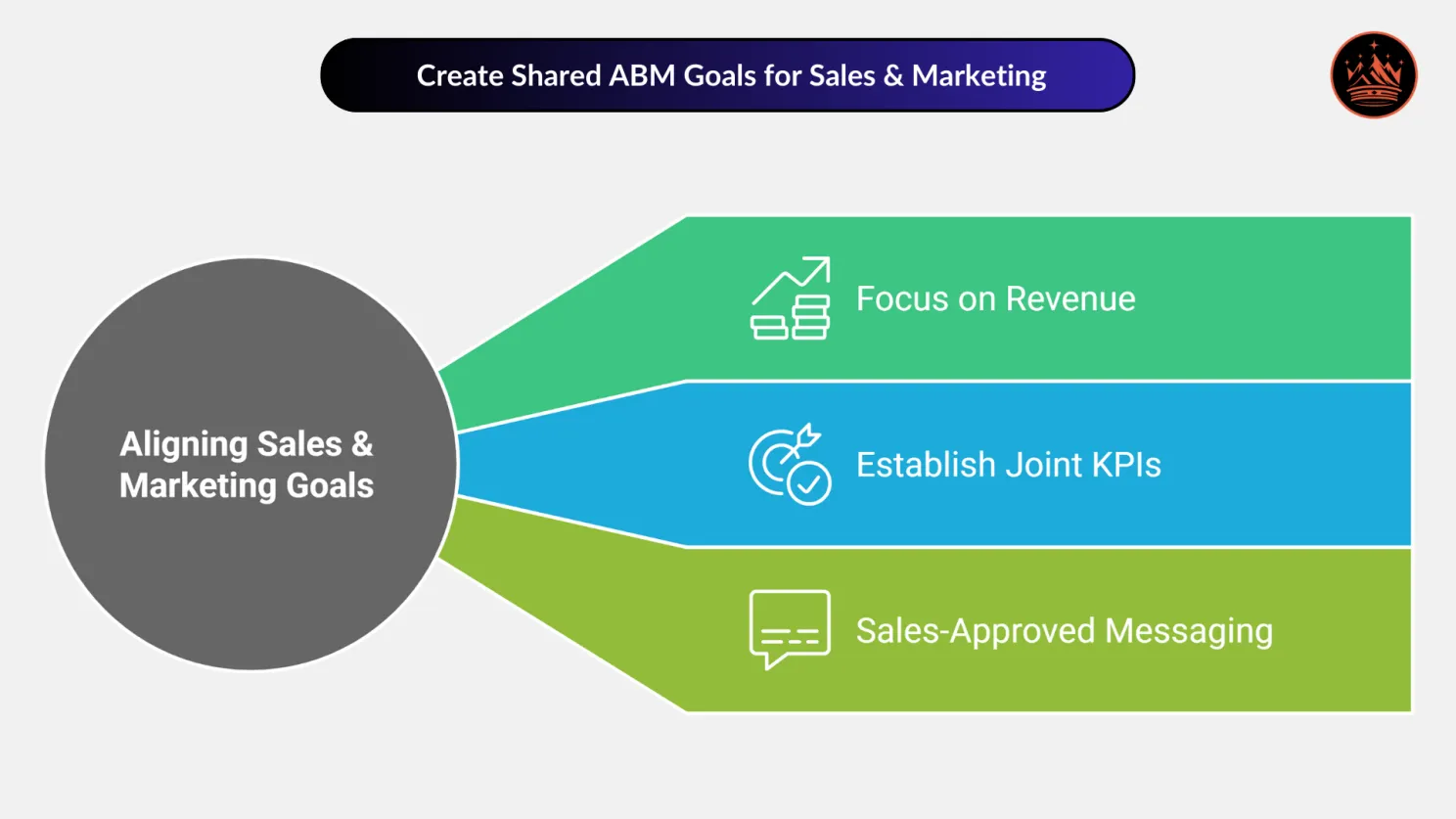
Sales teams often resist marketing-driven initiatives because they see them as distractions. The solution? Ensure ABM goals are sales-driven, not marketing-driven.
🔹 How to Align Sales & Marketing Goals for ABM:
✔ Focus on Revenue, Not Just Engagement: Instead of tracking vanity metrics (clicks, impressions), measure pipeline growth and deal acceleration.
✔ Establish Joint KPIs: Define metrics like account penetration, meetings booked, and sales deal velocity—KPIs that matter to both sales & marketing.
✔ Sales-Approved Messaging: Marketing should develop sales materials with direct input from sales teams to ensure relevance.
✔ Example:
A machine tool manufacturer shifts its ABM KPIs from “leads generated” to “meetings booked with decision-makers.” This shift increases marketing credibility and drives real sales conversations instead of just filling the pipeline with unqualified leads.
3. Equip Sales with Actionable ABM Intelligence
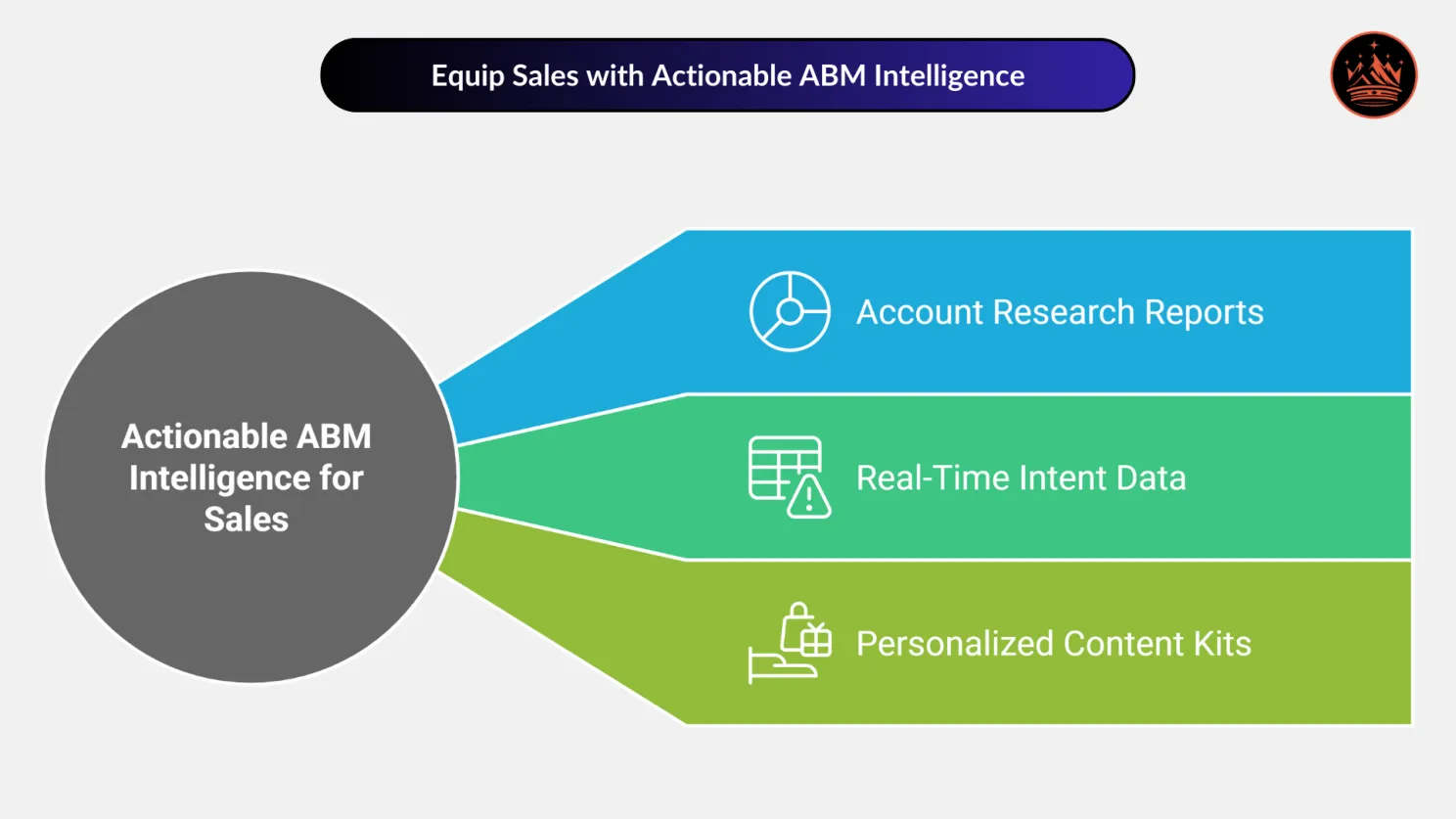
For sales to succeed in ABM, they need insights—not just leads.
🔹 How to Provide Sales with Actionable Intelligence:
✔ Account Research Reports: Deliver detailed insights on target accounts, including company news, recent investments, and competitor analysis.
✔ Real-Time Intent Data: Notify sales when key stakeholders from target accounts visit the website, engage with content, or interact with ads.
✔ Personalized Content Kits: Create Sales Enablement Content like custom sales decks, case studies, and product comparison sheets tailored to each target account.
🚀 Example:
A material handling equipment manufacturer uses intent data to alert sales reps when plant managers from target accounts download a technical white-paper.Within 24 hours, sales follows up with a personalized email, referencing the white-paper insights—leading to a significant increase in response rates.
4. Align Sales & Marketing Messaging for a Unified Approach
One of the biggest reasons ABM fails is inconsistent messaging between sales and marketing.
🔴 Marketing might send an email campaign focusing on cost savings.
🟢 Meanwhile, sales is pitching performance and reliability.
🔴 Result? Confused prospects and lost deals.
🔹 How to Ensure Sales & Marketing Messaging Alignment:
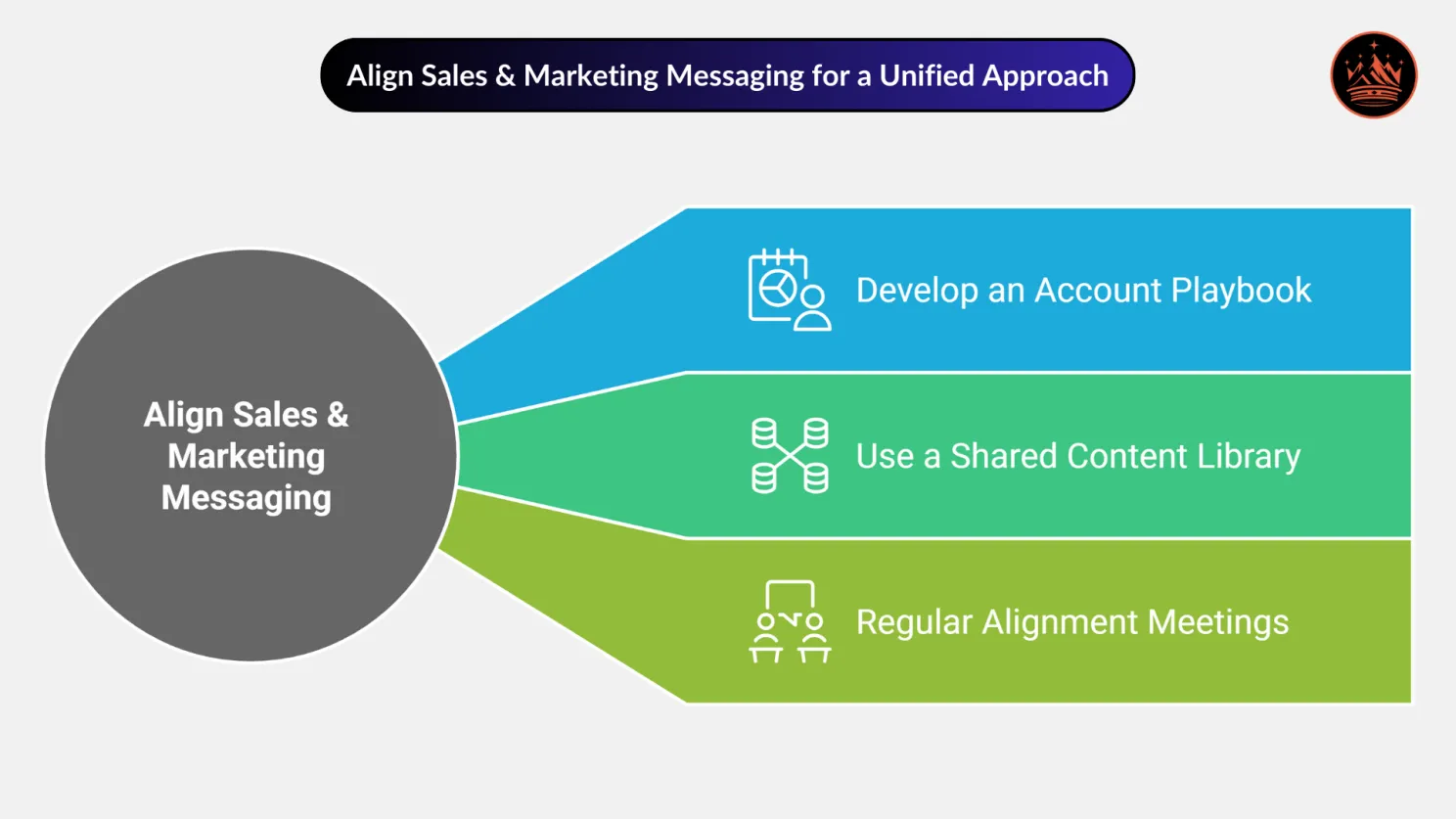
✔ Develop an Account Playbook: Outline talking points, key objections, and response strategies for each target account.
✔ Use a Shared Content Library: Ensure both teams use the same collateral, preventing misalignment in messaging.
✔ Regular Alignment Meetings: Conduct weekly ABM check-ins where sales and marketing discuss active campaigns, feedback, and optimizations.
✔ Example:
A manufacturer of industrial filtration systems ensures that sales teams only use pre-approved case studies and ROI calculators aligned with marketing campaigns. This cohesive messaging results in an increase in conversion rates.
5. Leverage Sales in Multi-Touch ABM Campaigns
ABM is not just about marketing campaigns—it’s about coordinated sales & marketing outreach.
🔹 How to Execute Multi-Touch ABM Outreach:
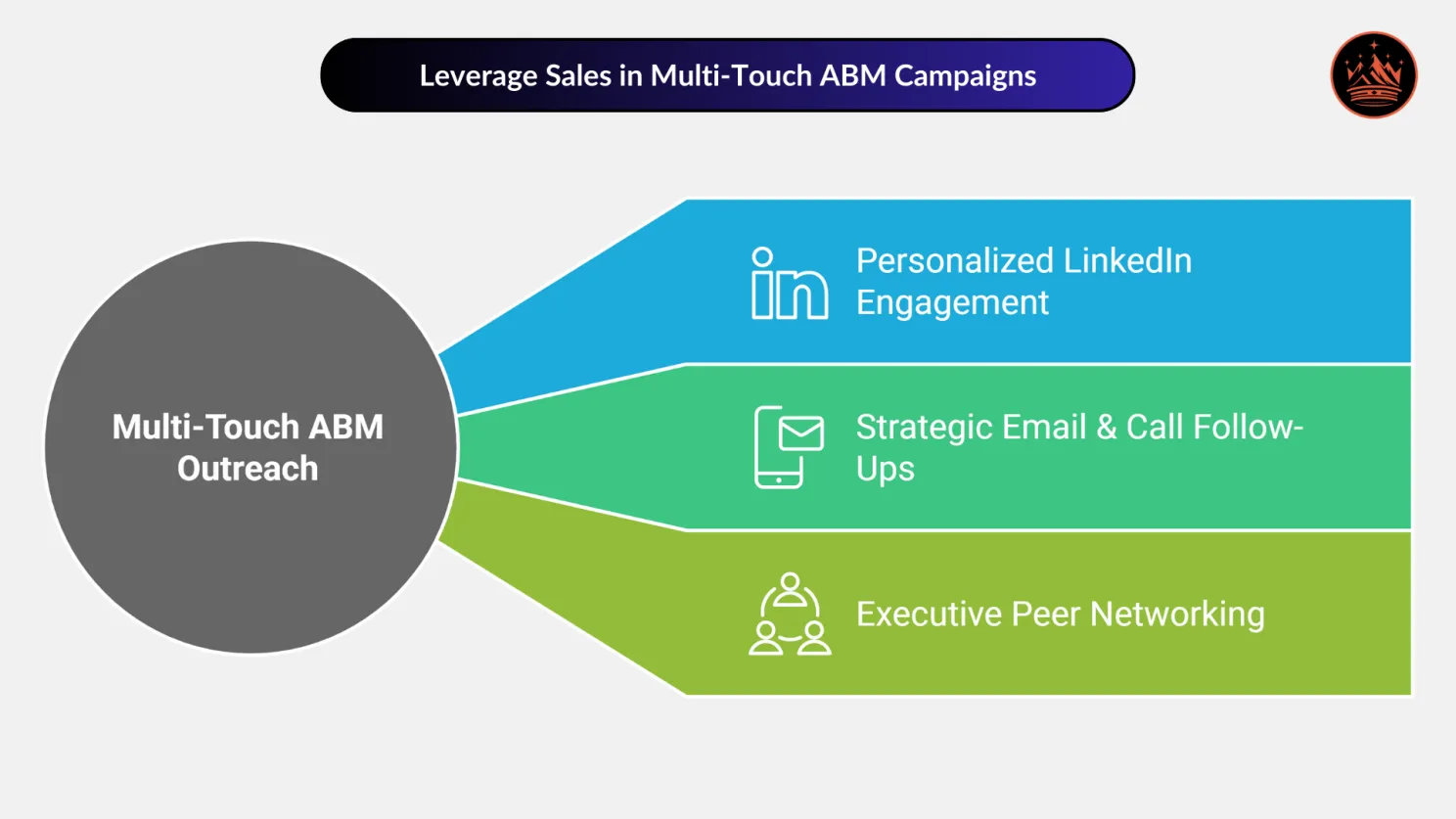
✔ 1:1 Personalized LinkedIn Engagement: Sales reps should tag, comment on, and share content relevant to target accounts.
✔ Strategic Email & Call Follow-Ups: Marketing may send a white-paper, but sales should follow up with a call discussing key insights.
✔ Executive Peer Networking: If targeting C-suite executives, arrange exclusive roundtable discussions where your leadership connects with theirs.
🚀 Example:
A process automation solutions provider runs a multi-touch ABM campaign targeting pharmaceutical manufacturers.
- Marketing sends an industry insights report.
- Sales follows up with a call, referencing insights relevant to the buyer’s specific operations.
- A sales engineer schedules a technical consultation, resulting in a high-value requirement discussion.
💡 Outcome? An increase in deal closure rates compared to traditional sales outreach.
Key Takeaways
- ABM success depends on full sales alignment—not just marketing efforts.
- Sales should be involved from the start—helping define target accounts and ABM goals.
- Providing sales with account intelligence ensures meaningful, high-impact outreach.
- Multi-touch ABM campaigns work best when sales & marketing execute coordinated outreach.
- When sales and marketing align, ABM accelerates sales deal velocity and increases revenue.
ABM is a Sales-Driven Growth Strategy
The best ABM strategies aren’t just marketing-led—they’re sales-driven. Sales teams must actively participate in every stage of the ABM process, from account selection to multi-touch engagement, ensuring that every interaction is meaningful and results in high-value deals.
-1.png)
-1.png)