
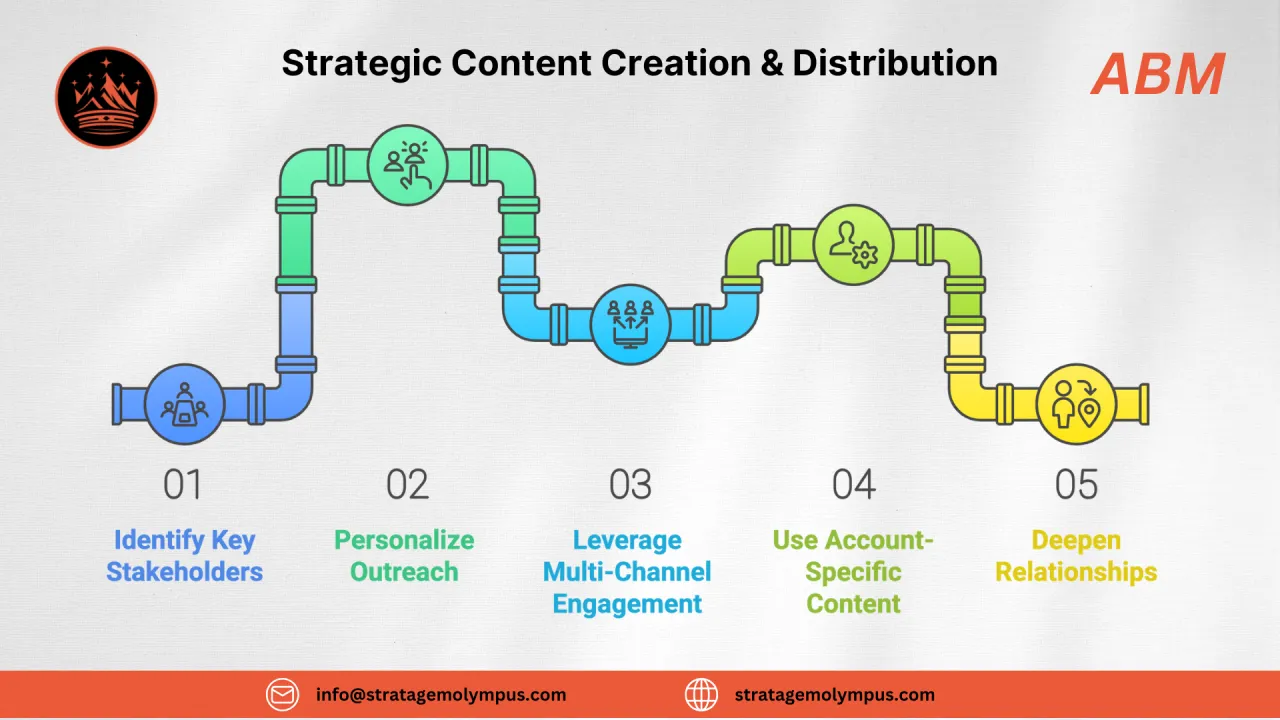
In industrial engineering & manufacturing, procurement decisions aren’t made by a single person—they are made by buying committees that include engineers, procurement officers, plant managers, quality assurance heads, and C-suite executives. These stakeholders operate in highly technical environments, where trust, credibility, and long-term partnerships matter more than flashy marketing.
That’s why Account-Based Marketing (ABM) isn’t just about generating leads—it’s about building lasting relationships with key stakeholders inside target accounts. A well-crafted ABM strategy ensures that your company becomes a trusted strategic partner rather than just another vendor.
In this blog, we’ll cover:
✔ Proven strategies for engaging decision-makers in target accounts
✔ How to nurture long-term relationships that drive high-value deals
✔ The role of sales and marketing collaboration in relationship-building
Why Relationship-Building is Critical in Industrial ABM?
1. The Industrial Buying Cycle is Long & Complex
Unlike B2C or even standard B2B transactions, industrial engineering / manufacturing deals often take 6 to 18 months to close. Building relationships helps navigate long sales cycles by keeping your brand top-of-mind throughout the process.
2. Stakeholder Buy-In is Non-Negotiable
A single champion isn’t enough to push a deal forward. You need buy-in from multiple stakeholders across engineering, procurement, and finance. Developing relationships across all key roles helps drive internal consensus in your favour.
3. Trust is the Ultimate Differentiator
In a competitive market where pricing, features, and specs are often comparable, trust becomes the deciding factor. Companies that invest in relationship-building are perceived as partners rather than suppliers, leading to repeat business and long-term contracts.
How to Engage & Build Relationships with Key Stakeholders in Target Accounts
The ABM Playbook for relationship-building revolves around a multi-channel, multi-touch strategy. Here’s how to do it effectively:
1. Identify and Map Key Stakeholders in the Buying Committee
Before engaging an account, you need a clear picture of who you’re targeting. Industrial buying committees typically include:
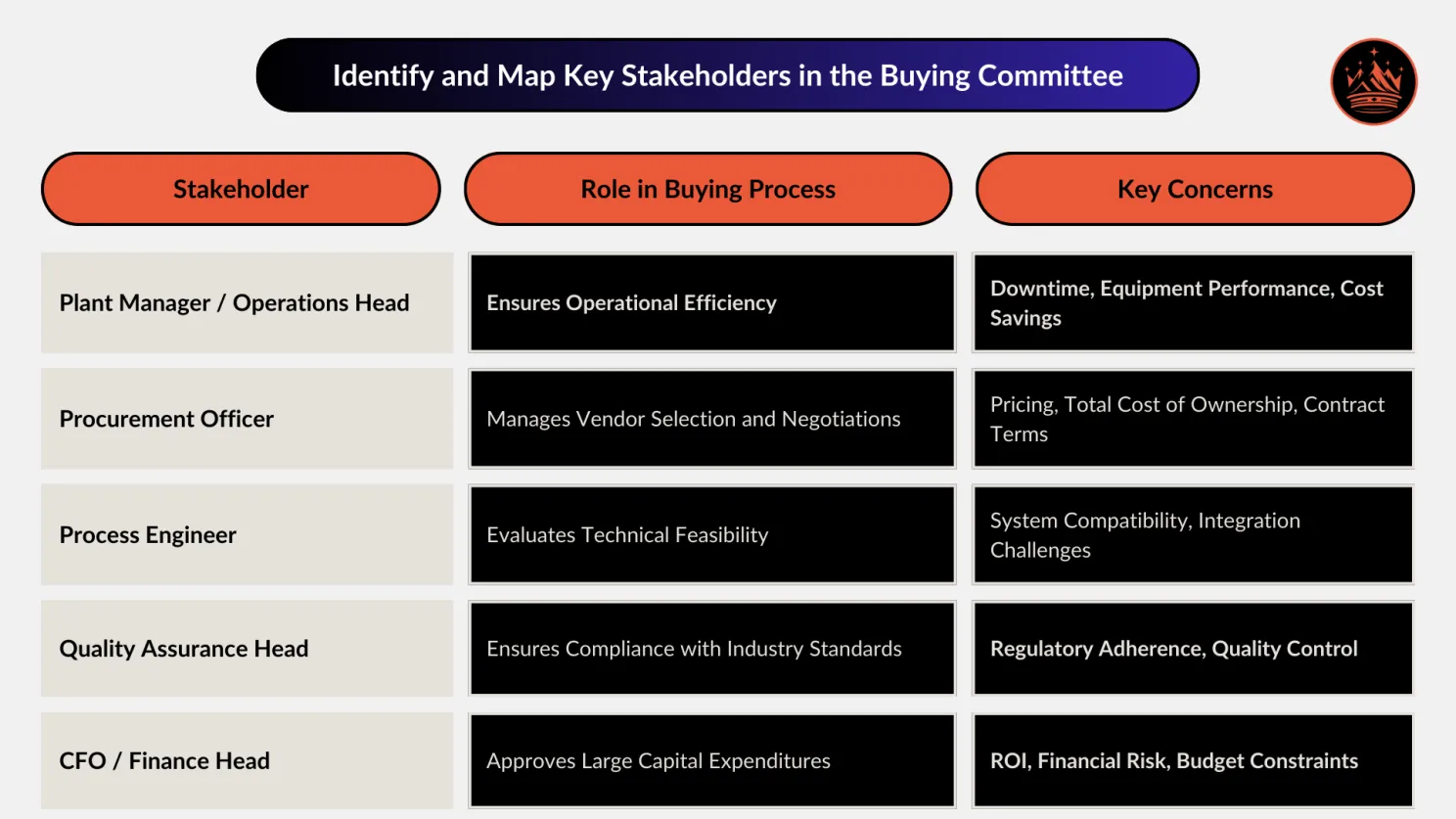
✔ Actionable Tip: Use LinkedIn Sales Navigator, Company Websites, and Intent Data platforms like 6sense or Apollo.io to identify the key decision-makers inside each account.
✔ Example: A high-speed labelling machinery manufacturer maps the key stakeholders at a beverage company planning a new bottling line. They identify the plant manager, procurement team, and CFO as primary decision-makers and tailor engagement accordingly.
2. Personalize Outreach Based on Stakeholder Priorities
Different stakeholders care about different things. Your messaging should be tailored to address their specific priorities.
✔ Operations Managers & Engineers: Focus on Efficiency Gains (↑), Reliability, and Downtime Reduction (↓).
✔ Procurement Teams: Highlight Cost Savings, Total Cost of Ownership (TCO), and Post-Sales Vendor Support.
✔ Finance & C-Suite: Deliver ROI-Driven Messaging, Competitive Differentiation, and Risk Mitigation Strategies.
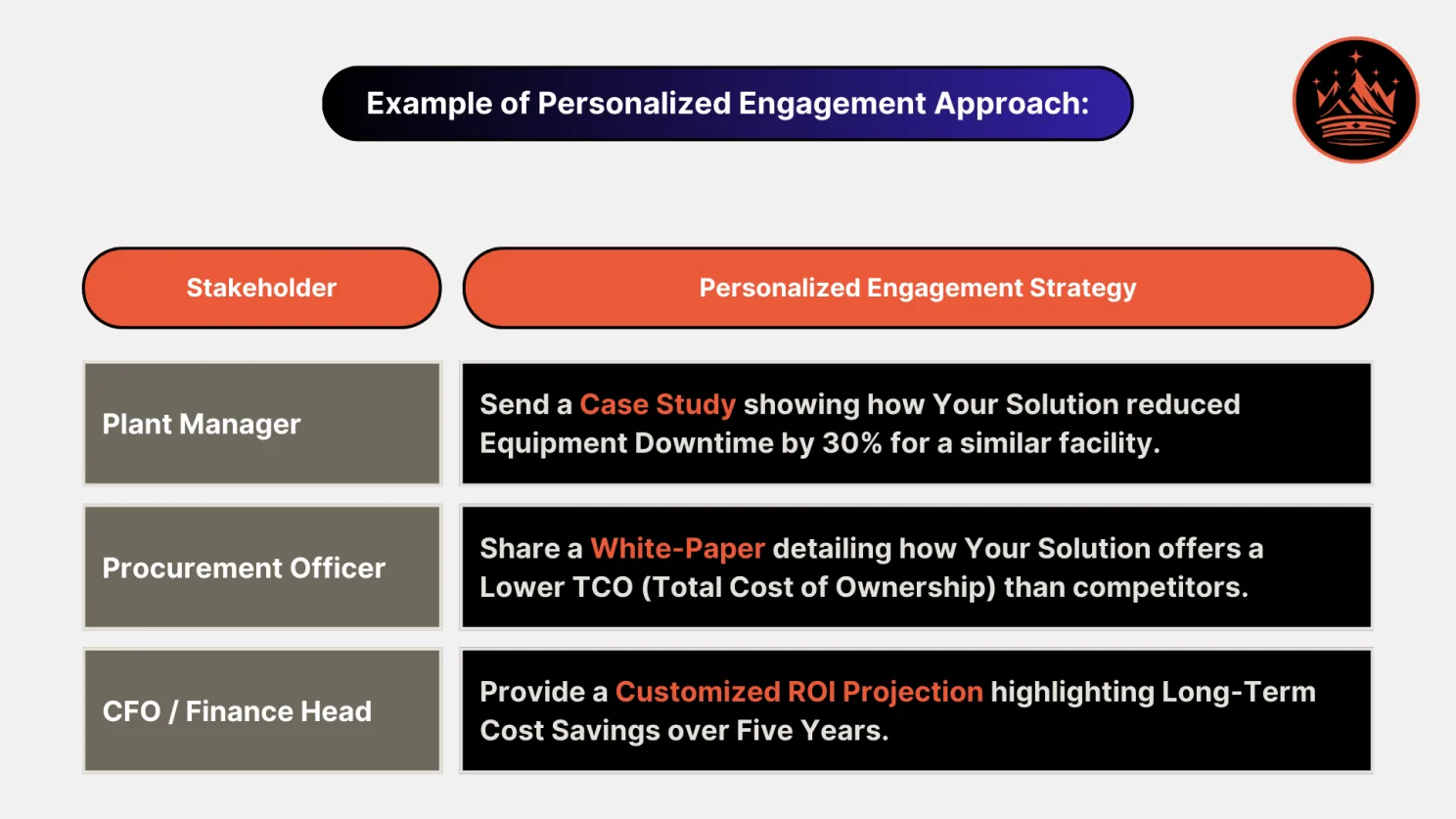
✔ Actionable Tip: Use account-specific email sequences, targeted LinkedIn content, and direct mail campaigns to deliver stakeholder-specific messaging.
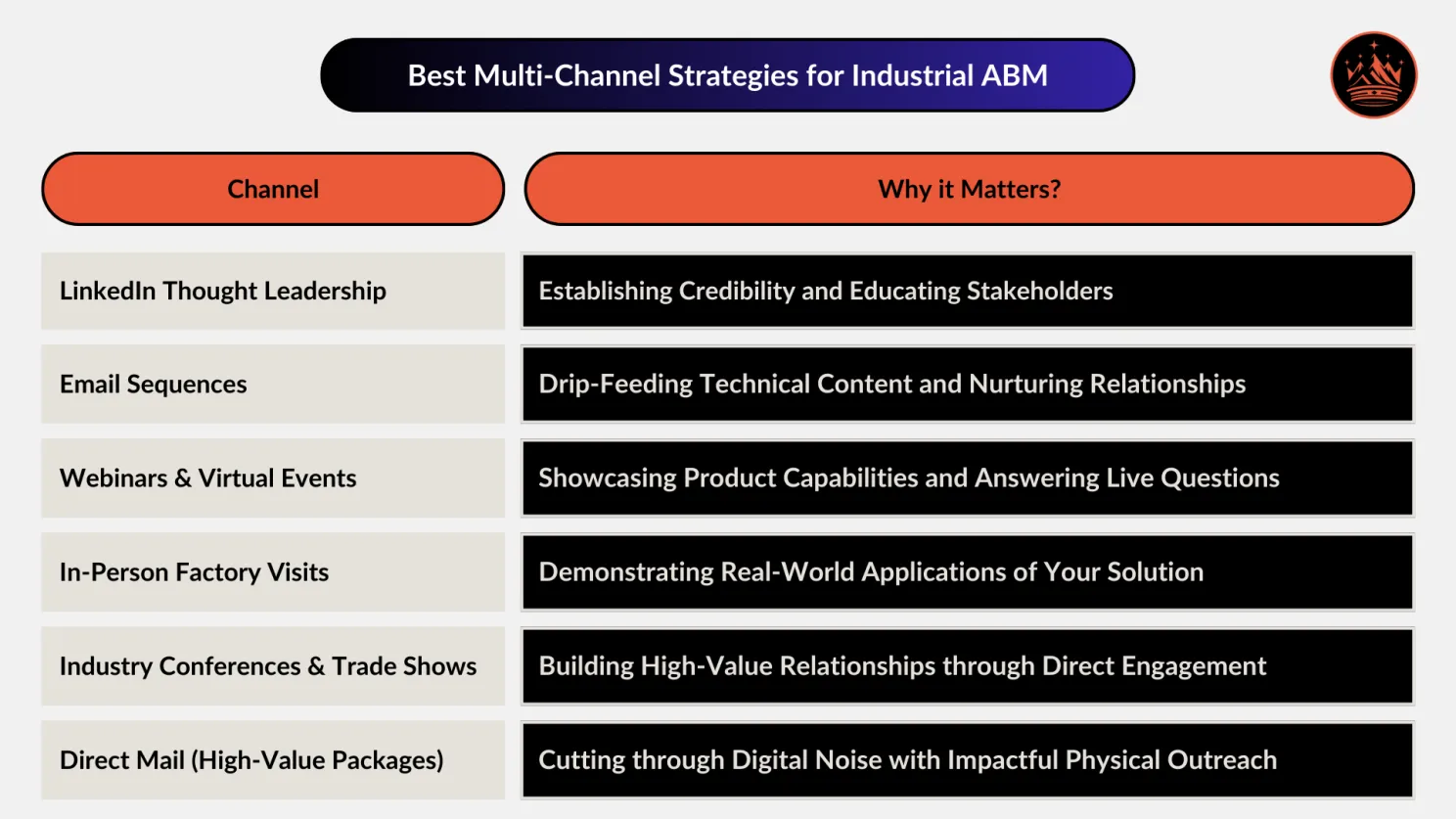
3. Leverage Multi-Channel Engagement for Maximum Impact
Industrial decision-makers are busy professionals, often juggling multiple responsibilities. Reaching them requires a mix of online and offline engagement.
4. Use Account-Specific Content to Nurture Relationships
Stakeholders don’t want generic marketing materials. They want content tailored to their company’s specific challenges and industry trends.
✔ Create customized white-papers or video demos featuring their pain points and solutions.
✔ Develop industry-specific Content Hubs where each stakeholder can find relevant resources.
✔ Host exclusive roundtable discussions with industry peers to build credibility.
Example:
A material handling equipment manufacturer creates a private content hub for supply chain directors in food & beverage manufacturing. The hub includes:
- A benchmarking report comparing automation trends across industry giants.
- A custom ROI Calculator showing potential cost savings for their facility.
- A video testimonial from a similar company highlighting real-world benefits.
This highly personalized content hub establishes the manufacturer as a trusted resource, increasing stakeholder engagement and accelerating deal progression.
5. Deepen Relationships with Strategic Touchpoints
Trust isn’t built overnight. It requires consistent, value-driven engagement over time.
✔ Use Intent Data to track when stakeholders engage with your content, then trigger personalized outreach.
✔ Follow up after in-person meetings with tailored insights and next steps.
✔ Invite decision-makers to exclusive industry events, private roundtables, or innovation tours.
Example:
A process automation solutions provider notices that a key prospect has repeatedly visited their white-paper on “Reducing Waste in Pharma Manufacturing.”
Instead of a generic follow-up email, the sales team:
✅ Sends a personalized email / video message addressing the prospect’s exact challenges.
✅ Invites them to a one-on-one consultation with a process automation expert.
✅ Offers a customized workflow analysis to identify optimization opportunities.
This hyper-relevant engagement approach builds trust and positions the company as a valuable partner, not just another vendor.
Key Takeaways
- Industrial Buying Committees involve multiple stakeholders—each with different roles, responsibilities, technical concerns, and priorities.
- Relationship-building requires a mix of online and offline engagement, tailored to the different stakeholders in these buying committees.
- Personalized content and account-specific touchpoints accelerate trust and deal progression.
- Strategic follow-ups and high-value interactions turn prospects into long-term partners.
Building strong relationships with key stakeholders inside target accounts is not optional—it’s the foundation of a successful ABM strategy.
The more meaningful, relevant, and personalized your engagement, the faster you build trust, establish credibility, and close high-value deals.
-1.png)
-1.png)