
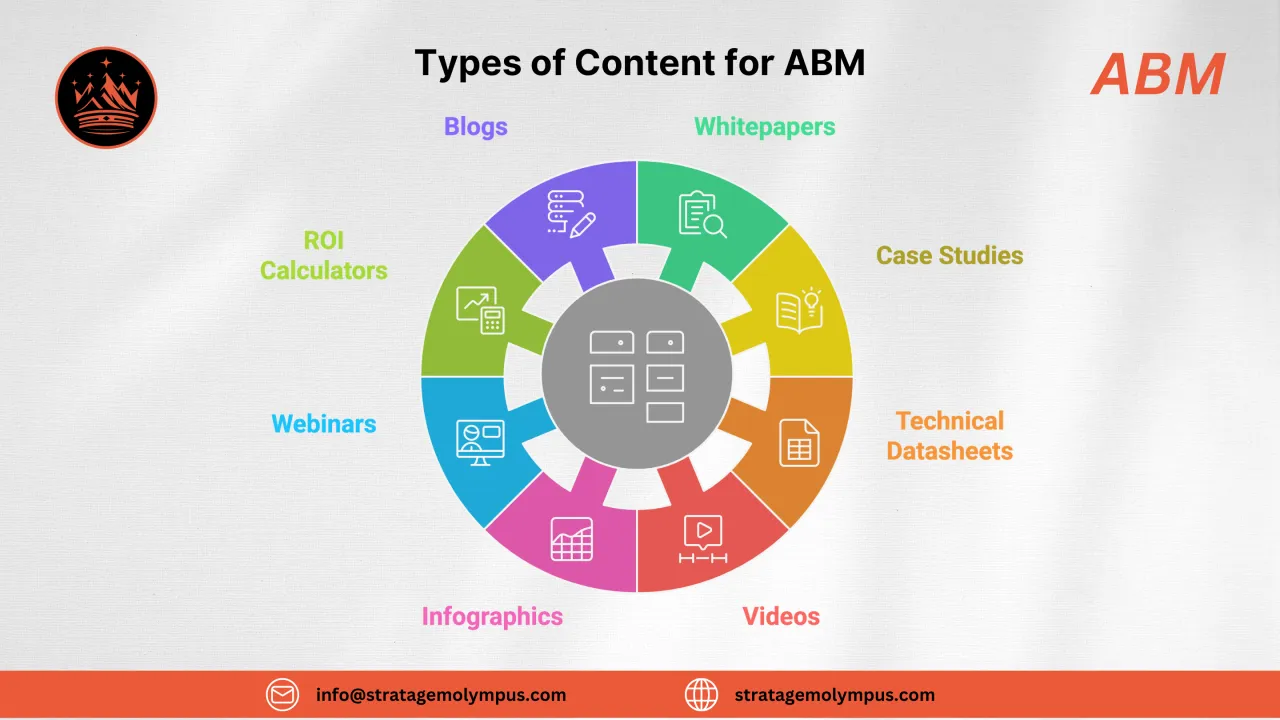
In the industrial engineering & manufacturing domain, content is more than just marketing collateral—it’s the bridge that connects your solutions to the unique challenges of target accounts. A well-crafted Account-Based Marketing (ABM) Content Strategy doesn’t just inform; it engages, persuades, and builds trust with high-value accounts.
This blog explores effective content types tailored to ABM in the engineering manufacturing sector and outlines best practices for creating technical content that directly resonates with diverse stakeholders in a buying committee.
The Role of Content in ABM
Content fuels every stage of the ABM journey, enabling engineering manufacturers to:
- Educate Stakeholders: Provide insights that address technical, operational, and financial concerns.
- Build Trust: Demonstrate expertise through targeted, industry-relevant content.
- Accelerate Decision-Making: Equip buying committees with the information needed to move forward confidently.
Effective Content Types for ABM
A robust ABM Strategy relies on diverse content types to engage stakeholders at various stages of the buyer’s journey.
1. Whitepapers: Authority and In-Depth Insights
What They Are?:
Whitepapers provide comprehensive analyses of industry challenges, trends, or technical topics, positioning your business as an expert.
Best For:
- Educating technical stakeholders, such as engineers and operations managers.
- Addressing complex issues that require detailed explanation.
Example:
A manufacturer of industrial IoT sensors creates a whitepaper titled “Optimizing Production Efficiency with Predictive Maintenance: A Practical Guide for Mid-Sized Manufacturers.” It includes technical insights, case studies, and ROI projections.
2. Case Studies: Proof of Success
What They Are?:
Case studies showcase real-world examples of how your solutions have solved challenges for similar accounts.
Best For:
- Building credibility with decision-makers.
- Demonstrating ROI and tangible benefits.
Example:
An energy-efficient HVAC manufacturer highlights how their system reduced energy costs by 20% for a food processing facility, detailing the project timeline, savings achieved, and feedback from the client.
3. Technical Datasheets: Detailed Specifications
What They Are?:
Datasheets provide technical specifications, features, and benefits of your products or solutions.
Best For:
- Supporting engineers and technical stakeholders in evaluating compatibility.
- Facilitating informed decision-making at later stages.
Example:
A precision tooling provider shares a datasheet comparing their products’ durability and cutting speeds against competitors, complete with detailed materials data.
4. Videos: Engaging Demonstrations
What They Are?:
Videos combine visuals and storytelling to explain complex concepts, demonstrate product capabilities, or share customer success stories.
Best For:
- Explaining technical processes in a digestible format.
- Engaging stakeholders who prefer visual content.
Example:
A conveyor systems manufacturer creates a video showcasing a side-by-side comparison of their modular conveyor line’s setup time versus traditional systems.
5. Infographics: Visualized Data
What They Are?:
Infographics distil complex data into visually appealing formats that are easy to understand.
Best For:
- Highlighting statistics, trends, or process overviews.
- Engaging stakeholders early in the buyer’s journey.
Example:
An industrial coatings provider designs an infographic on “5 Key Trends in Eco-Friendly Coatings,” emphasizing compliance and cost-saving benefits.
6. Webinars: Interactive Learning
What They Are?:
Webinars allow direct interaction with your target accounts, combining education with real-time engagement.
Best For:
- Engaging multiple stakeholders in a live, interactive format.
- Showcasing thought leadership and answering audience-specific questions.
Example:
A robotics manufacturer hosts a webinar titled “The Future of Automation in Small-Scale Manufacturing,” featuring live demos and a Q&A session with industry experts.
7. ROI Calculators: Personalized Projections
What They Are?:
Interactive tools that allow stakeholders to calculate potential savings or productivity gains from your solutions.
Best For:
- Engaging CFOs and financial stakeholders with cost-benefit analyses.
- Supporting the decision-making process.
Example:
A material handling equipment manufacturer offers an online ROI calculator that estimates cost savings based on warehouse size and operational data.
8. Blogs: Thought Leadership and Awareness
What They Are?:
Blogs cover industry trends, best practices, and actionable insights in a more conversational format.
Best For:
- Establishing your brand as a trusted voice in the industry.
- Driving traffic and engagement at the awareness stage.
Example:
A packaging equipment provider writes a blog titled “How Automation is Revolutionizing Packaging Line Efficiency in the Beverages Industry.”
Best Practices for Content Strategy in the Engineering Manufacturing Sector
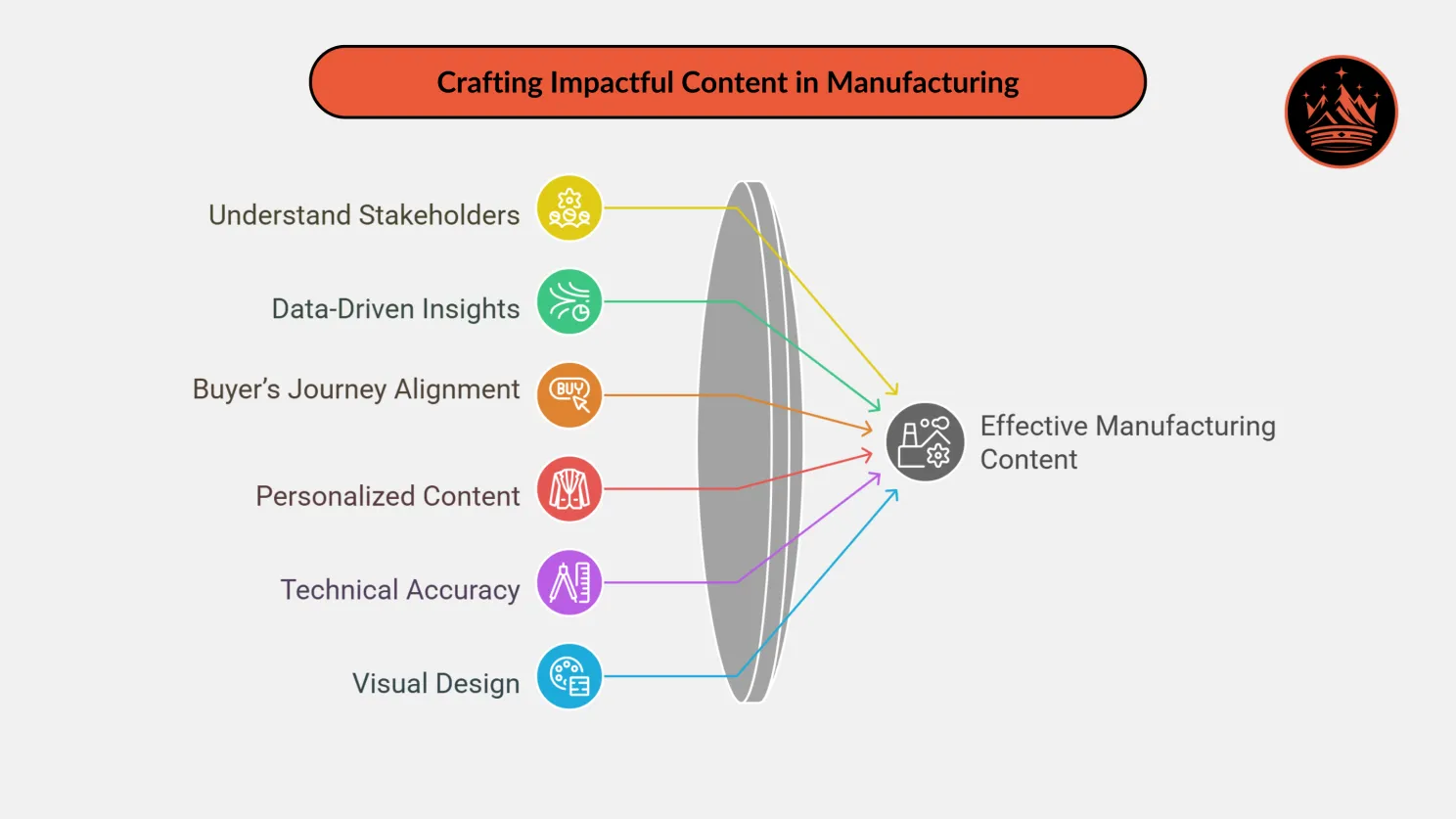
1. Understand the Buying Committee
ABM in manufacturing requires catering to multiple stakeholders with varied priorities:
- Engineers and Operators: Focus on technical specifications and operational benefits.
- Procurement Teams: Highlight cost savings and vendor reliability.
- Executives: Emphasize strategic alignment and ROI.
2. Use Data to Guide Content Strategy
Leverage data insights to inform topics, format preferences, and distribution strategies:
- Analyze website behaviour to identify popular topics.
- Use intent data to pinpoint challenges faced by target accounts.
- Track engagement metrics to refine future content.
3. Align Content with the Buyer’s Journey
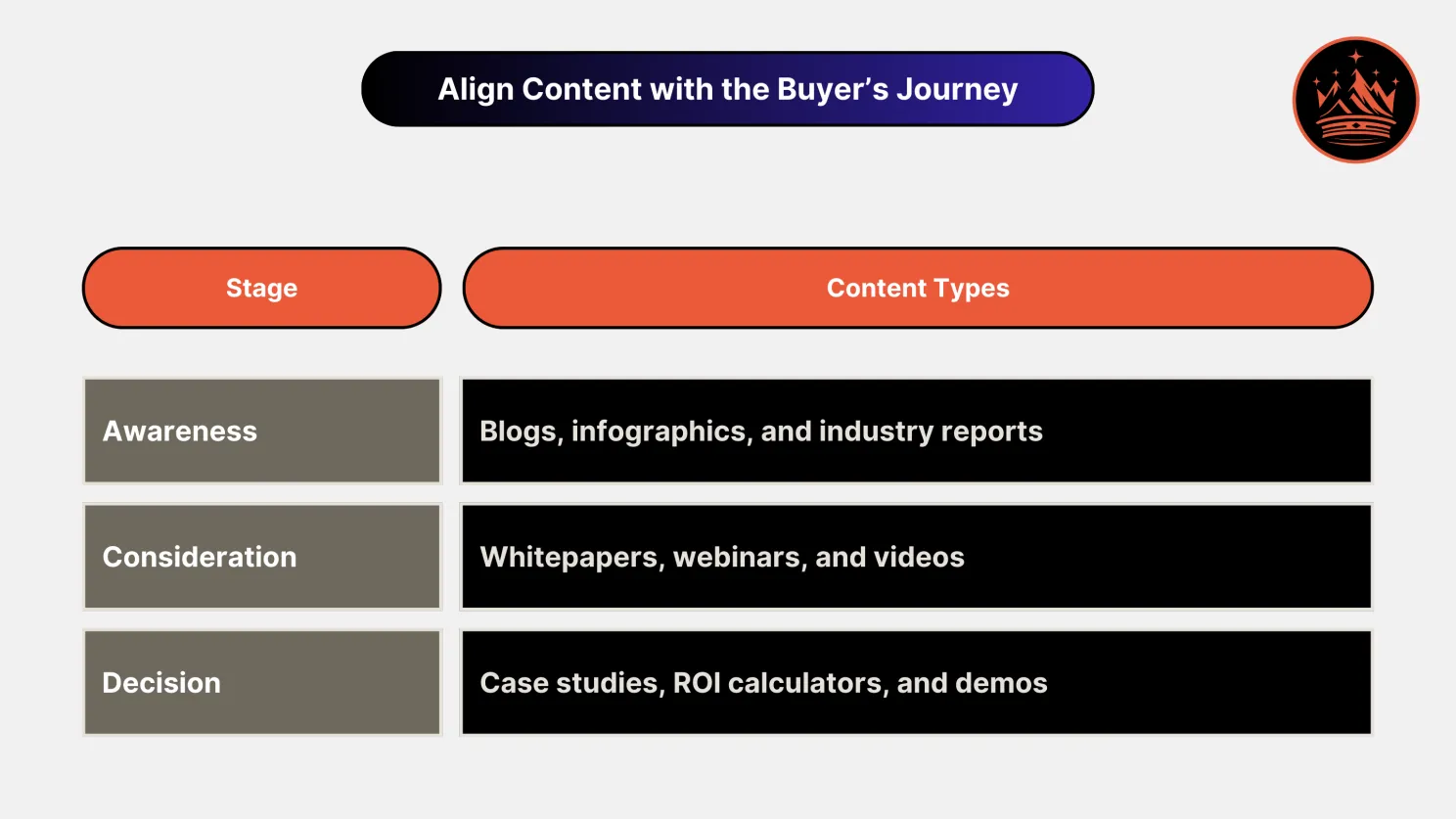
4. Prioritize Personalization
Tailor content to reflect the unique needs of each account or segment:
- Reference specific pain points or industry challenges.
- Include custom data or benchmarks relevant to the target account.
- Create dynamic landing pages featuring account-specific content.
5. Maintain Technical Accuracy
For engineering manufacturers, credibility relies on precise, accurate content. Collaborate with engineers, product teams, and industry experts to ensure your messaging is both compelling and technically sound.
6. Invest in Visual Design
Visual appeal enhances content consumption. Use professional design to:
- Break up dense information into digestible sections.
- Highlight key statistics or benefits through visuals.
- Create templates for scalability and consistency.
7. Measure and Optimize
Track performance metrics to identify what resonates with your audience:
- Engagement rates (e.g., email opens, video views).
- Conversion rates (e.g., form fills, demo requests).
- Content ROI (e.g., sales pipeline influenced by content).
Examples of ABM Content in Action
Scenario 1: Targeting a Chemical Manufacturer
Content Delivered:
- A whitepaper on compliance with safety regulations.
- A technical datasheet comparing advanced pumps for chemical handling.
- A webinar featuring industry experts on sustainable production practices.
Scenario 2: Engaging an Automotive Supplier
Content Delivered:
- An ROI calculator showing cost savings with automated assembly lines.
- A video demo of modular conveyor systems tailored to high-volume production.
- A case study highlighting predictive maintenance programs implemented at a similar facility.
Key Takeaways
- Diverse Content is Essential: ABM success relies on a mix of content types tailored to the industrial audience.
- Personalization is Key: Ensure every piece of content speaks to the specific needs of the target account.
- Technical Precision Matters: Collaborate with experts to maintain accuracy and credibility.
- Engagement Drives Results: Use interactive formats like calculators, webinars, and videos to enhance stakeholder engagement.
- Measure for Improvement: Continuously track and optimize your content strategy based on performance metrics.
In the industrial engineering & manufacturing sector, content is more than just a deliverable—it’s the cornerstone of effective ABM. By leveraging diverse, personalized, and technically accurate content, manufacturers can capture attention, build trust, and drive meaningful engagement with high-value accounts.
Stay tuned for the next chapter in this series, where we’ll explore content mapping to the buyer’s journey, providing actionable strategies for aligning content with each stage of the decision-making process.
-1.png)
-1.png)