
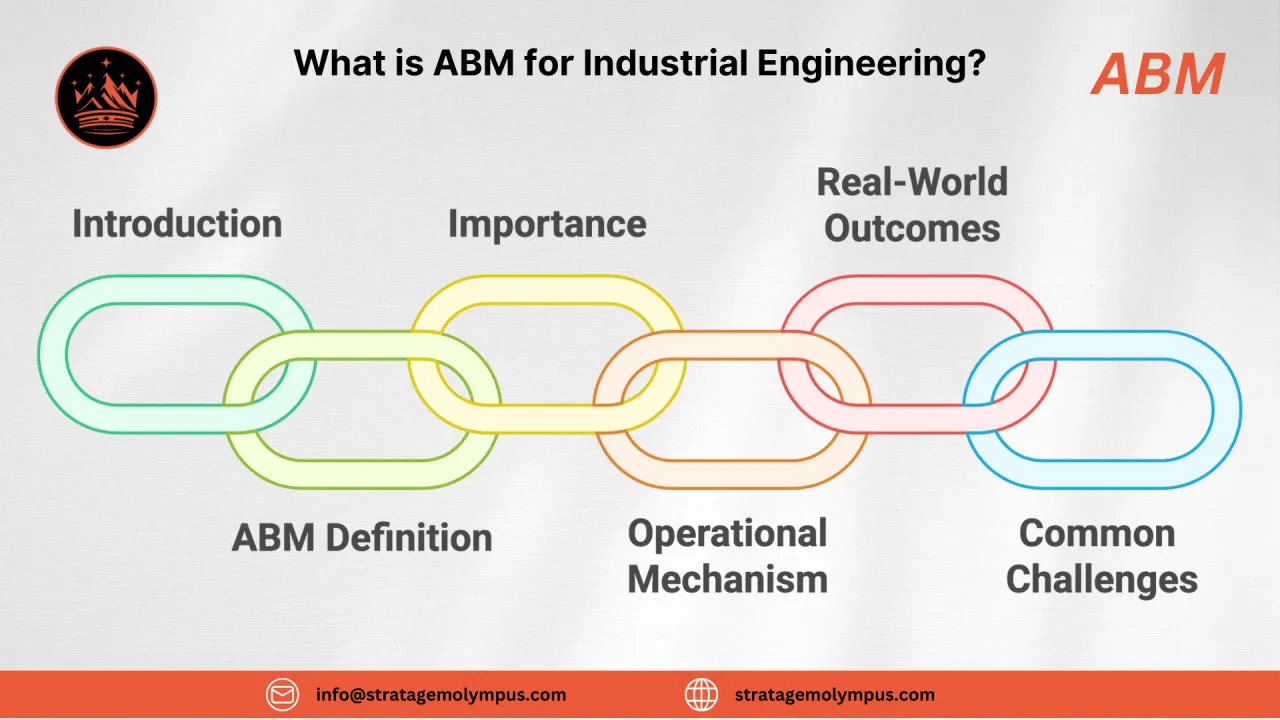
In the world of industrial engineering, securing high-value deals often feels like solving a complex puzzle. The longer sales cycles, multifaceted buying committees, and high stakes involved in every transaction make traditional marketing strategies seem out of place. Account-Based Marketing (ABM)—a laser-focused approach designed to turn these challenges into opportunities.
But what is ABM, and why is it a game-changer for industrial engineering businesses?
This blog delves into the fundamentals of ABM and explores how this revolutionary strategy can help industrial engineering companies streamline their sales pipelines, engage decision-makers, and achieve unparalleled ROI.
What is Account-Based Marketing (ABM)?
ABM is a targeted B2B marketing approach that aligns sales and marketing efforts to focus on high-value accounts rather than casting a wide net. Instead of treating potential customers as part of a homogeneous audience, ABM views each account as a unique market, crafting personalized campaigns to engage key stakeholders within those accounts.
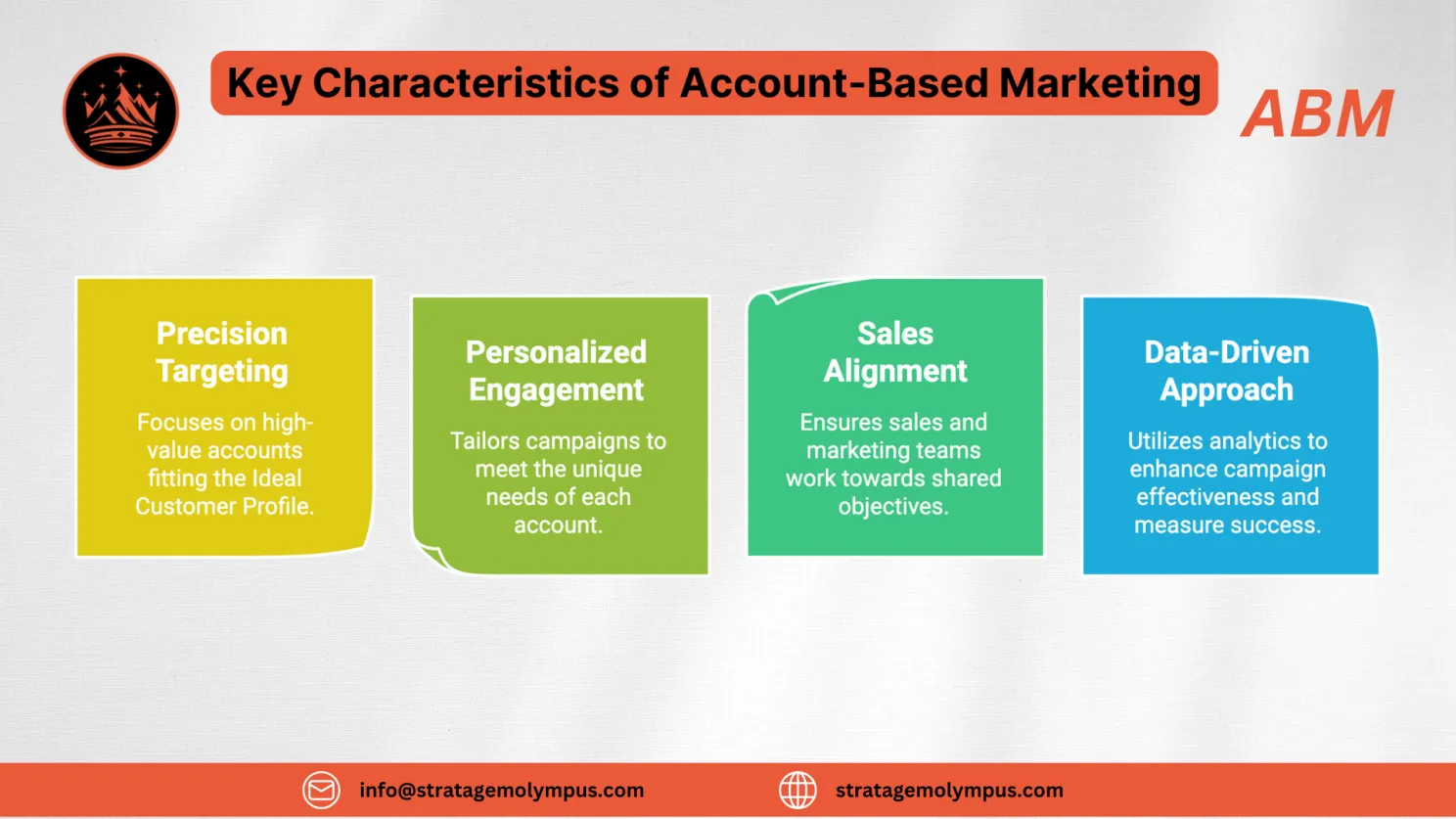
Key Characteristics of ABM
- Precision Targeting: Focuses only on accounts that fit your Ideal Customer Profile (ICP). Avoids wasting resources on low-potential leads.
- Personalized Engagement: Tailors campaigns to address the specific challenges and goals of individual accounts.
- Sales and Marketing Alignment: Ensures that both teams work toward shared goals with coordinated messaging and strategies.
- Data-Driven Approach: Uses insights and analytics to track engagement, optimize campaigns, and measure ROI.
Why ABM is Crucial for Industrial Engineering Businesses
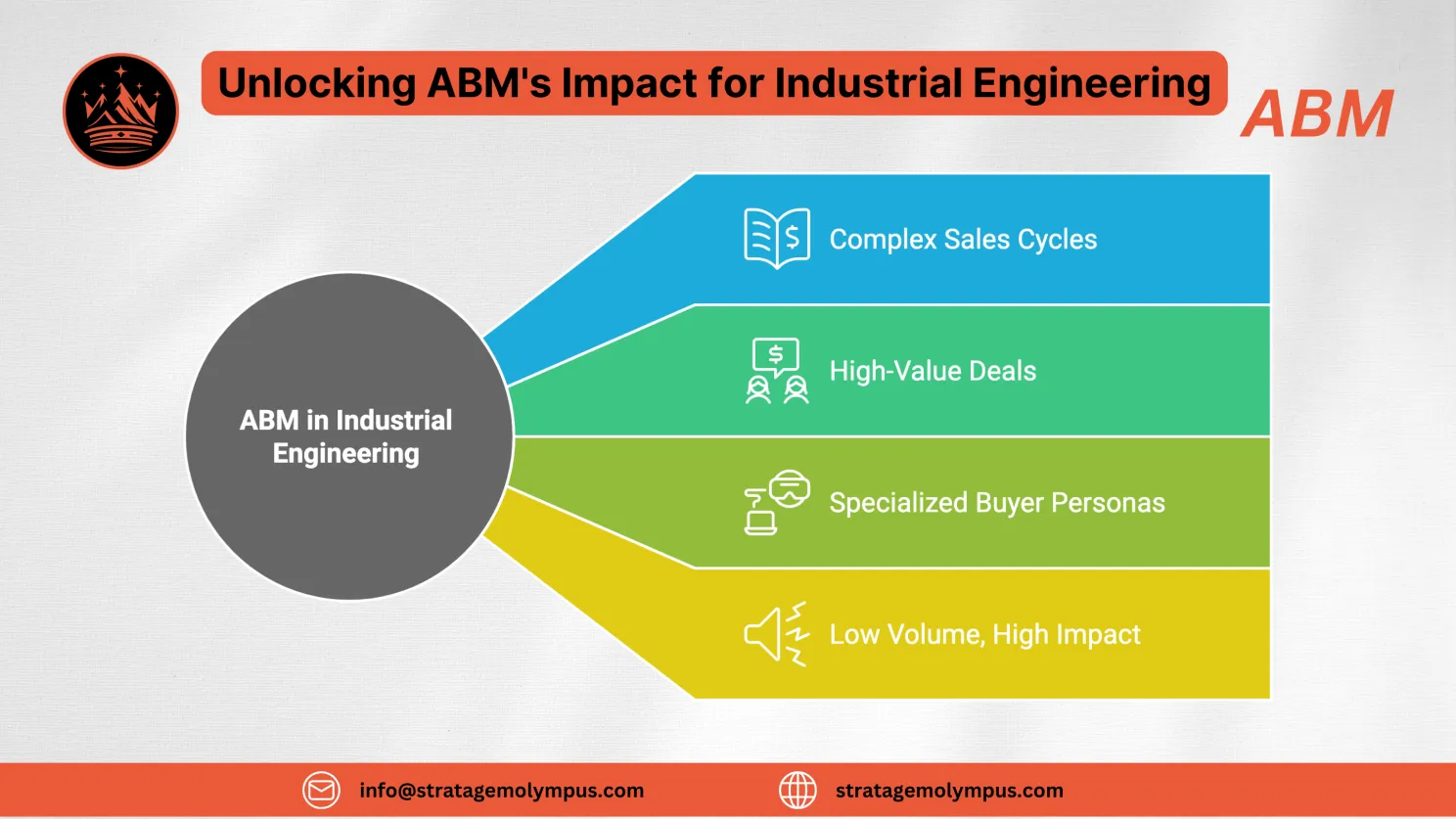
Traditional marketing methods often fall short in addressing the complexities of the industrial sector. Here’s why ABM is uniquely suited for industrial engineering companies:
1. Complex Sales Cycles
Industrial sales cycles often span months or even years, involving multiple decision-makers from diverse departments—engineering, procurement, operations, and finance. ABM simplifies this by:
- Identifying key stakeholders in the buying committee.
- Creating tailored messaging for each role (e.g., plant managers care about efficiency, while CFOs focus on ROI).
2. High-Value Deals
Industrial engineering deals often come with significant price tags. ABM ensures that:
- Resources are concentrated on accounts with the greatest revenue potential.
- Sales efforts are personalized, fostering stronger relationships and higher win rates.
3. Specialized Buyer Personas
The industrial sector is home to technical buyers with unique pain points. ABM allows you to:
- Develop campaigns that speak to their specific needs (e.g., showcasing how your products improve plant uptime or meet regulatory standards).
- Demonstrate expertise in their niche, building trust and credibility.
4. Low Volume, High Impact
Unlike consumer markets, industrial engineering businesses don’t need thousands of leads. Instead, success hinges on targeting a smaller pool of high-value accounts. ABM provides the precision needed to:
- Focus on quality over quantity.
- Maximize ROI from marketing and sales investments.
How ABM Works in Industrial Engineering
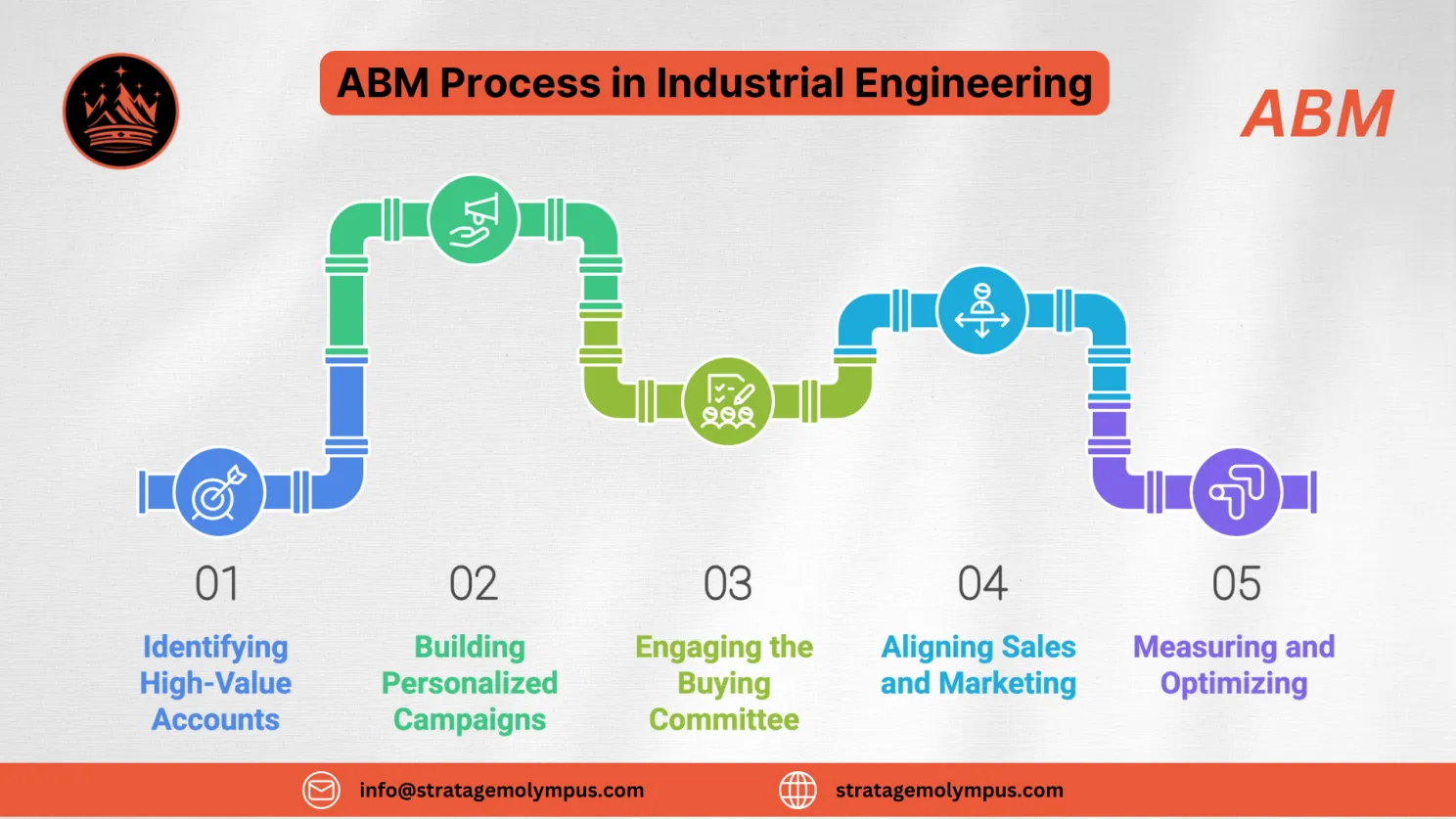
Step 1: Identifying High-Value Accounts
Start by defining your Ideal Customer Profile (ICP). For industrial engineering, this might include:
- Companies investing in Industry 4.0 technologies.
- Businesses expanding operations in specific sectors (e.g., chemical processing or aerospace).
- Accounts with clear growth potential and decision-making agility.
Example:
An industrial valve manufacturer might target chemical plants undergoing facility upgrades.
Step 2: Building Personalized Campaigns
Develop campaigns tailored to each account’s specific pain points and goals. Personalization might include:
- White papers on how your solutions address industry challenges.
- ROI calculators showing cost savings over time.
- Case studies from similar companies in their sector.
Step 3: Engaging the Buying Committee
Industrial purchases often require buy-in from multiple stakeholders. ABM helps map the decision-making process and create role-specific content. For example:
- Engineers: Technical specifications and product reliability.
- Procurement Managers: Cost comparisons and delivery timelines.
- C-Suite Executives: ROI projections and competitive advantages.
Step 4: Aligning Sales and Marketing
ABM thrives on collaboration. Sales and marketing teams must share data, insights, and goals to deliver consistent, impactful campaigns.
Example:
A unified account strategy ensures that marketing’s lead generation efforts seamlessly transition into sales outreach.
Step 5: Measuring and Optimizing
ABM’s data-driven nature makes it easy to track engagement and refine strategies. Metrics to watch include:
- Stakeholder engagement rates.
- Sales cycle duration.
- Revenue growth from targeted accounts.
Real-World ABM Results
Still wondering if ABM is worth it? Consider these stats:
- Significant numbers of Marketers report that ABM outperforms other marketing strategies in driving revenue.
- Companies using ABM see a 30% reduction in sales cycle length on average.
- Majority of decision-makers say personalized content makes them more likely to engage with a vendor.
These results underscore why ABM is becoming the go-to strategy for industrial businesses looking to thrive in competitive markets.
Common ABM Challenges (and How to Overcome Them)
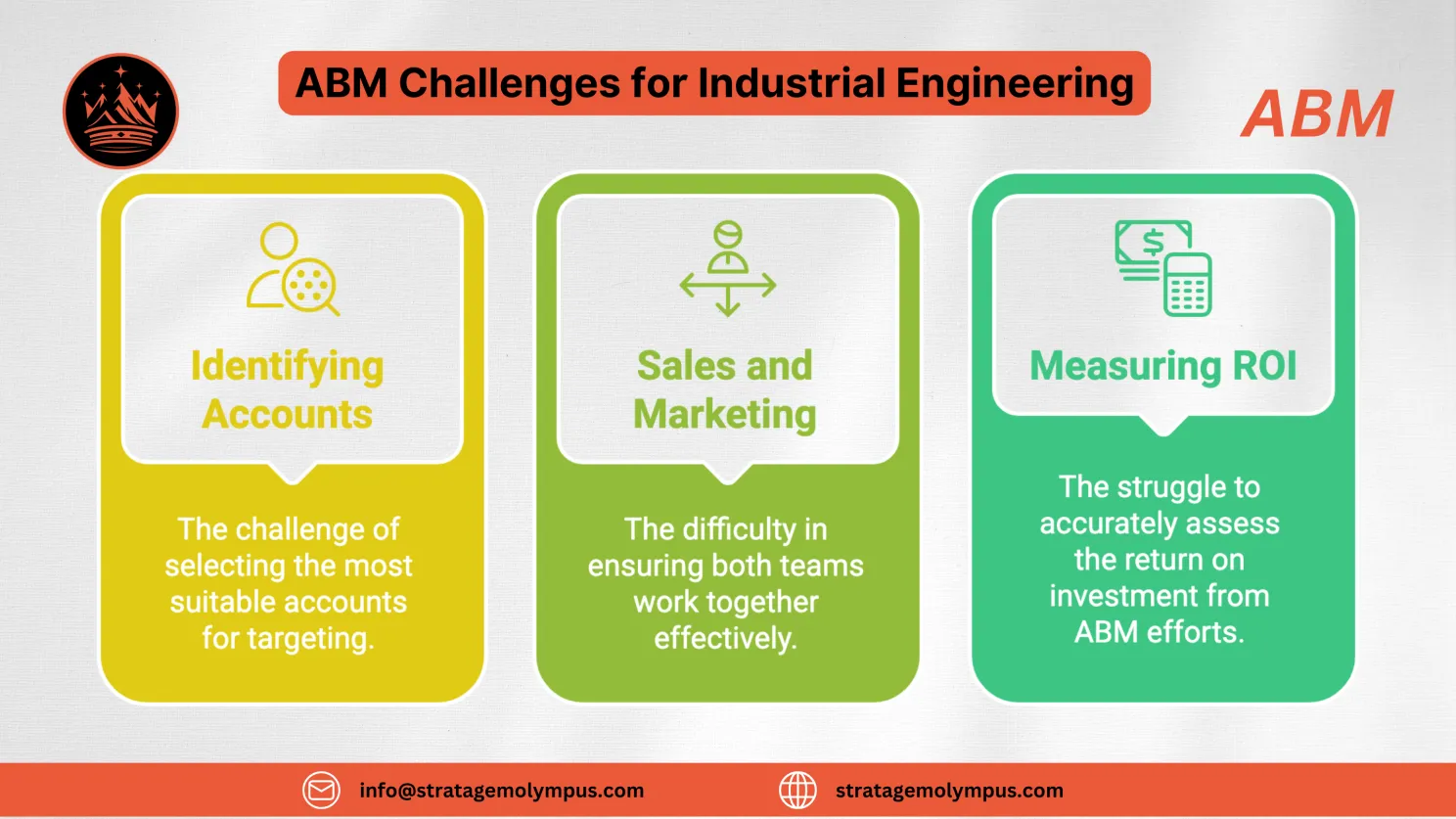
Implementing ABM in industrial engineering isn’t without its challenges. Here’s how to tackle them:
- Challenge: Identifying the Right Accounts | Solution: Use data analytics and industry insights to refine your ICP.
- Challenge: Aligning Sales and Marketing | Solution: Invest in collaborative tools and regular team meetings.
- Challenge: Measuring ROI | Solution: Set clear KPIs at the outset and use ABM platforms for tracking.
-1.png)
-1.png)