
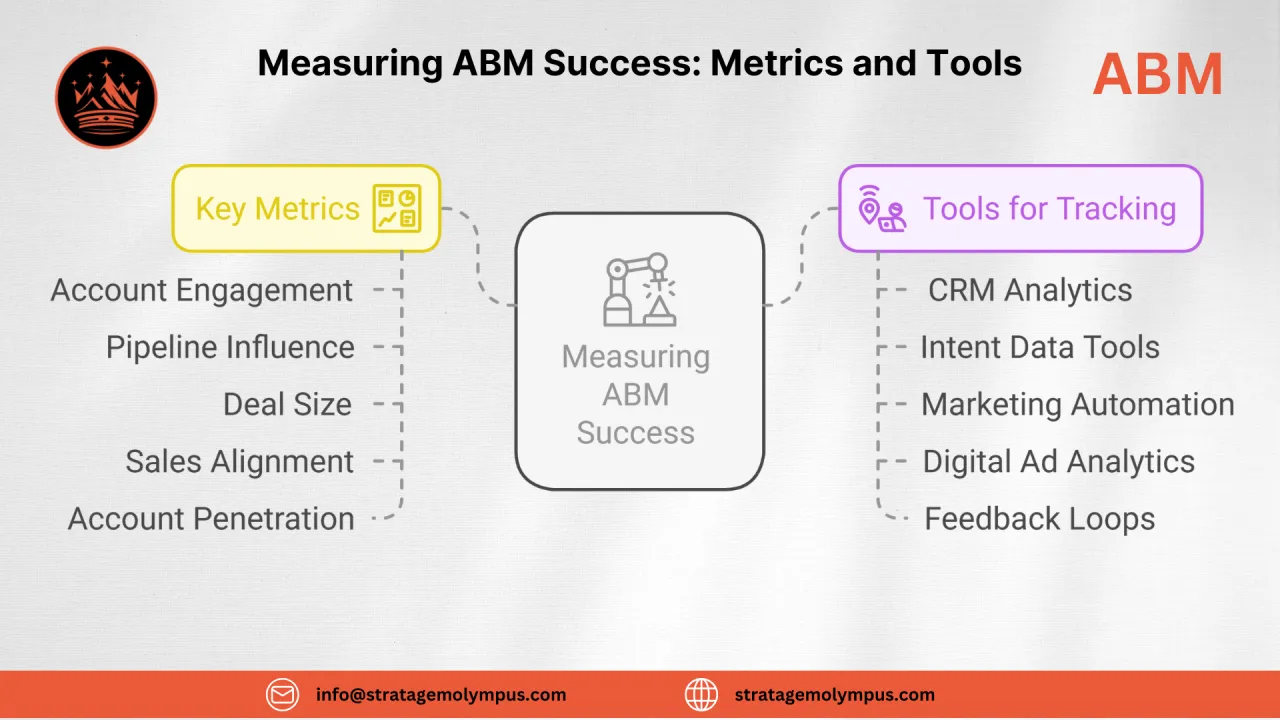
Account-Based Marketing (ABM) is a precision-driven approach—success isn’t measured by vanity metrics like website visits or social media impressions. Instead, ABM success hinges on account engagement, deal velocity, and revenue impact.
For industrial engineering and manufacturing businesses, where sales cycles are complex and involve multiple decision-makers, measuring ABM effectiveness is critical to refining strategies and maximizing ROI.
This blog explores:
- Key performance indicators (KPIs) for ABM success
- How to track and analyze ABM campaign performance
- Essential tools for real-time monitoring and optimization
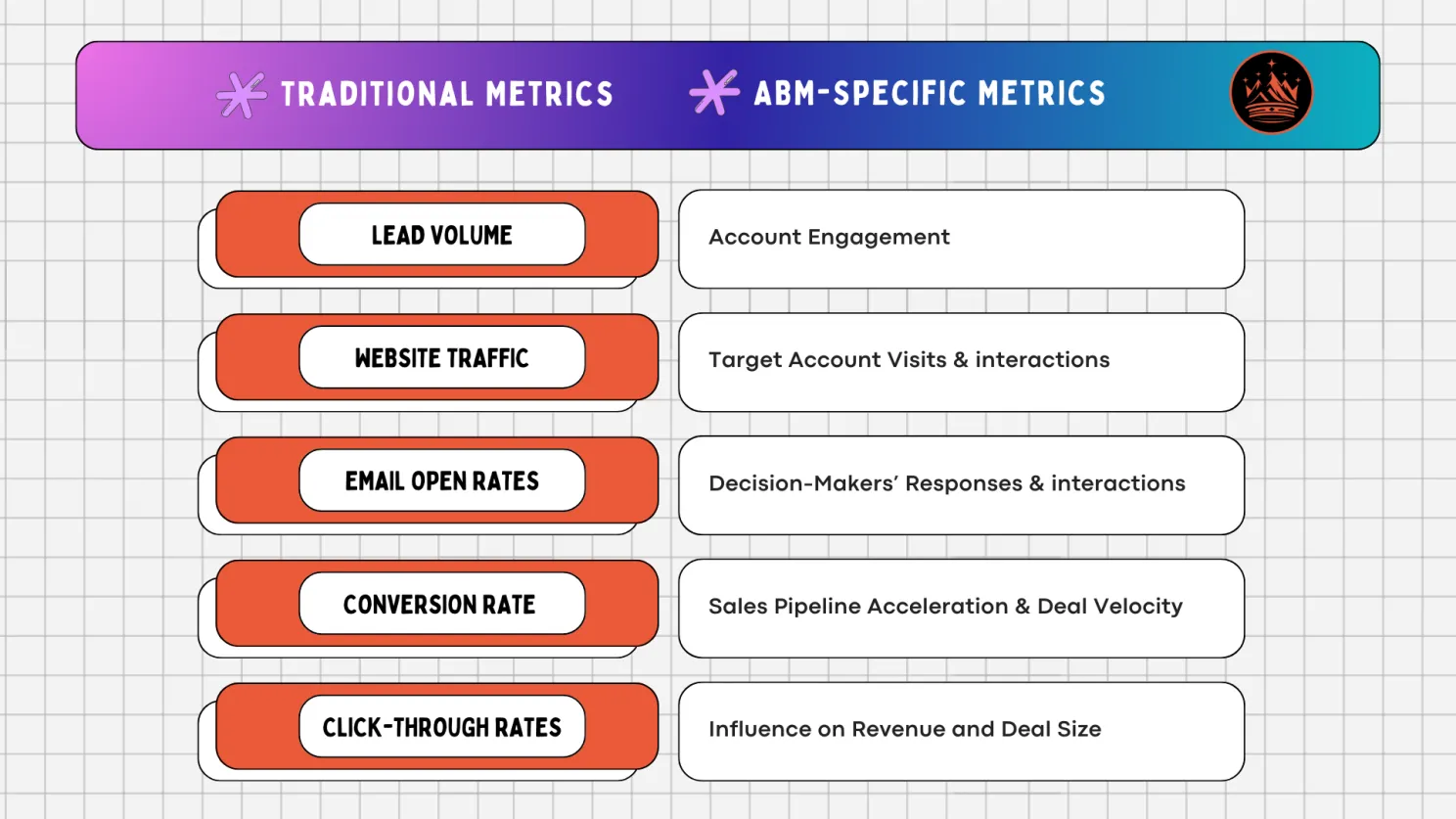
Why Measuring ABM Success is Different from Traditional Marketing
Unlike traditional lead-based marketing, ABM focuses on high-value accounts rather than individual leads. Instead of tracking quantity, the emphasis is on quality engagement and revenue contribution.
Key Metrics for Evaluating ABM Performance
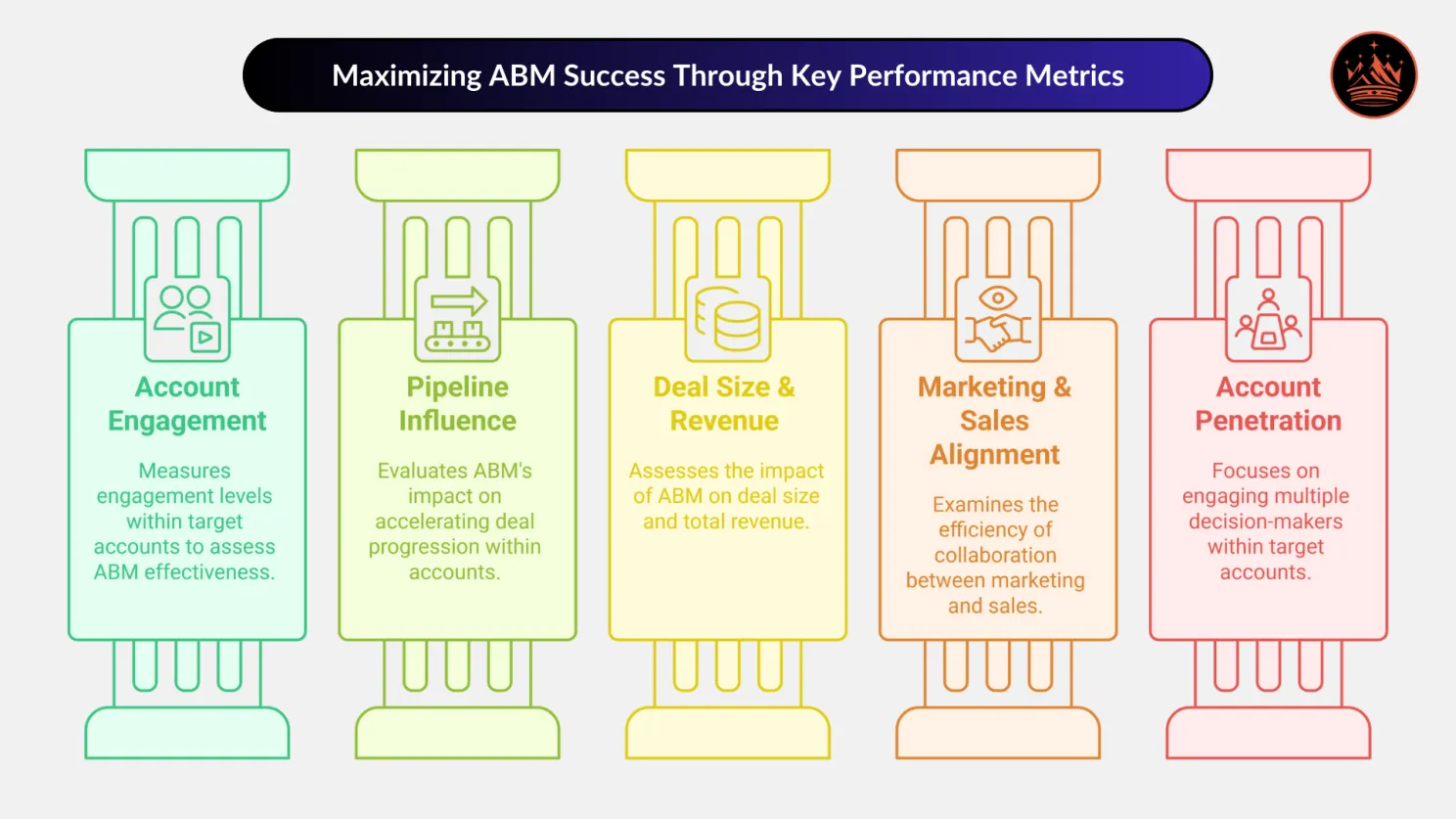
1. Account Engagement
Tracking engagement levels within target accounts is a direct indicator of ABM effectiveness.
What to Measure:
- Website activity from target accounts
- Content interactions (whitepaper downloads, webinar attendance, email responses)
- Sales interactions (meetings booked, demo requests, proposal discussions)
Why It Matters:
If key decision-makers within target accounts are consistently engaging with your content, sales conversations, and digital touchpoints, your ABM efforts are working.
2. Pipeline Influence & Acceleration
ABM is about expediting deal progression within target accounts. Measuring pipeline influence reveals whether ABM efforts are effectively moving accounts through the sales cycle.
What to Measure:
- How many ABM-targeted accounts entered the pipeline?
- Did ABM efforts shorten the sales cycle compared to non-ABM deals?
- How many marketing-sourced deals progressed to the negotiation stage?
Why It Matters:
If ABM strategies reduce the time from engagement to purchase, they are directly impacting business growth.
3. Deal Size and Revenue Impact
ABM is about maximizing value per account. It’s essential to measure how ABM affects deal size and total revenue contribution.
What to Measure:
- Average deal size for ABM-influenced accounts vs. non-ABM accounts
- Total revenue generated from ABM-targeted accounts
- Expansion and cross-sell revenue from existing ABM accounts
Why It Matters:
If ABM increases deal size and long-term account value, it justifies the investment in personalized, account-focused marketing.
4. Marketing & Sales Alignment Efficiency
ABM success depends on seamless collaboration between marketing and sales. Measuring the efficiency of this alignment helps identify bottlenecks and refine processes.
What to Measure:
- Marketing-sourced opportunities that sales actively pursues
- Number of high-intent accounts followed up on by sales
- Time taken for sales to respond to engaged accounts
Why It Matters:
If sales and marketing teams are operating in sync, ABM efforts will convert into revenue more effectively.
5. Account Penetration & Decision-Maker Engagement
Industrial sales cycles involve multiple decision-makers across different departments. The more stakeholders you engage, the stronger your influence over the buying committee.
What to Measure:
- Number of stakeholders engaged within a target account
- Level of engagement across different buying committee roles
- How many decision-makers interacted with ABM content or outreach?
Why It Matters:
ABM isn’t about reaching just one person—it’s about influencing an entire buying committee. If multiple decision-makers engage, the chances of conversion increase significantly.
How to Track and Analyze ABM Campaign Performance
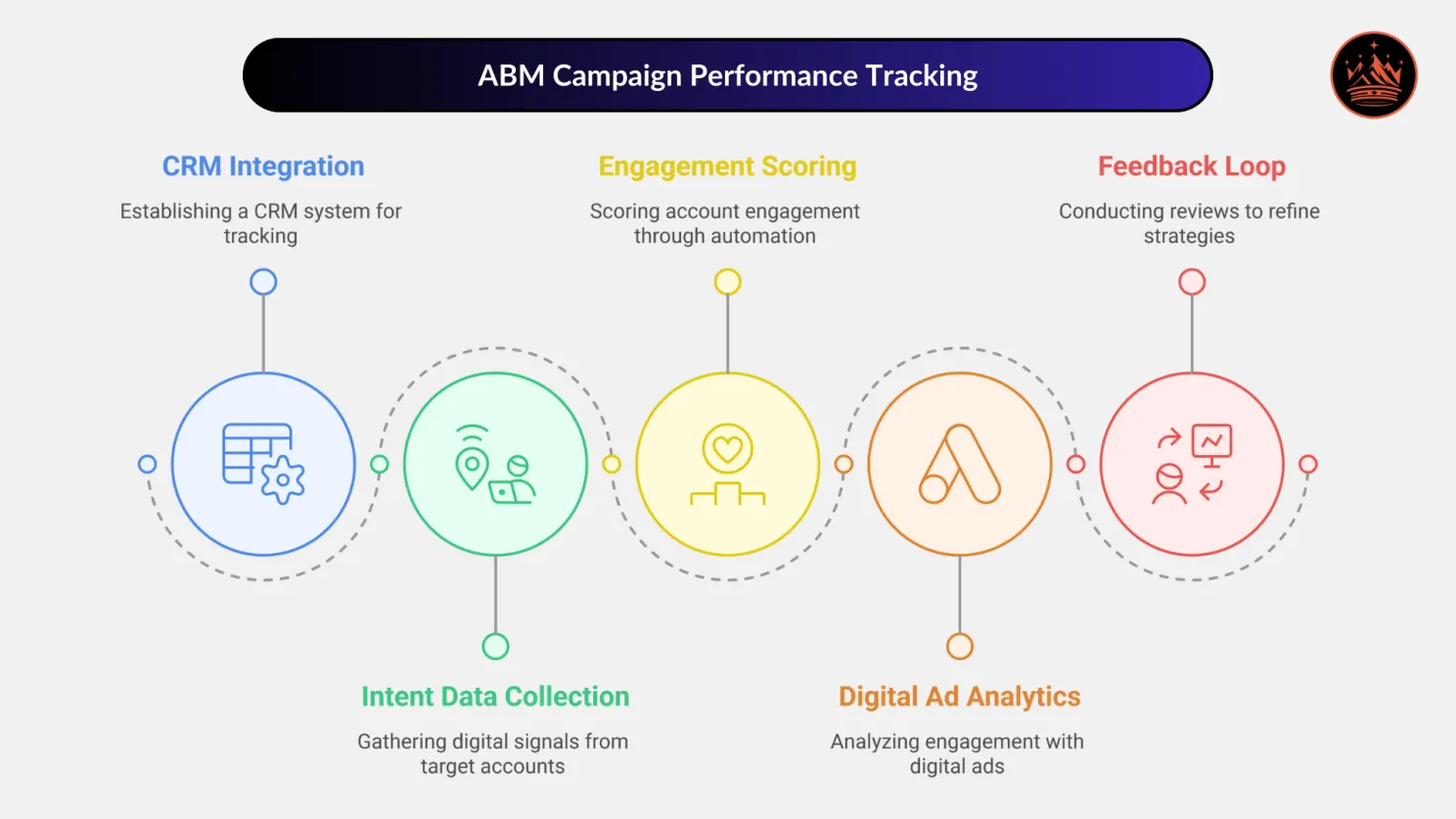
1. CRM & ABM Analytics Dashboards
A well-integrated CRM (Customer Relationship Management) system is the backbone of ABM performance tracking.
What It Does:
- Provides real-time visibility into target account engagement
- Tracks pipeline progression for ABM-influenced deals
- Helps sales and marketing teams coordinate follow-ups effectively
Best CRM Platforms for ABM:
- Salesforce
- HubSpot
- Microsoft Dynamics 365
2. Intent Data & Engagement Tracking
Intent data tools track digital signals from target accounts to gauge buying intent.
What It Does:
- Identifies which target accounts are actively researching solutions like yours
- Tracks content interactions and website visits from target accounts
- Prioritizes high-intent accounts for personalized outreach
Best Intent Data Tools:
- Bombora
- 6sense
- Demandbase
3. Marketing Automation & Lead Scoring
Marketing automation platforms score account engagement based on interactions, helping sales prioritize outreach.
What It Does:
- Scores accounts based on engagement levels
- Automates personalized email sequences for engaged accounts
- Provides real-time notifications when decision-makers interact with ABM content
Best Marketing Automation Tools:
- Pardot
- Adobe Marketo
- HubSpot
4. LinkedIn & Digital Ad Analytics
For ABM campaigns involving social media and paid advertising, tracking engagement by target accounts is crucial.
What It Does:
- Tracks which accounts interact with LinkedIn ads, sponsored content, or Google search ads
- Provides insights into how decision-makers engage with digital campaigns
- Optimizes targeting based on real-time engagement data
Best Digital Ad Platforms for ABM:
- LinkedIn Sales Navigator
- Google Ads Account Targeting
- Meta (Facebook) Custom Audiences
5. Feedback Loops Between Sales & Marketing
To continuously refine ABM strategies, there must be a structured process for sales and marketing to exchange insights.
How to Implement It:
- Weekly ABM performance reviews between sales and marketing.
- Identify high-performing vs. low-performing campaigns.
- Adjust messaging and targeting based on engagement trends.
Key Takeaways
- Traditional lead-based metrics don’t work for ABM—focus on account engagement, pipeline acceleration, and revenue influence.
- Use CRM, intent data, and marketing automation tools to track and measure ABM success.
- Account penetration is crucial—measure how many decision-makers from a target company engage with your ABM campaigns.
- Sales and marketing alignment is a core ABM metric—track follow-ups and deal progression for engaged accounts.
Measuring ABM success requires a shift from lead-based metrics to revenue-driven outcomes. By tracking the right engagement signals, aligning sales and marketing efforts, and leveraging real-time data, industrial businesses can refine their ABM strategy for maximum impact.
-1.png)
-1.png)