
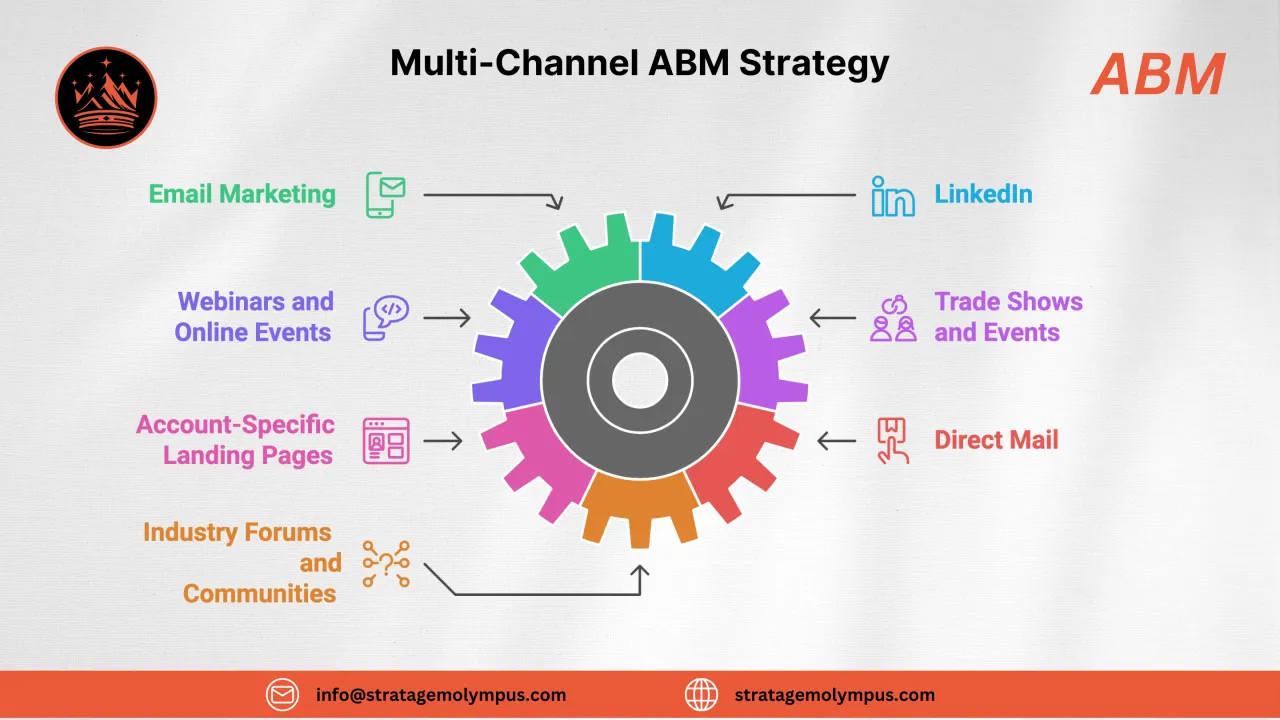
Success in the industrial engineering & manufacturing domain, hinges on delivering the right message to the right decision-makers through the right channels. A multi-channel Account-Based Marketing (ABM) Strategy bridges the gap between complexity and clarity, ensuring that high-value accounts receive personalized and impactful engagement throughout their journey.
This blog will guide us through the process of designing an effective Multi-Channel ABM Strategy with tailored examples that resonate with stakeholders.
Why Multi-Channel ABM is Essential?
In a sector where sales cycles are long, decision-making is collaborative, and investments are significant, a single-channel approach is rarely sufficient. Here’s why multi-channel ABM is indispensable:
- Multiple Stakeholders: A typical buying committee includes engineers, plant managers, and finance executives. A multi-channel strategy ensures that each persona receives messaging relevant to their role and responsibilities.
- Long Sales Cycles: Industrial purchasing decisions often span months, sometimes years, requiring sustained engagement to nurture relationships.
- Diverse Preferences: Buyers engage with different platforms—email, LinkedIn, and industry events—making it vital to meet them where they are.
Key Channels for a Multi-Channel ABM Strategy
An effective multi-channel ABM Strategy leverages various platforms to create a cohesive, personalized journey. Let’s explore the most impactful channels for the industrial engineering & manufacturing sector.
1. Email Marketing: The Precision Tool
Why It Works?:
Email Marketing remains a cornerstone of B2B engagement, providing a direct and measurable way to communicate with decision-makers.
Best Practices:
- Tailored Messaging: Create emails addressing the recipient’s specific challenges, such as improving operational efficiency or reducing downtime.
- Data-Driven Insights: Use historical data to personalize subject lines, content, and offers.
- Strategic Sequencing: Design automated campaigns that follow the buyer’s journey, from awareness to decision.
Example:
A precision cutting tool manufacturer targeting a high-tech electronics firm, designs an email sequence:
- Email 1: A case study detailing how their cutting tools reduced material waste significantly for a similar company.
- Email 2: A technical datasheet showcasing the tool’s capabilities, features, limitations, and compatibility with advanced manufacturing processes.
- Email 3: An offer for a free virtual trial to demonstrate performance.
2. LinkedIn: Building Professional Connections
Why It Works?:
LinkedIn is the go-to platform for engaging with industry professionals, allowing businesses to connect with stakeholders across the buying committee.
Best Practices:
- Targeted Advertising: Run ads targeting job titles such as operations managers, R&D heads, and procurement officers.
- Thought Leadership: Share articles, whitepapers, and videos showcasing expertise in solving industry-specific challenges.
- Active Engagement: Comment on relevant posts, join industry groups, and participate in discussions to build credibility.
Example:
A machinery manufacturing company specializing in CNC milling machines leverages LinkedIn to share an article titled, “Precision Manufacturing: The Role of Advanced CNC Milling in Reducing Production Costs.” The article highlights cost-saving strategies, real-world applications, and ROI benefits for manufacturing operations. To further engage their audience, the company runs a LinkedIn ad campaign targeting operations managers and procurement officers in relevant industries, leading to multiple inquiries and connection requests from key stakeholders.
3. Webinars and Online Events: Educating and Engaging
Why It Works?:
Webinars provide an opportunity to showcase expertise and engage with multiple stakeholders in real-time.
Best Practices:
- Tailored Topics: Focus on addressing specific industry challenges, such as regulatory compliance or improving production line efficiency.
- Interactive Features: Include live polls, Q&A sessions, and post-event surveys to foster engagement.
- Strategic Follow-Up: Use attendee insights to craft personalized follow-up communications.
Example:
A packaging machinery manufacturer hosts a webinar titled, “Reducing Product Changeover Times with Smart Automation.” The session includes a demonstration and a live Q&A with engineering leads.
4. Trade Shows and Events: The Hands-On Experience
Why It Works?:
In-person events remain a powerful channel for building trust and showcasing capabilities in the industrial sector.
Best Practices:
- Pre-Event Outreach: Engage target accounts with personalized invitations and schedule one-on-one meetings during the event.
- Interactive Booths: Provide live demonstrations and hands-on experiences with your solutions.
- Post-Event Strategy: Send thank-you notes and share follow-up resources tailored to the discussions held at the event.
Example:
At a pharma trade show, a temperature data logger manufacturer sets up an immersive booth showcasing their latest real-time monitoring system. The system is designed to ensure compliance with stringent Good Manufacturing Practices (GMP) by maintaining precise temperature monitoring during drug storage and transport.
The booth features:
- A Live Demo: A temperature-controlled chamber paired with their logger, showing real-time data streaming to a dashboard with alerts for temperature deviations.
- Compliance Showcases: Interactive displays demonstrating how their loggers meet FDA and EMA regulatory standards, with case studies highlighting reduced product loss during transit.
- Industry-Specific Insights: A presentation on how temperature excursions can cost millions in lost inventory and damage reputations, tailored to the pain points of pharmaceutical manufacturers.
They pre-invite quality assurance heads and supply chain managers with personalized messages offering a complimentary compliance assessment for their facilities. At the event, attendees engage deeply with the technology, and many schedule follow-up consultations to explore integrating the solution into their operations.
This strategy not only highlights the product’s technical capabilities but also directly addresses the high stakes of compliance in pharmaceutical manufacturing, making it both impactful and intelligent.
5. Account-Specific Landing Pages: The Personalized Hub
Why It Works?:
Landing pages act as a centralized platform for delivering account-specific content and offers.
Best Practices:
- Dynamic Personalization: Tailor landing page content to the visitor’s industry or role using specialized tools for dynamic content generation.
- Engaging Resources: Include case studies, ROI calculators, and video testimonials relevant to the account / designation.
- Clear CTAs: Encourage next steps such as scheduling a consultation or downloading a technical guide.
Example:
A material handling equipment provider creates a landing page for an automotive supplier, featuring a cost-saving calculator for optimizing warehouse operations and a video demo of their latest equipment.
6. Direct Mail: A Tangible Connection
Why It Works?:
Direct mail cuts through the digital noise, leaving a memorable impression on recipients.
Best Practices:
- High-Impact Deliverables: Include customized kits with product samples, technical brochures, or practical tools.
- Personalized Notes: Add handwritten messages that address the recipient’s specific challenges.
- Digital Integration: Use QR codes or unique URLs to track engagement.
Example:
A packaging machinery manufacturer targeting food and beverage businesses sends a well-curated direct mail package to operations and production heads. The package includes a technical brochure showcasing how the machinery improves efficiency and reduces product spillage during high-volume operations. Accompanying the package is a personalized note addressing challenges like meeting seasonal production spikes or reducing changeover downtime. The note also includes a QR code linking to a virtual factory tour where recipients can see the machinery in action, tailored to applications in the food and beverage sector.
7. Industry Forums and Communities: Building Trust
Why It Works?:
Engaging in industry-specific forums and communities positions your business as a trusted advisor.
Best Practices:
- Provide Value: Share expertise, answer questions, and contribute to technical discussions without overtly selling.
- Monitor Trends: Identify recurring challenges and tailor your messaging accordingly.
- Engage Consistently: Build long-term relationships by participating regularly.
Example:
A producer of energy-efficient HVAC systems frequently contributes to a manufacturing forum, sharing tips on reducing energy costs. Over time, this builds credibility and leads to inquiries from interested buyers.
Steps to Develop a Multi-Channel ABM Strategy
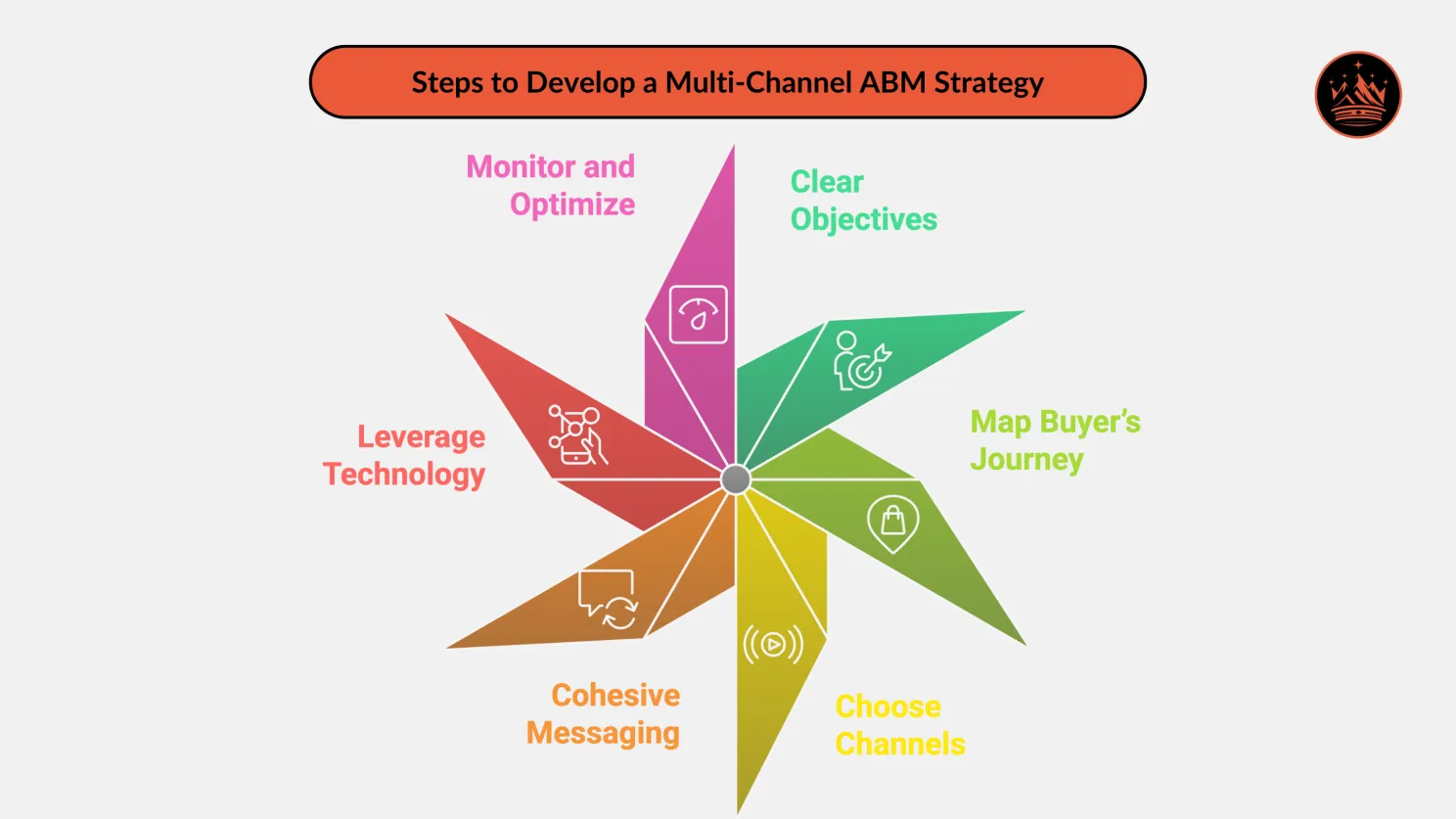
Step 1: Define Clear Objectives
Align your multi-channel efforts with measurable goals, such as:
- Increasing account engagement by 20% within six months.
- Converting three high-value accounts per quarter.
Step 2: Map the Buyer’s Journey
Understand the decision-making process of your target accounts and identify touchpoints where each channel adds value.
Step 3: Choose the Right Channels
Select platforms based on audience behaviour and industry trends. For example:
- Use LinkedIn and email for awareness and consideration stages.
- Leverage direct mail and events for decision and implementation phases.
Step 4: Create Cohesive Messaging
Ensure consistency across channels while tailoring content to each persona’s needs. For instance:
- Operations managers receive content on efficiency gains.
- CFOs are provided with ROI-focused materials.
Step 5: Leverage Technology
Invest in tools like:
- CRM Systems: To track interactions and manage data.
- Marketing Automation Platforms: To track content engagement and audience behaviour.
- Analytics Tools: To measure performance and optimize campaigns.
- ABM Platforms: To execute account-specific campaigns.
Step 6: Monitor and Optimize
Track key metrics such as engagement rates, pipeline velocity, and ROI. Use insights to refine your strategy continuously.
Key Takeaways
- Holistic Engagement: Multi-channel ABM ensures comprehensive engagement across diverse touchpoints.
- Personalization Drives Results: Tailor every interaction to the unique needs of the account.
- Consistency Matters: Maintain a unified message while adapting it to different platforms and stakeholders.
- Technology Enables Precision: Use tools to scale personalization and track performance.
- Measure and Improve: Regularly analyze results to optimize campaigns and maximize ROI.
A multi-channel ABM Strategy is the key to unlocking meaningful engagement with high-value accounts in the industrial engineering & manufacturing sector. By integrating tailored messaging across channels like email, LinkedIn, direct mail, and industry events, businesses can build trust, foster relationships, and accelerate deal closures.
-1.png)
-1.png)