
1️⃣ What is Predictive Analytics in ABM?
🔧 From Reactive Outreach to Predictive Precision
Account-Based Marketing (ABM) is fundamentally about precision—identifying the right accounts, aligning messaging to their pain points, and orchestrating outreach at the right time.
But here’s the problem in industrial B2B:
- Buyer journeys are opaque and non-linear.
- Sales cycles stretch across quarters (sometimes years).
- And signals of purchase intent often appear too late to act on them meaningfully.
This is where Predictive Analytics changes the game.
It empowers industrial marketing and sales teams to move from reactive to proactive—from waiting for engagement to forecasting which accounts will engage, why, and when.
No more playing catch-up with competitors who beat you to the RFP.
With predictive analytics, your ABM strategy becomes a radar system—scanning for behavioral, firmographic, and technographic patterns across your ICP and guiding sales toward the most conversion-ready accounts.
📊 Section 1: What is Predictive Analytics in ABM?
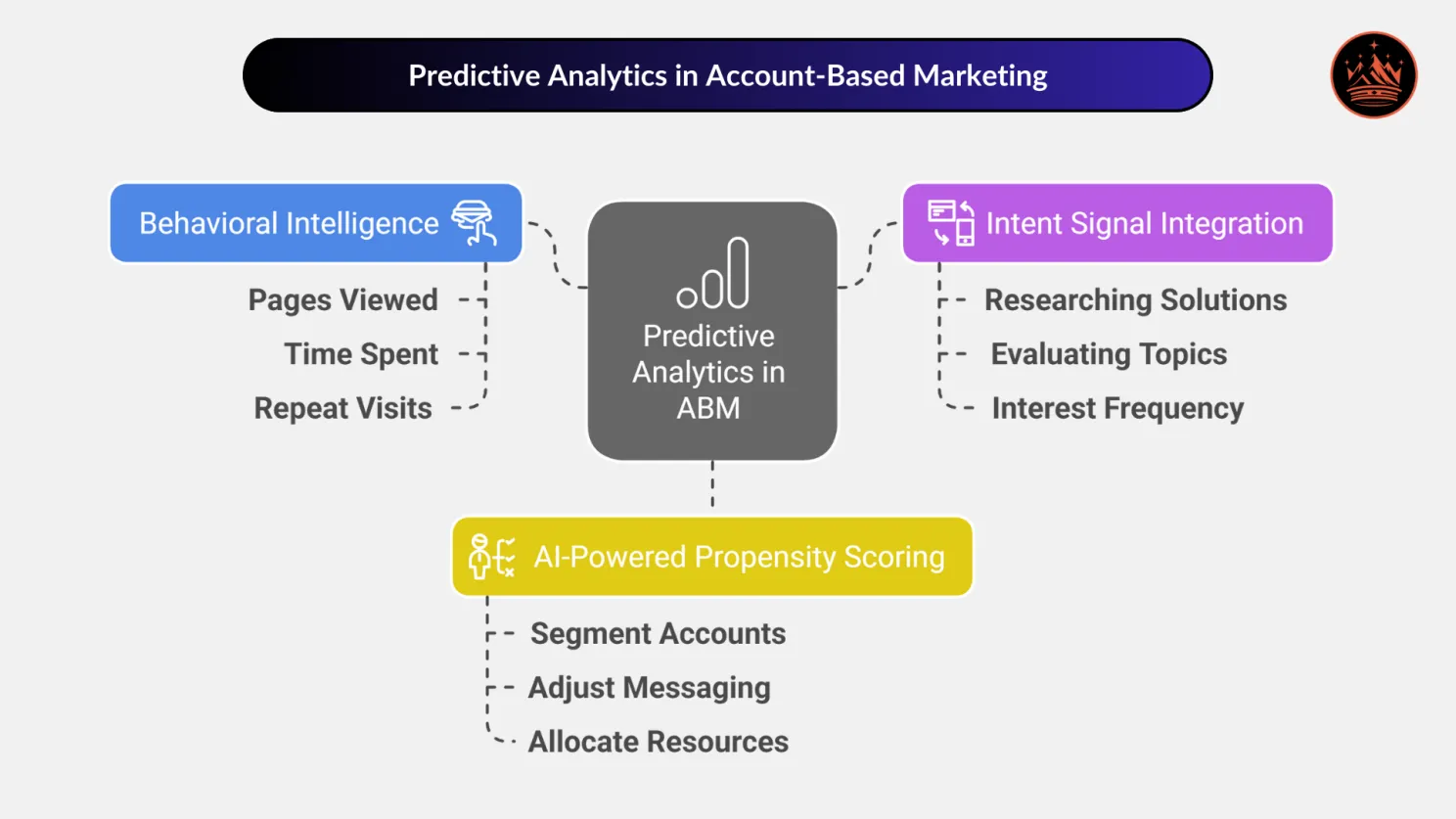
Predictive analytics in ABM refers to the use of statistical models, machine learning algorithms, and real-time behavioral data to forecast which accounts are likely to convert and how they should be prioritized across your ABM funnel.
At its core, predictive analytics in ABM answers three strategic questions:
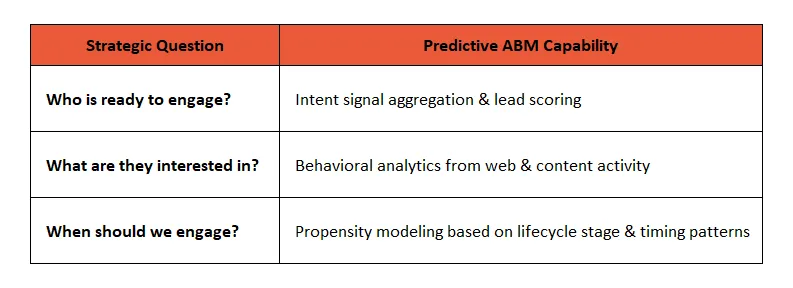
Let’s break down the key components.
🧠 1. Behavioral Intelligence
Predictive ABM platforms ingest vast volumes of digital breadcrumbs:
- Pages viewed (e.g., “Stainless Steel Mixer for Food Processing”)
- Time spent on engineering specs or CAD downloads
- Repeat visits to pricing or product configuration pages
- Engagement with outbound campaigns or ABM ads
This allows teams to infer buyer interest before an inquiry is ever made.
📡 2. Intent Signal Integration
Third-party intent providers (like Bombora, G2 Buyer Intent, Apollo.io) aggregate data across publisher networks, forums, comparison sites, and research portals. These signals are mapped back to your target accounts to detect:
- Who is actively researching relevant solutions
- Which topics or capabilities they’re evaluating
- How recently and frequently they’ve shown interest
Unlike first-party web analytics, these signals capture off-site behavior—often before a buyer even lands on your domain.
💡 Example: An OEM procurement lead searching multiple vendor listings for “21 CFR Part 11 Temperature Loggers” could trigger a high-intent alert—prompting outbound engagement before your competitor even knows they’re in-market.
🔢 3. AI-Powered Propensity Scoring
Modern ABM platforms apply machine learning to historical data (won/lost deals, sales velocity, firmographic traits) to assign each target account a propensity-to-buy score.
This helps you:
- Segment accounts by high/medium/low likelihood to convert
- Adjust messaging based on buying stage
- Allocate Sales Engineer / Manager attention where impact is the highest
Unlike manual lead scoring (which is often static), these models are dynamic—constantly learning from new engagement patterns.
⚙️ Why This Matters for Industrial Engineering & Manufacturing
In sectors where:
- Decision-makers are engineers, procurement officers, and facility managers
- Sales cycles revolve around specs, compliance, and risk mitigation
- And deal values are five, six, or seven figures…
…guesswork becomes expensive.
Predictive analytics eliminates “spray and pray” tactics and equips your GTM teams with forward-looking clarity:
- Who’s actually in-market
- Which messaging will resonate
- And what outreach sequence is most likely to convert
It’s not just about better targeting. It’s about timing, relevance, and conversion efficiency.
2️⃣ Benefits of Predictive Analytics in ABM for Industrial Engineering & Manufacturing
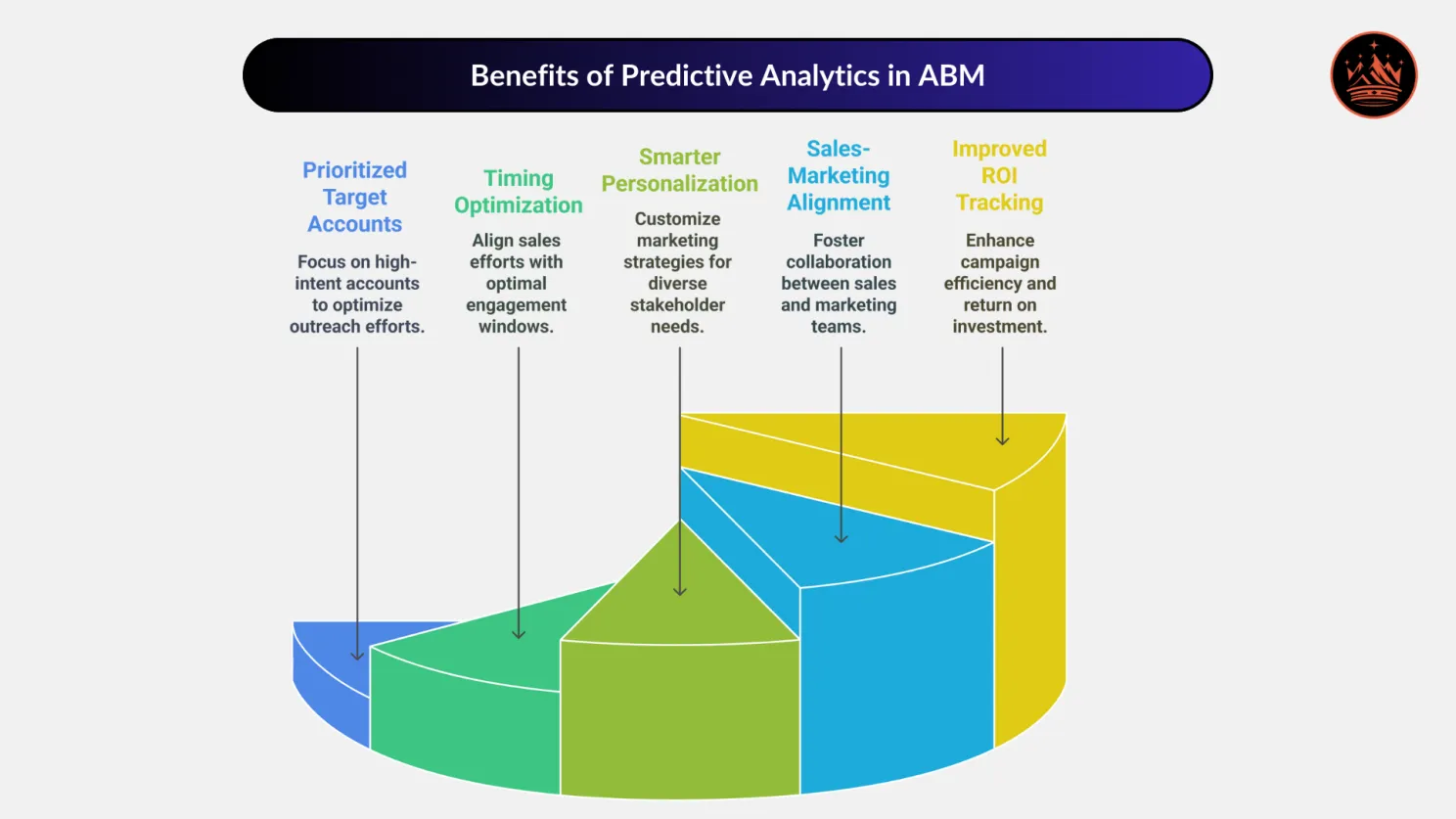
Predictive analytics isn’t just a technological upgrade—it’s a strategic shift in how industrial manufacturers plan, execute, and optimize their Account-Based Marketing.
Unlike traditional ABM, which often relies on manual segmentation and retrospective data, predictive analytics enables real-time, forward-looking decisions based on actual buying behavior, market trends, and AI-powered models.
Here are the core benefits—each deeply relevant to industrial businesses navigating long sales cycles, multiple decision-makers, and high-value deals.
🎯 1. Prioritized Target Account Lists Based on Real-Time Intent
Traditional ABM typically starts with a manually curated list of ICP accounts. But not all ICP accounts are in-market right now.
Predictive analytics elevates the ABM play by helping you:
- Identify which ICP accounts are showing active buying behavior
- Spot spikes in off-site research and content consumption
- Segment target accounts by likelihood to convert this quarter, not next year
This ensures your sales team isn’t wasting time on dormant accounts while high-intent buyers slip through the cracks.
🛠️ Example: A manufacturer of programmable logic controllers (PLCs) can prioritize outreach to automation consultants who have recently viewed competitor comparison articles across partner sites.
🔁 2. Shortened Sales Cycles through Timing Optimization
In capital-intensive industrial markets, knowing when to reach out is often more critical than knowing who to reach.
Predictive insights surface optimal engagement windows by analyzing:
- Prior deal timing patterns
- Seasonal buying behavior
- Historical conversion data by segment
The result? Sales outreach happens just as buying committees begin active evaluation—reducing lead-to-close time and increasing win probability.
🧭 Insight: Predictive intent tools can alert your reps before an RFQ is issued, positioning your brand early in the consideration set.
🧠 3. Smarter Personalization at Scale
When combined with firmographic, technographic, and behavioral data, predictive analytics allows industrial marketers to:
- Customize messaging based on stage-specific intent (research vs evaluation)
- Tailor nurture sequences for engineers vs procurement stakeholders
- Recommend dynamic content assets based on prior interaction history
This level of precision makes your content strategy feel like a personal consultation—not a campaign.
📌 Tactical Tip: If an account repeatedly engages with “Hazardous Area Certified” sensor specs, trigger a nurture sequence focused on ATEX / IECEx compliance and case studies in similar verticals.
🤝 4. Enhanced Sales-Marketing Alignment with AI-Scored Accounts
Predictive scoring acts as a shared compass across departments.
Rather than subjective lead qualification, ABM teams operate with:
- A unified list of AI-ranked accounts
- Visibility into recent account-level behaviors
- Agreement on which contacts to pursue and when
This builds tighter GTM collaboration—and eliminates friction between marketing-generated leads and sales-qualified accounts.
🔄 What Changes: Instead of debating whether a lead is “hot,” your teams sync on who’s moving, why they matter, and how to proceed.
📈 5. Improved ROI Tracking and Campaign Efficiency
Predictive analytics platforms don’t just forecast behavior—they measure and learn from it.
Your team can:
- Attribute conversions to intent signals and content triggers
- Optimize budget allocation toward channels that influence high-score accounts
- Benchmark campaign outcomes based on AI predictions
This creates a feedback loop of continuous improvement, reducing waste and increasing ABM ROI over time.
💡 Bonus Insight: Predictive ABM tools can flag when an account’s engagement drops below historical benchmarks—allowing customer success teams to intervene before churn becomes a risk.
🧭 Summary: Why This Matters to Industrial Firms
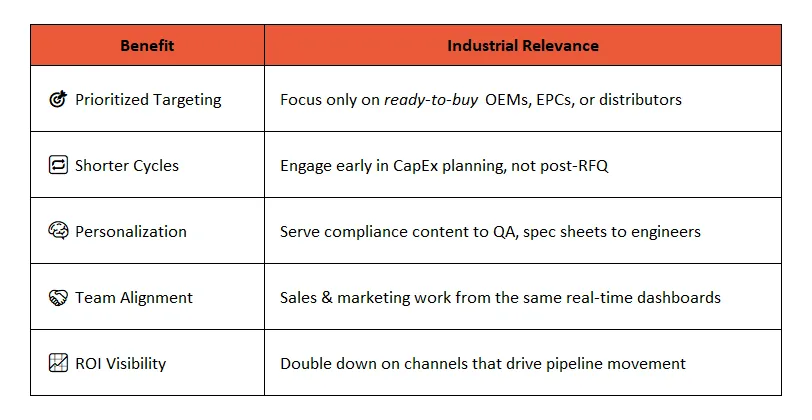
In an industry where sales cycles are long, buying committees are layered, and deals are won on relevance and timing, predictive analytics isn’t optional—it’s foundational.
3️⃣ Core Components of Predictive ABM in Industrial Manufacturing
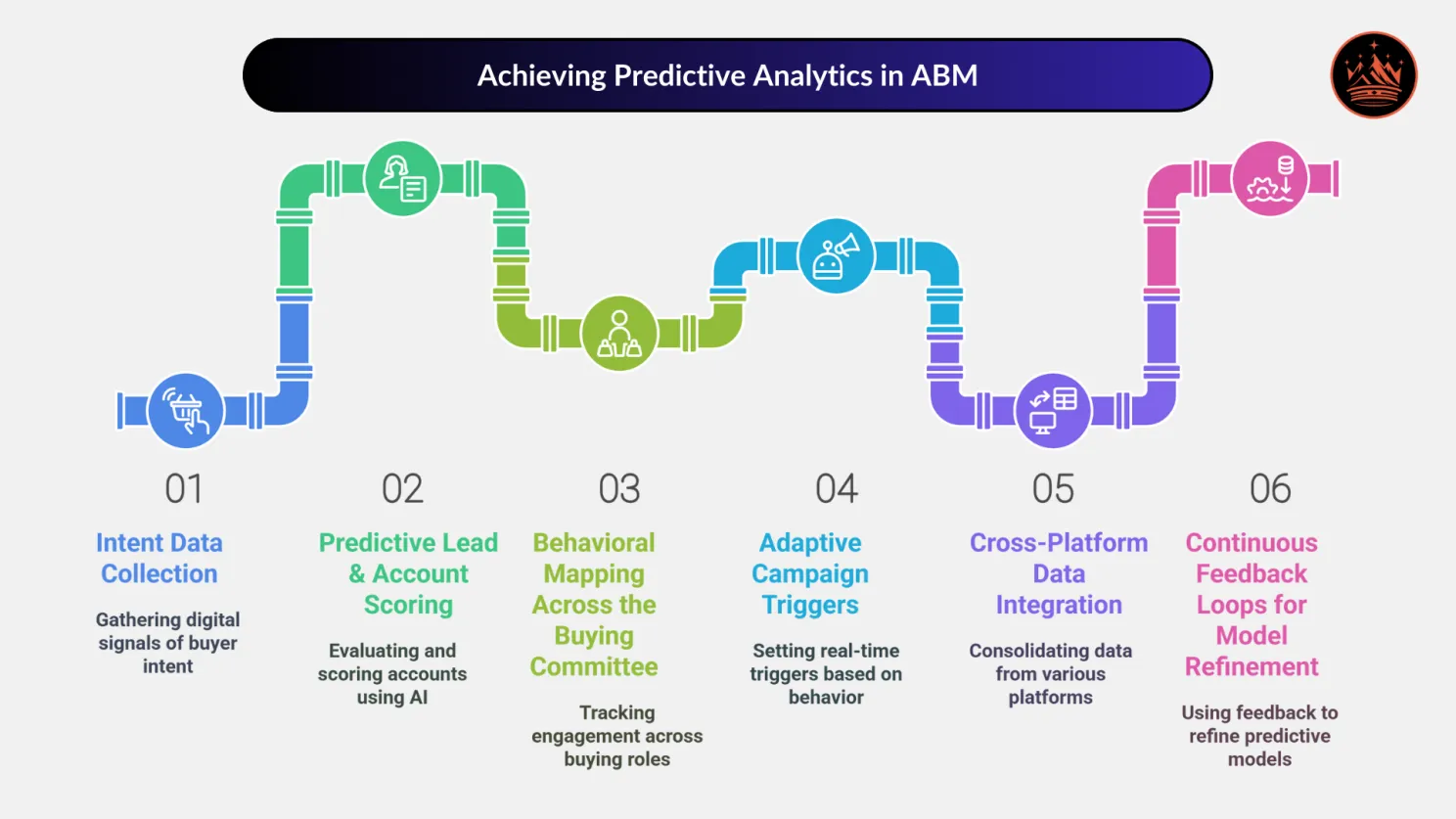
Predictive ABM is not a single tool or tactic—it’s a strategic stack of interlinked components working in tandem to forecast behavior, prioritize action, and improve engagement precision across the entire buying journey.
In the context of industrial engineering & manufacturing, where deals often span 6–18 months, involve multiple technical and procurement stakeholders, and require complex consultative selling, each component of this framework plays a pivotal role in enabling intelligent, data-driven decisions.
Let’s break it down into the six core pillars:
🔍 1. Intent Data Collection
Intent data is the fuel that powers predictive models.
It refers to digital signals that suggest a buyer is actively researching a solution—including off-site behaviors that your team would otherwise miss.
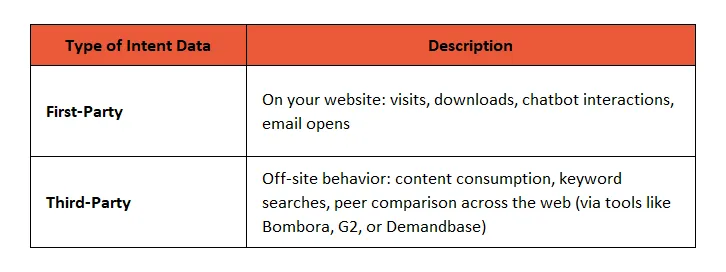
📌 Industrial Insight: A prospect downloading your pressure vessel spec sheet and reading articles on corrosion-resistant alloys elsewhere = high buying intent.
🧠 2. Predictive Lead & Account Scoring
Predictive ABM platforms leverage AI to evaluate and score accounts based on:
- Behavioral intent signals
- Historical conversion patterns
- Firmographic and technographic fit
- Timing and buying cycle indicators
Each account is assigned a composite score, allowing teams to focus on the most likely to convert accounts.
🔧 Example for OEM suppliers: Accounts that match your ICP, are researching “PLC retrofitting solutions,” and have shown past download behavior might be scored 95/100 and prioritized immediately.
🗺️ 3. Behavioral Mapping Across the Buying Committee
Industrial buying isn’t driven by one person—it’s a committee game.
Predictive ABM recognizes this and enables:
- Contact-level engagement tracking (engineers, procurement heads, compliance officers)
- Multi-threaded behavioral patterns (e.g., if engineering downloads CAD files and QA views certification docs)
- Persona-specific scoring within the same account
🎯 Outcome: You don’t just know an account is active—you know which role is researching what, and how to customize outreach.
🔁 4. Adaptive Campaign Triggers
Modern predictive systems let you set real-time campaign triggers based on behavior changes. These can include:
- Surge in specific keyword intent
- Engagement with high-value pages (pricing, certifications)
- Drop in activity (for retention intervention)
Trigger types in an ABM workflow could look like:
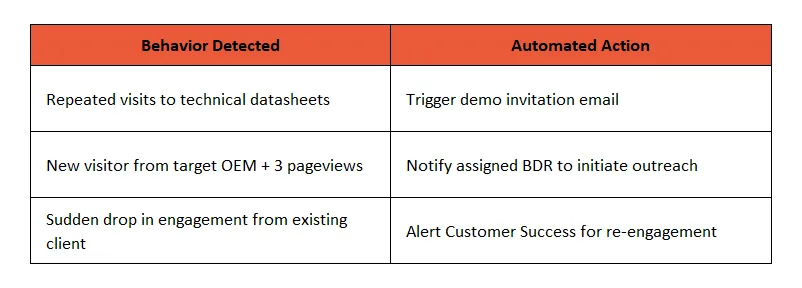
⏱️ Why It Matters: Speed and timing become competitive advantages when you can act in the moment of buyer intent.
📊 5. Cross-Platform Data Integration
To make predictive ABM work, you must consolidate data across:
- CRM (e.g., Salesforce, HubSpot)
- Marketing Automation (e.g., HubSpot, Pardot)
- Ad Platforms (LinkedIn Ads , RollWorks)
- Intent Engines (Bombora, G2)
- Website Analytics ( Google Analytics, RB2B)
Unified data enables:
- Real-time dashboards
- Feedback loops between campaigns and revenue teams
- Consistent visibility across marketing, sales, and success functions
🔧 For SMEs: Tools like HubSpot + Apollo.io + Clearbit can provide a simplified version of this without enterprise-level cost.
📈 6. Continuous Feedback Loops for Model Refinement
Predictive models get smarter over time—but only if you feed them feedback.
That includes:
- Closed-lost reasons from sales
- Content attribution (which asset closed the deal)
- Post-sale satisfaction and retention metrics
Advanced systems use this feedback to:
- Refine scoring models
- Optimize persona targeting
- Eliminate underperforming campaigns
💡 Industrial Relevance: If equipment buyers from the pharma sector consistently churn post-sale, the model can deprioritize similar profiles over time—even if they show strong initial intent.
🧩 Final Thought for Industrial ABM Teams
Building a predictive ABM motion in industrial engineering contexts requires both the data infrastructure and the cultural alignment to act on the insights.
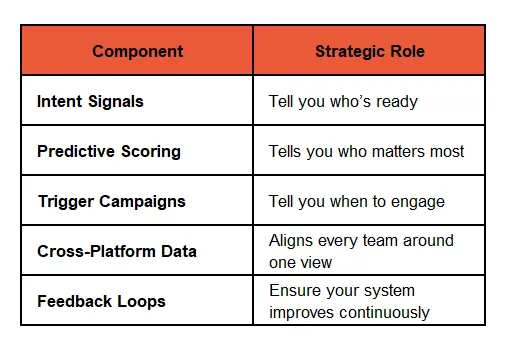
In short: Predictive ABM enables industrial marketers to anticipate buyer needs—not react to them. That’s not just smarter marketing—it’s strategic advantage in motion.
4️⃣ Predictive ABM in Action: Real-World Case Studies
The power of predictive analytics in ABM is best understood not through theory—but through application.
The following case studies showcase how industrial firms leveraged predictive insights to outperform competitors, close high-value deals faster, and prioritize the right accounts at the right time.
✅ Case Study 1: Hexagon AB + Demandbase
Global Leader in Industrial Tech Solutions
Challenge
Hexagon had disparate business units targeting the same accounts with siloed efforts—causing buyer confusion, internal competition, and campaign inefficiencies.
Predictive ABM Strategy
- Integrated Demandbase’s AI and intent data to centralize account intelligence.
- Used predictive scoring to rank accounts based on activity, firmographic fit, and surging interest.
- Triggered real-time orchestration of ads, email, and sales sequences based on behavioral surges.
Results
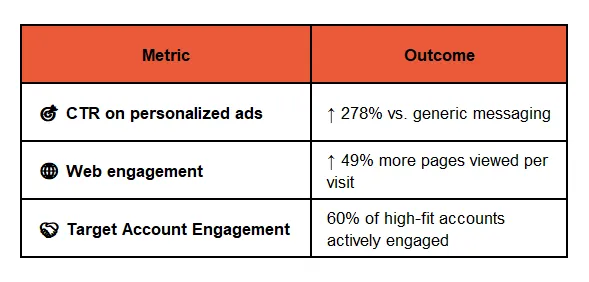
Key Takeaway:
Predictive ABM enabled Hexagon to shift from fragmented marketing to precisely timed, persona-relevant, and account-coordinated experiences—resulting in stronger pipeline quality.
📍Source: Demandbase x Hexagon Case Study
✅ Case Study 2: Siemens + Bombora
Global Industrial Automation Leader
Challenge
Sales and marketing lacked early visibility into buying signals from large engineering firms preparing for digital transformation and automation upgrades.
Predictive ABM Strategy
- Deployed Bombora’s Company Surge® intent data to monitor surging interest in automation-related topics.
- Identified accounts researching solutions 3–6 months before formal RFPs.
- Aligned outbound cadences and content based on the specific topics accounts were surging on.
Results
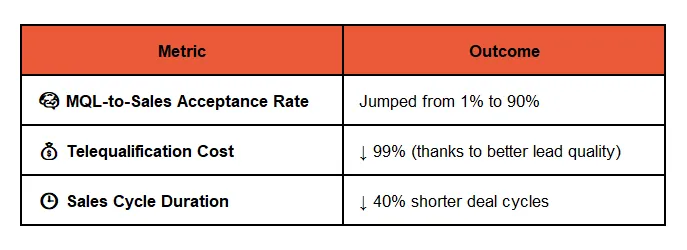
Key Takeaway:
Intent data empowered Siemens to reach buyers in the “pre-awareness” stage, creating demand ahead of competitors and reducing sales friction dramatically.
📍Source: Bombora x Siemens Case Study
✅ Case Study 3: Industrial Equipment Manufacturer (via Weidert Group)
Mid-Market OEM Equipment Supplier
Challenge
The company sold niche hydraulic power units to OEMs and dealers. Traditional outreach lacked traction due to the highly specialized and narrow target base.
Predictive ABM Strategy
- Used intent data and predictive scoring to refine the original ICP mid-campaign.
- Observed stronger intent and engagement from regional dealers vs. large OEMs.
- Adjusted content strategy to focus on dealer-specific ROI case studies and application videos.
Results
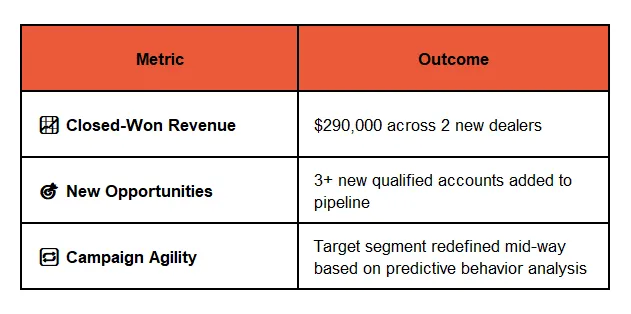
Key Takeaway:
Predictive analytics helped the team uncover hidden segments within the niche, proving that agility, driven by real-time intent, unlocks new revenue streams.
📍Source: Weidert Group ABM Case Study
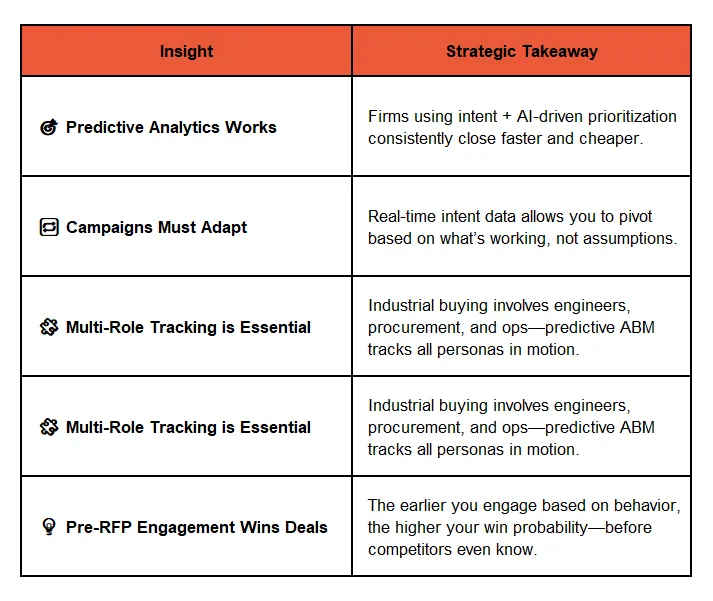
🧠 What These Case Studies Prove
5️⃣ Tools & Platforms for Predictive ABM in Industrial Engineering & Manufacturing
Predictive ABM isn’t just about collecting data—it’s about activating insights at the right moment, through the right channels, for the right accounts. To achieve that, industrial firms need a well-curated tech stack built around accuracy, automation, and alignment.
Here’s a breakdown of the best-in-class tools and platforms—tailored to the needs and constraints of mid-market and enterprise-level industrial engineering and manufacturing companies.
🧠 1. Intent Data Platforms
Track surging interest on specific industrial topics across the web—before buyers fill a form or visit your site.
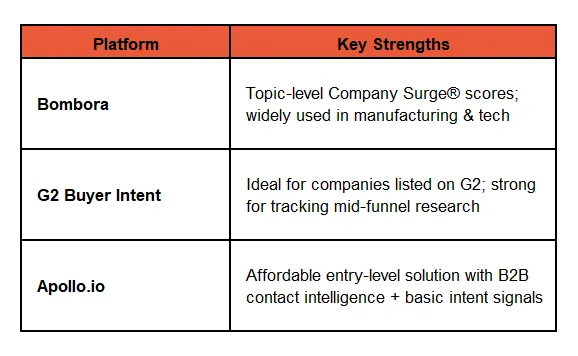
🔍 Tip: Match intent topics to your product category (e.g., “automated inspection systems”, “industrial IoT”, “predictive maintenance”) for maximum relevance.
🤖 2. Predictive Orchestration & AI Scoring
Transform raw data into prioritized account lists and automated actions—based on behavior and fit.
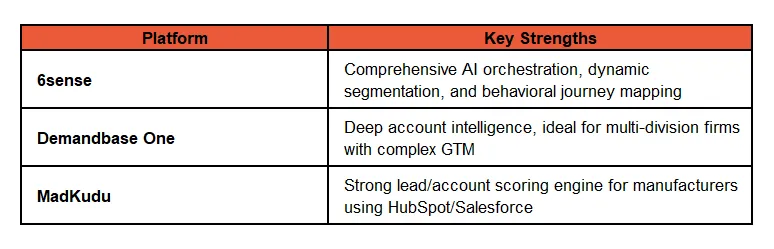
🎯 Use Case Example: Set automated workflows when intent score + fit score cross a threshold—triggering email sequences, LinkedIn touches, or SDR alerts.
🧩 3. CRM & Marketing Automation
Bridge the intelligence gap between marketing and sales—ensure insights flow to the people who close.
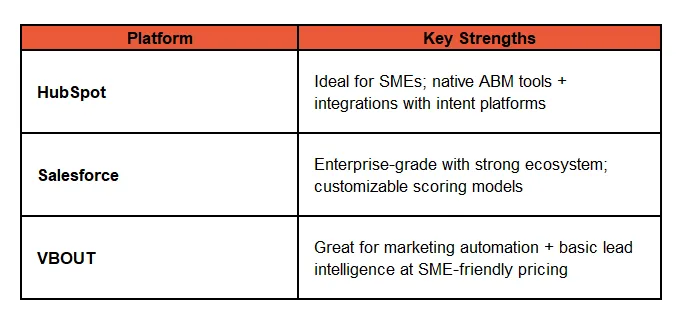
🤝 Alignment Tip: Ensure both marketing and sales teams work from a shared CRM view enriched with predictive insights.
📊 4. Analytics & ABM Dashboards
Measure what matters: Account-level journey, conversion probability, and funnel velocity.
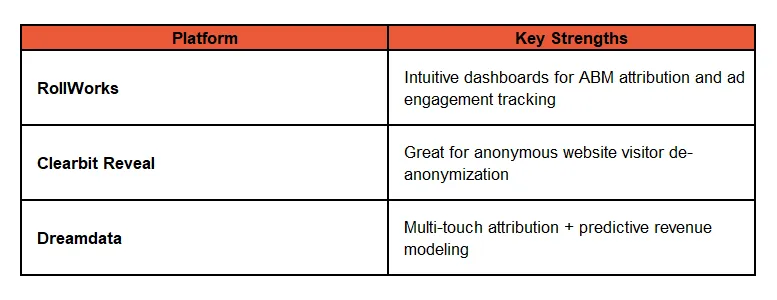
📌 Bonus Insight: Build a dashboard that merges engagement (ads + content) + sales stages to understand what’s driving conversions at each touchpoint.
❤️ 5. Customer Experience & Post-Sale Signals
Don’t just win the account—predict lifetime value and churn risks using post-sale intelligence.
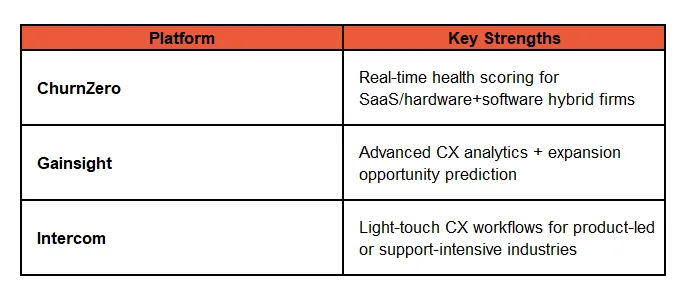
🔁 Predictive ABM doesn’t stop at acquisition—it helps identify expansion-ready accounts and flag at-risk ones, long before renewal dates.
⚙️ How to Build a Predictive ABM Stack on a Budget (for SMEs)
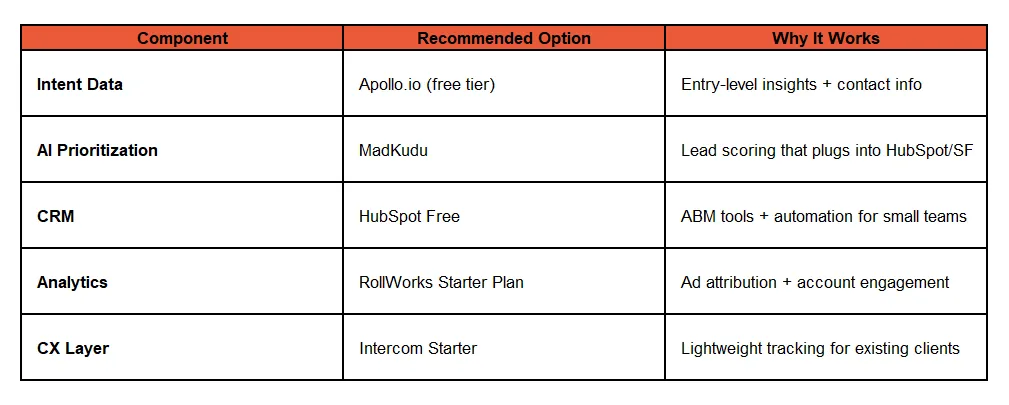
🧰 Pro Tip: Use native integrations + Zapier to sync data flows if you’re bootstrapped. Predictive ABM is scalable when you focus on essentials.
6️⃣ Metrics That Define Success in Predictive ABM
Predictive ABM thrives on measurable impact. It’s not just about flashy dashboards or scoring algorithms—it’s about proving that data-fuelled decisions drive real pipeline acceleration, higher win rates, and stronger customer relationships.
Below is a structured breakdown of performance metrics across each stage of the predictive ABM lifecycle, with specific applicability to industrial engineering and manufacturing businesses.
🚦 1. Pre-Funnel Metrics – Are You Spotting Buying Intent Early?
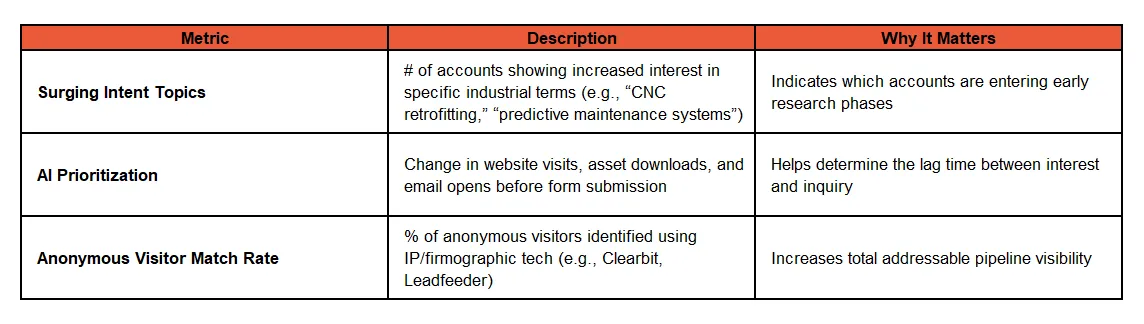
🧠 Insight: Predictive success begins with surfacing in-market accounts before your competitors do.
🔄 2. Funnel Acceleration Metrics – Are You Moving the Right Accounts Faster?
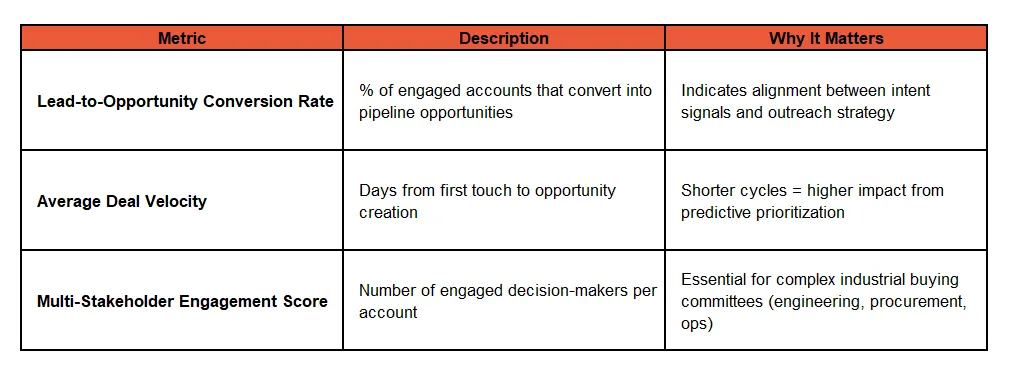
⚙️ Industrial Edge: Predictive ABM works best when outreach is triggered by behavior across multiple personas within a target account.
💰 3. Revenue Impact Metrics – Is Predictive ABM Driving Bigger Wins?
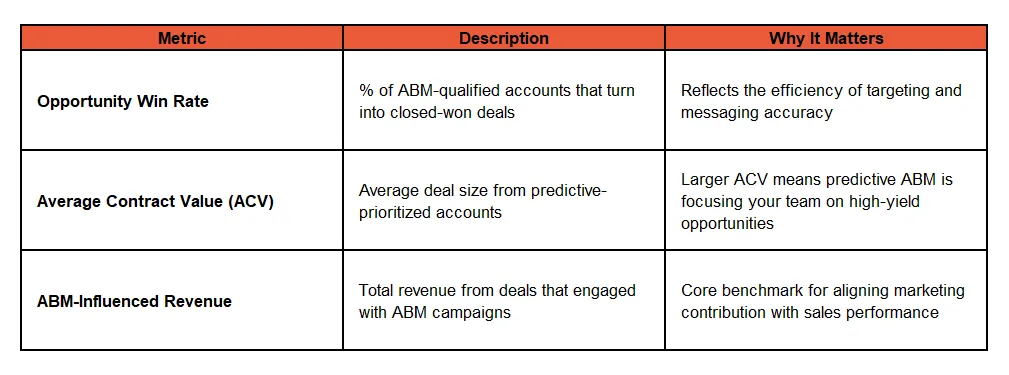
📈 Benchmark: Companies using predictive insights in ABM see faster deal cycles and higher ACV.
🔁 4. Post-Sale & LTV Metrics – Are You Optimizing for Long-Term Value?
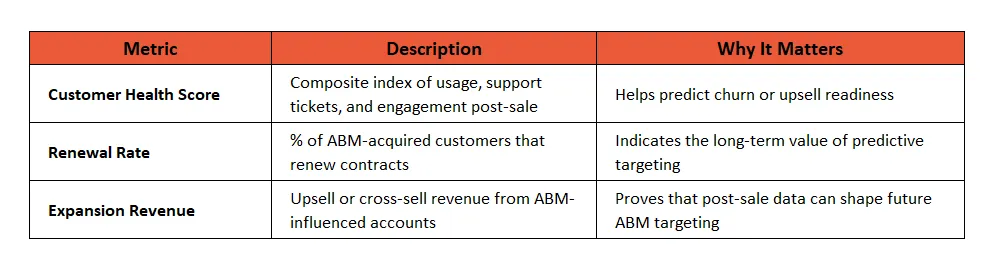
🔄 LTV Mindset: Predictive ABM isn’t just about acquisition—it’s a framework for continuous revenue generation through customer lifecycle insight.
🧪 Bonus: Model Performance Metrics for Predictive Tools
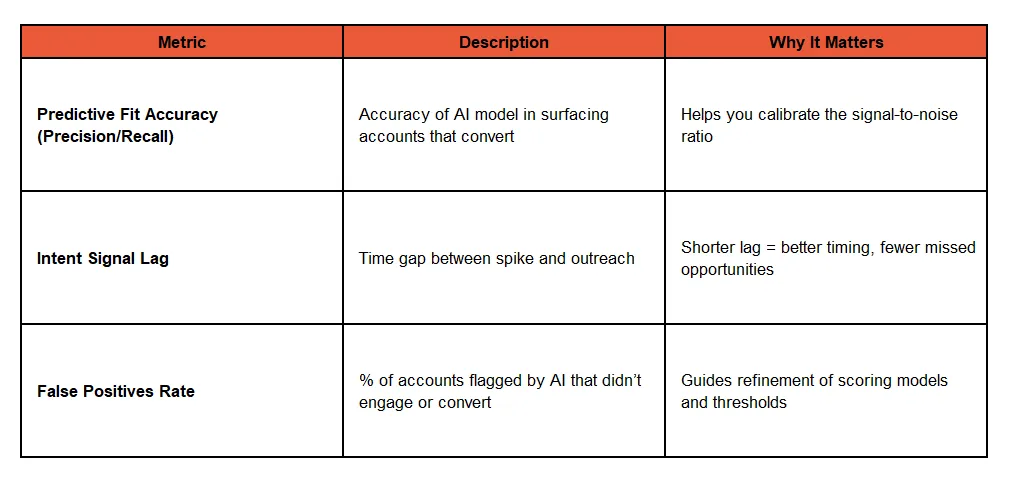
⚖️ Balance the model: Too aggressive = noise. Too conservative = missed revenue.
🧩 How to Visualize It All – Recommended Dashboard Views
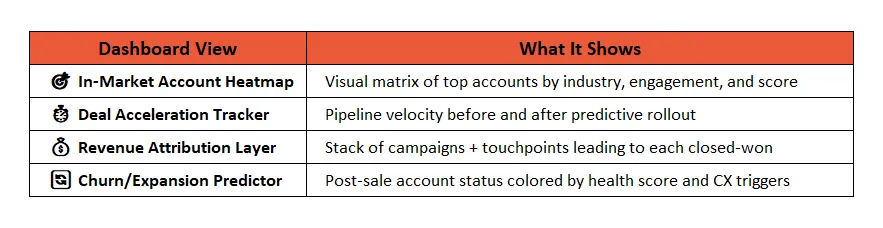
📊 Use tools like Dreamdata, MadKudu, HubSpot Custom Reports, or 6sense Insights Dashboards to track, visualize, and communicate performance across revenue teams.
7️⃣ Key Takeaways for Industrial Engineering Manufacturers
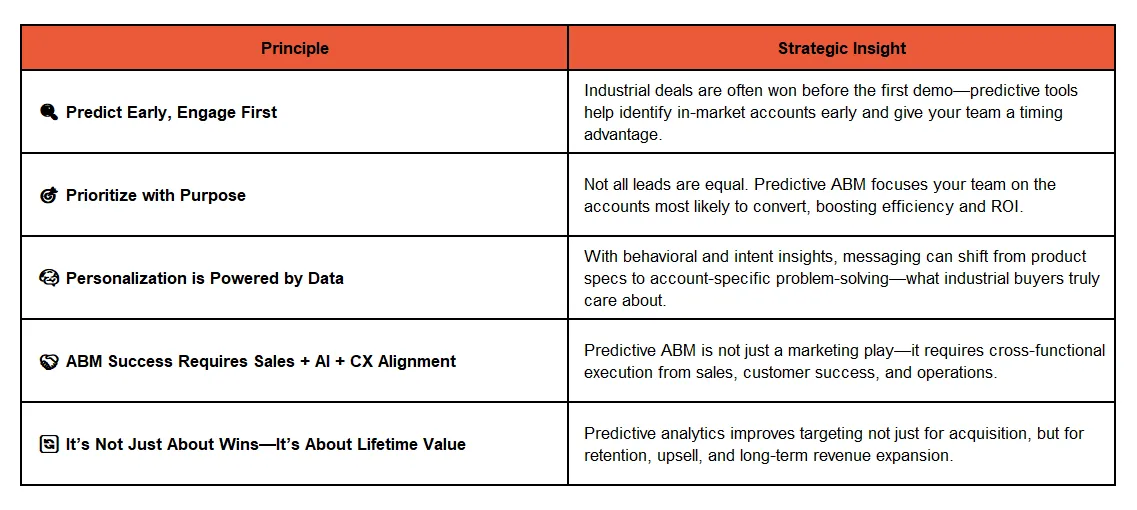
🔮 Final Thoughts: The Intelligent Evolution of ABM
Industrial engineering manufacturers face longer sales cycles, complex stakeholder ecosystems, and niche market dynamics. Traditional ABM helps narrow the focus—but predictive analytics supercharges that focus with foresight.
By tapping into real-time buying signals, historical behaviors, and AI-powered scoring, industrial businesses can stop guessing who’s ready to buy and start acting with precision. It’s no longer about casting a wide net—it’s about aiming with a laser.
The future of ABM isn’t just strategic.
It’s intelligent.
It’s adaptive.
It’s predictive.
-1.png)
-1.png)