
In the realm of modern business, the Revenue Operations (RevOps) framework stands out as a pivotal approach to achieving streamlined operations and maximizing revenue. By integrating key functions such as sales, marketing, and customer success, RevOps provides a unified strategy that enhances efficiency and drives growth. This blog delves into the essential elements, goals, implementation strategies, challenges, and benefits of the RevOps framework, supported by compelling insights and real-world examples.
A. Understanding the RevOps Framework
Revenue Operations (RevOps) is a strategic approach that unifies distinct areas of a business, including marketing, sales, and customer success. This integration breaks down departmental silos and fosters cross-functional collaboration, promoting a unified revenue-focused approach to a firm’s growth. The RevOps framework serves as a blueprint for businesses aiming to maximize revenue growth by streamlining operations and enhancing collaboration.
Supporting Information: RevOps is essential for modern businesses aiming to achieve significant growth. According to Forrester, companies with aligned sales and marketing teams can achieve 36% higher revenue growth than others. This alignment, facilitated by RevOps, is a game-changer in today’s competitive market.
B. Key Elements of the RevOps Framework for Industrial Engineers and Manufacturers
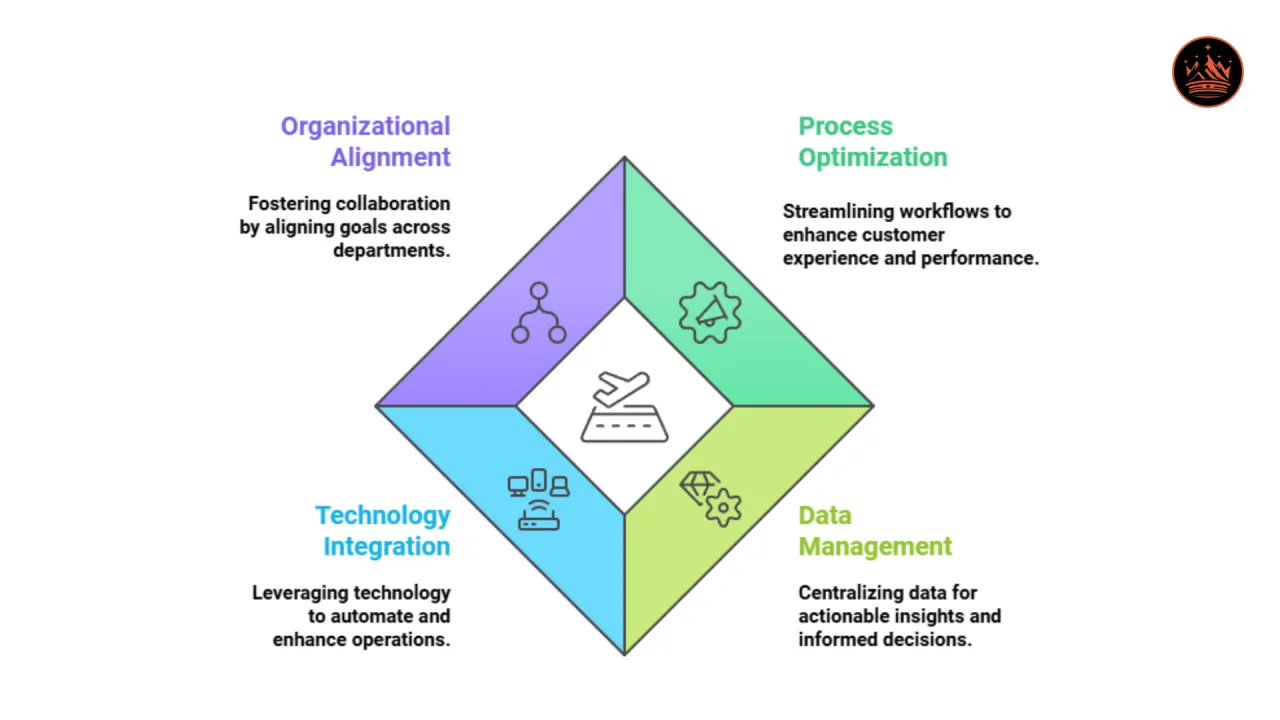
The RevOps framework is a game-changer for industrial engineering and manufacturing businesses, aligning four essential pillars to streamline operations and drive revenue growth:
- Process Optimization:
RevOps ensures workflows across engineering, production, sales, and customer success are streamlined to deliver a seamless customer experience. This reduces inefficiencies, enhances project timelines, and improves overall performance.
Example: An industrial equipment manufacturer optimized its sales and order fulfillment process using RevOps. By integrating its CRM and ERP systems, it reduced lead-to-order time from weeks to days, ensuring faster delivery of custom machinery to its clients.
2.Data Management and Analytics:
Centralizing data from production, supply chain, and sales enables manufacturers to uncover actionable insights. RevOps empowers teams to predict market trends, align resources, and tailor solutions to customer needs.
Example: A precision tools manufacturer used RevOps to integrate data from its production line sensors and customer orders. This allowed the company to forecast demand more accurately, reducing inventory waste and increasing on-time delivery rates.
3.Technology:
RevOps leverages tools like CRM systems, marketing automation platforms, and production analytics software to automate and enhance operations. The right technology enables real-time collaboration and smarter decision-making.
Example: A packaging machinery manufacturer adopted IoT-enabled monitoring tools within its RevOps framework. These tools provided insights into machine performance, helping customers minimize downtime and improving post-sales support efficiency.
- Organizational Alignment:
RevOps fosters collaboration across departments such as engineering, production, marketing, and sales by aligning goals and metrics. This shared vision ensures cohesive strategies and better business outcomes.
Example: A conveyor systems provider aligned its sales and production teams under a RevOps model. This allowed them to work seamlessly on custom projects, reducing delivery timelines and improving customer satisfaction for clients in the food processing industry.
C. Goals of the RevOps Framework for Industrial Engineering and Manufacturing
The RevOps framework is designed to tackle key challenges in industrial engineering and manufacturing by driving efficiency, collaboration, and growth. Its primary goals include:
1.Automating the Tech Stack:
RevOps enhances technological infrastructure by automating repetitive tasks and streamlining operations across sales, production, and customer support.
Example: An industrial automation company automated its lead tracking and proposal generation processes. This allowed the sales team to focus on high-value client interactions, accelerating project approvals and reducing administrative overhead.
- Enhancing Customer Experience:
By unifying data from customer touchpoints such as sales interactions, after-sales support, and field service, RevOps ensures a consistent and tailored customer journey.
Example: A precision equipment manufacturer leveraged RevOps to align its sales and service teams, ensuring that installation timelines matched customer production schedules. This led to improved customer satisfaction and repeat business.
- Improving Operational Efficiencies:
Standardized processes across teams—such as engineering, production, and marketing—result in smoother workflows and better resource utilization.
Example: A material handling equipment provider implemented standardized quoting and project management systems through RevOps. This reduced lead times for custom conveyor systems and improved on-time delivery rates.
- Maximizing Revenue Growth:
RevOps identifies untapped opportunities, refines pricing strategies, and aligns teams to focus on high-impact activities that drive revenue.
Example: A heavy machinery manufacturer used RevOps to prioritize accounts with high potential for aftermarket services, significantly increasing parts sales and service contracts.
- Promoting Cross-Functional Teamwork:
RevOps fosters collaboration between engineering, sales, and customer success teams by aligning goals and metrics, ensuring cohesive decision-making.
Example: A packaging solutions provider integrated its sales and production teams through RevOps, enabling seamless communication for custom orders. This reduced errors during manufacturing and boosted customer satisfaction.
D. Implementation Strategies for RevOps in Industrial Engineering and Manufacturing
Building a RevOps framework tailored for industrial engineering and manufacturing involves a series of strategic steps that align teams, processes, and technology to drive measurable growth and efficiency.
- Setting Goals:
Clear objectives ensure alignment across engineering, sales, marketing, and customer success teams, all working towards shared revenue-focused outcomes.
Example: A manufacturer of industrial pumps defined specific RevOps goals, such as reducing lead-to-delivery timelines and increasing aftermarket service revenue. This clarity led to streamlined production schedules and improved customer satisfaction.
- Selecting Technologies:
Choosing tools that integrate seamlessly into existing systems enables efficient data sharing and decision-making.
Example: A material handling equipment manufacturer implemented a CRM and project tracking software to synchronize sales and production teams. This reduced miscommunication, ensuring smoother execution of custom projects.
- Establishing Processes:
Standardizing workflows across departments ensures consistency and improves operational efficiency.
Example: A conveyor systems provider standardized its lead qualification and order fulfillment processes under RevOps, resulting in faster proposal turnarounds and higher conversion rates.
- Continuous Training:
Regular training on RevOps tools and best practices keeps teams aligned and equipped to adapt to changing industry demands.
Example: A heavy machinery manufacturer introduced quarterly RevOps training sessions for its sales and service teams, enabling them to leverage customer data for more effective upselling and cross-selling strategies.
E. Challenges in Building a RevOps Framework for Industrial Engineering and Manufacturing
Implementing a RevOps framework in the industrial engineering and manufacturing sectors comes with unique challenges. Addressing these obstacles effectively ensures long-term success and improved operational efficiency.
- Addressing Misalignment Between Teams:
Unifying goals and KPIs across engineering, sales, production, and customer success teams can be complex. RevOps bridges these gaps, fostering collaboration and shared accountability.
Example: An industrial machinery manufacturer implemented RevOps to align its sales and engineering teams, ensuring that custom machinery designs aligned perfectly with client specifications. This collaboration reduced order errors and improved delivery timelines.
- Managing Change in Organizational Structure:
Transitioning to a RevOps model requires careful communication and change management to gain employee buy-in and minimize disruption.
Example: A precision equipment manufacturer navigated organizational changes by providing regular workshops for its sales and production teams, ensuring smooth adoption of new workflows and tools.
- Ensuring Data Accuracy and Consistency:
High-quality, centralized data is critical for effective decision-making in manufacturing, where multiple systems (e.g., ERP, CRM) often operate in silos.
Example: A supplier of industrial valves implemented RevOps to standardize and consolidate data across its CRM and inventory management systems. This improved demand forecasting and reduced production downtime.
- Optimizing the Revenue Framework:
RevOps requires continuous monitoring and refinement to remain aligned with shifting market demands and customer needs.
Example: A conveyor systems manufacturer adjusted its RevOps strategy to target emerging opportunities in e-commerce logistics, leading to increased market share and improved ROI on marketing campaigns.
F. Benefits of a RevOps Framework for Industrial Engineering and Manufacturing
The RevOps framework provides transformative advantages for industrial engineering and manufacturing businesses by aligning teams, optimizing operations, and driving growth. Key benefits include:
- Improved Efficiency:
Streamlined workflows across engineering, production, sales, and support teams lead to smoother operations and enhanced productivity.
Example: An industrial pump manufacturer implemented RevOps to optimize order tracking and fulfillment processes, reducing delays and improving on-time delivery rates for high-value clients.
- Better Data-Driven Decision-Making:
Centralized data from production, sales, and customer service empowers manufacturers to uncover actionable insights and refine strategies.
Example: A precision tooling company integrated its CRM and ERP systems under RevOps, enabling it to accurately forecast demand and reduce excess inventory, saving costs and improving supply chain efficiency.
- Enhanced Customer Experience:
A cohesive customer journey fosters trust, loyalty, and long-term relationships with key clients in high-stakes industries.
Example: A conveyor systems manufacturer aligned its sales and after-sales teams through RevOps, ensuring seamless installation and maintenance services. This approach improved customer satisfaction and led to repeat business from major food processing clients.
- Increased Revenue:
Cross-functional alignment and data-driven strategies unlock new opportunities for growth and optimize resource allocation.
Example: A material handling equipment provider used RevOps to prioritize high-potential accounts and tailored its outreach strategies. This resulted in significant increases in revenue from long-term service contracts and system upgrades.
The RevOps framework is essential for modern businesses seeking to enhance efficiency and drive revenue growth. By aligning sales, marketing, and customer success, RevOps fosters collaboration and data-driven decision-making. Understanding the key elements, goals, implementation strategies, and challenges of RevOps is crucial for businesses aiming to stay competitive.
Adopting a RevOps framework can significantly enhance a company’s operational efficiency and revenue growth. Businesses should evaluate their specific needs and consider implementing RevOps to achieve sustainable growth. Explore further resources and case studies to gain deeper insights into the successful implementation of RevOps and its impact on business.
-1.png)
-1.png)