In the evolving landscape of business operations, distinguishing between Revenue Operations (RevOps) and traditional Sales Operations (SalesOps) is crucial for strategic growth and efficiency. While both aim to drive revenue and improve business performance, they differ significantly in their scope, objectives, and methodologies. Understanding these differences can help businesses implement the right strategies to optimize their operations and achieve sustained growth.
A. Definitions and Core Objectives
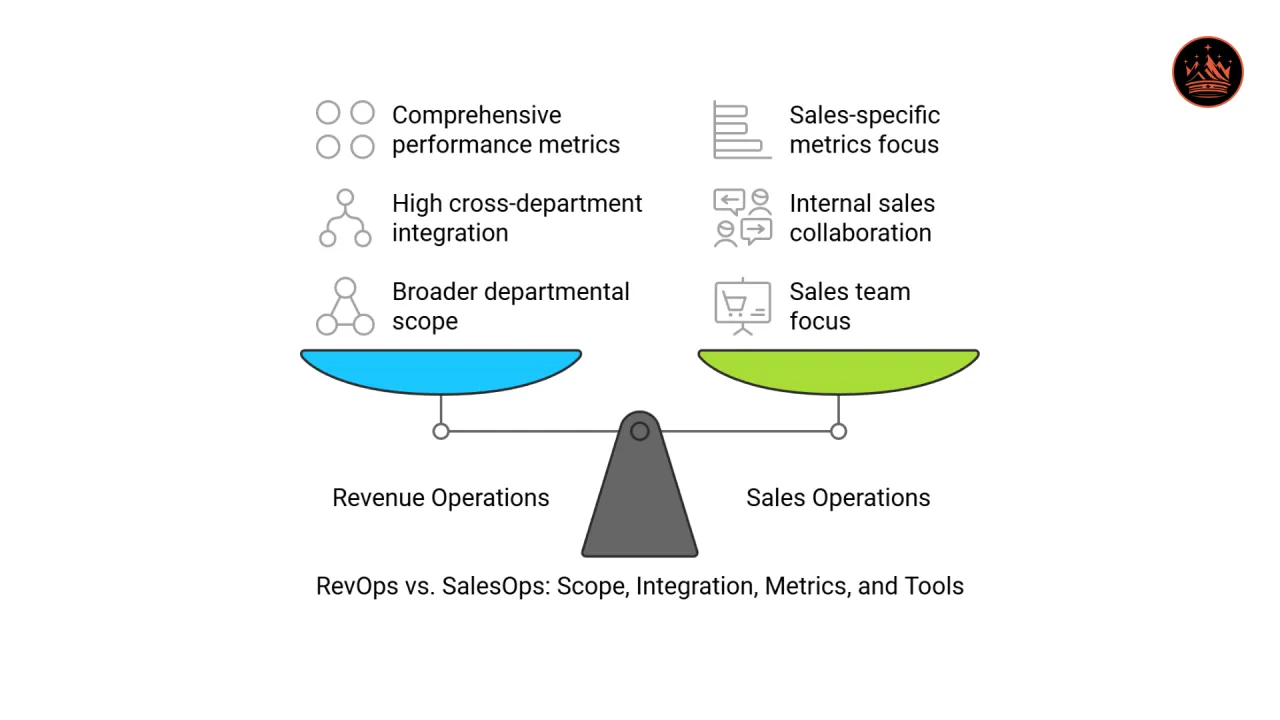
Revenue Operations (RevOps) is a holistic approach that unifies sales, marketing, and customer success operations to maximize revenue growth and operational efficiency. RevOps focuses on aligning all revenue-generating teams to ensure seamless collaboration and data sharing. The primary goal is to create a unified strategy that drives revenue growth through improved efficiency and customer experience.
Sales Operations (SalesOps), on the other hand, is more focused on supporting and optimizing the sales team’s performance. SalesOps involves managing sales processes, implementing sales strategies, and using data to drive sales productivity. The main objective is to enhance the sales team’s efficiency and effectiveness by providing the necessary tools, processes, and insights.
B. Focus and Scope
RevOps has a broader scope as it encompasses multiple departments beyond just sales. It aims to break down silos and align sales, marketing, and customer success to ensure that all departments work towards common revenue goals. This alignment helps in creating a cohesive strategy that enhances the overall customer experience and drives revenue growth across the organization.
SalesOps, however, has a narrower focus, concentrating primarily on the sales team. It involves optimizing sales processes, managing sales data, and implementing tools that help the sales team close deals more effectively. While SalesOps can significantly improve sales performance, it does not necessarily address the alignment and collaboration between different departments.
C. Integration and Collaboration
RevOps fosters a high level of integration and collaboration across departments. By unifying sales, marketing, and customer success operations, RevOps ensures that all teams share the same goals, metrics, and data. This integration helps in eliminating silos, improving communication, and enhancing overall operational efficiency.
SalesOps primarily focuses on internal collaboration within the sales team. While it may involve some level of coordination with marketing and customer success, the primary emphasis is on optimizing sales processes and improving sales performance. This can sometimes lead to misalignment with other departments if not managed properly.
D. Metrics and KPIs
RevOps uses a comprehensive set of metrics and KPIs to measure performance across sales, marketing, and customer success. These metrics provide a holistic view of the business performance and help in making data-driven decisions.
SalesOps typically focuses on sales-specific metrics such as lead conversion rates, sales cycle length, average deal size, and quota attainment. While these metrics are crucial for measuring sales performance, they do not provide a complete picture of the overall business health and customer experience.
E. Technology and Tools
RevOps leverages a wide range of technologies and tools to support its operations. These include Customer Relationship Management (CRM) systems, marketing automation platforms, customer success software, data analytics tools, and AI-driven insights. The integration of these technologies helps in creating a unified data platform that supports seamless collaboration and data sharing across departments.
SalesOps primarily uses sales-specific tools such as CRM systems, sales enablement software, and sales analytics tools. While these tools are essential for optimizing sales performance, they do not necessarily support the broader alignment and integration needed for RevOps.
F. Organizational Structure
RevOps typically involves a more complex organizational structure as it spans multiple departments. It requires a high level of coordination and collaboration between sales, marketing, and customer success teams. The RevOps team is usually led by a Chief Revenue Officer (CRO) or a similar executive role that oversees all revenue-generating operations.
SalesOps has a simpler organizational structure focused on the sales team. It is typically led by a Sales Operations Manager or Director who is responsible for optimizing sales processes and supporting the sales team. While this structure can be highly effective for improving sales performance, it may not address the broader alignment and collaboration needed for overall business success.
G. Successful Implementation
RevOps Implementation: Successful implementation of RevOps requires a strategic approach that involves aligning goals, integrating technologies, and fostering collaboration across departments. It is essential to establish clear metrics and KPIs, invest in the right technologies, and create a culture of continuous improvement. Regular training and development programs can also help in ensuring that all teams are aligned and working towards common goals.
SalesOps Implementation: Implementing SalesOps successfully involves optimizing sales processes, investing in sales enablement tools, and using data to drive sales performance. It is crucial to establish clear sales metrics, provide regular training and development programs for the sales team, and foster a culture of continuous improvement.
Conclusion
RevOps and SalesOps are both essential for driving business success, but they differ significantly in their scope, objectives, and methodologies. RevOps offers a holistic approach that aligns sales, marketing, and customer success operations to maximize revenue growth and operational efficiency. SalesOps, on the other hand, focuses primarily on optimizing the sales team’s performance. Understanding these differences can help businesses implement the right strategies to achieve sustained growth and success.
Businesses should evaluate their specific needs and consider integrating RevOps or SalesOps to improve operational efficiency and drive growth. By understanding the key differences between these two approaches, organizations can make informed decisions and implement strategies that align with their goals. Explore further resources and case studies to gain deeper insights into the successful implementation of RevOps and SalesOps and their impact on business performance. Stay ahead of the competition by embracing the right operational strategy and driving your business towards greater efficiency and growth.
-1.png)
-1.png)