
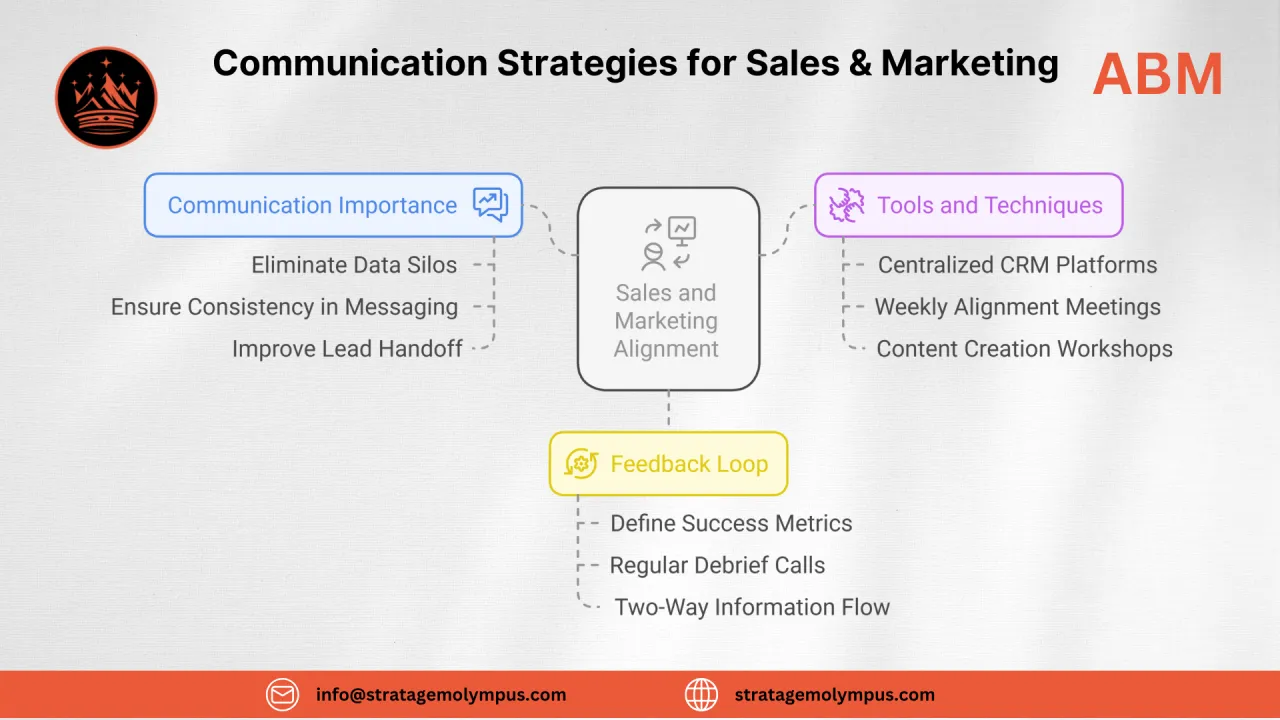
In industrial engineering & manufacturing businesses, where long sales cycles and multiple decision-makers define the buying process, seamless communication between sales and marketing is the cornerstone of ABM success.
Without effective communication, sales teams may not leverage marketing insights, and marketing teams may create content that doesn’t resonate with real-world buyer concerns. The result? Missed opportunities, misalignment, and wasted resources.
This blog explores:
- Why sales and marketing communication is essential for ABM success
- Tools and techniques for effective collaboration
- How to establish a continuous feedback loop to refine ABM efforts
Why Sales and Marketing Must Communicate as One Team?
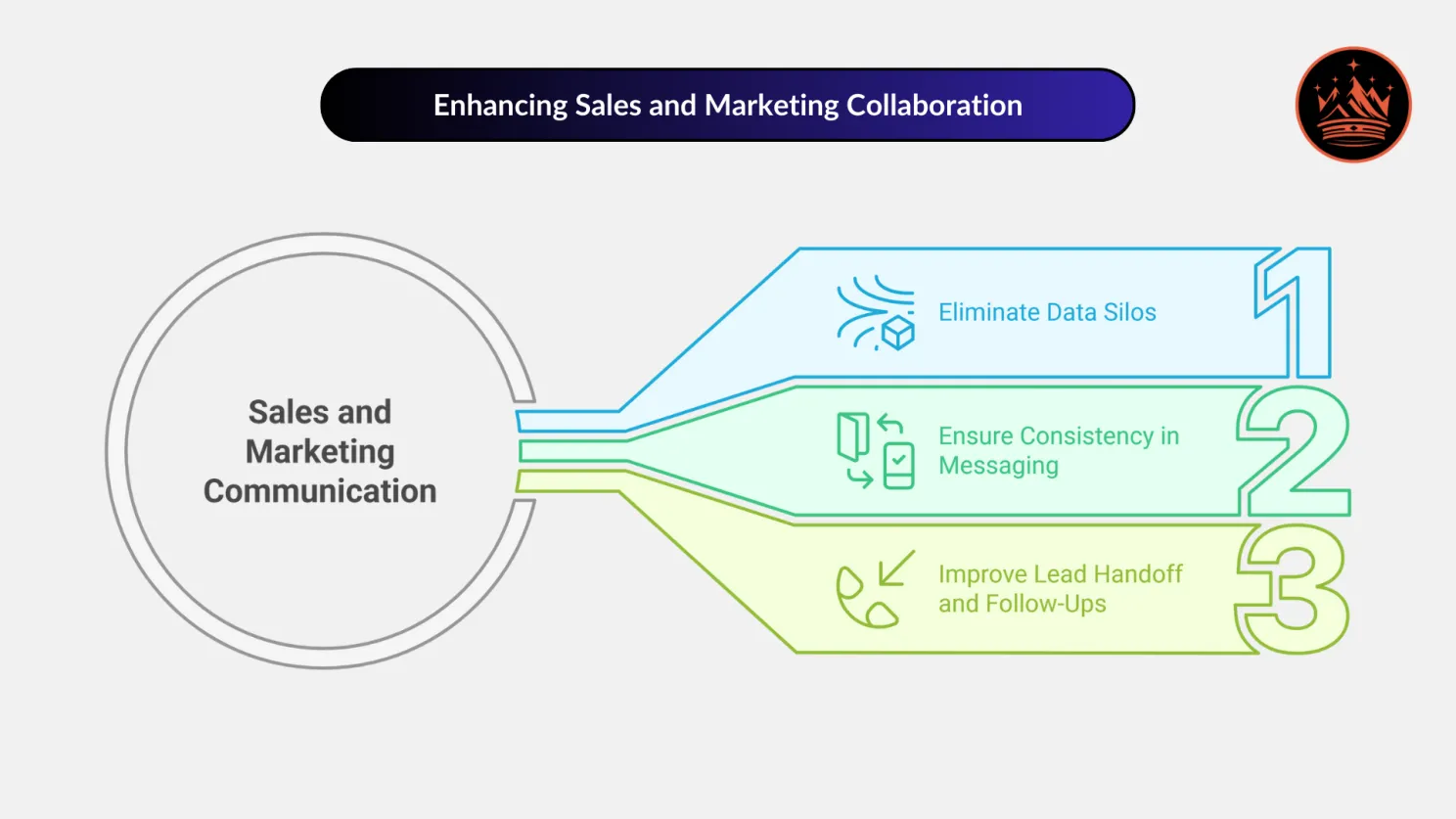
1. Eliminate Data Silos
ABM thrives on data-driven decision-making. However, if marketing holds engagement insights while sales has on-the-ground intelligence, critical opportunities may slip through the cracks.
Example:
A sales team may discover that a target account is expanding operations, but without a structured communication process, marketing may not be informed to adjust messaging accordingly.
2. Ensure Consistency in Messaging
A misaligned approach leads to conflicting narratives, confusing potential buyers.
Example:
- Marketing runs an email campaign focusing on cost savings.
- Meanwhile, sales is pitching a performance and efficiency-driven narrative.
- The disconnect creates uncertainty in the buyer’s mind, slowing down decision-making.
3. Improve Lead Handoff and Follow-Ups
Marketing efforts generate engagement, but if sales doesn’t act on high-intent accounts, the impact is lost. Clear communication ensures that:
- Marketing provides timely insights on account engagement (website visits, content downloads, event attendance).
- Sales follows up with a personalized approach based on these insights.
Tools and Techniques for Effective Communication
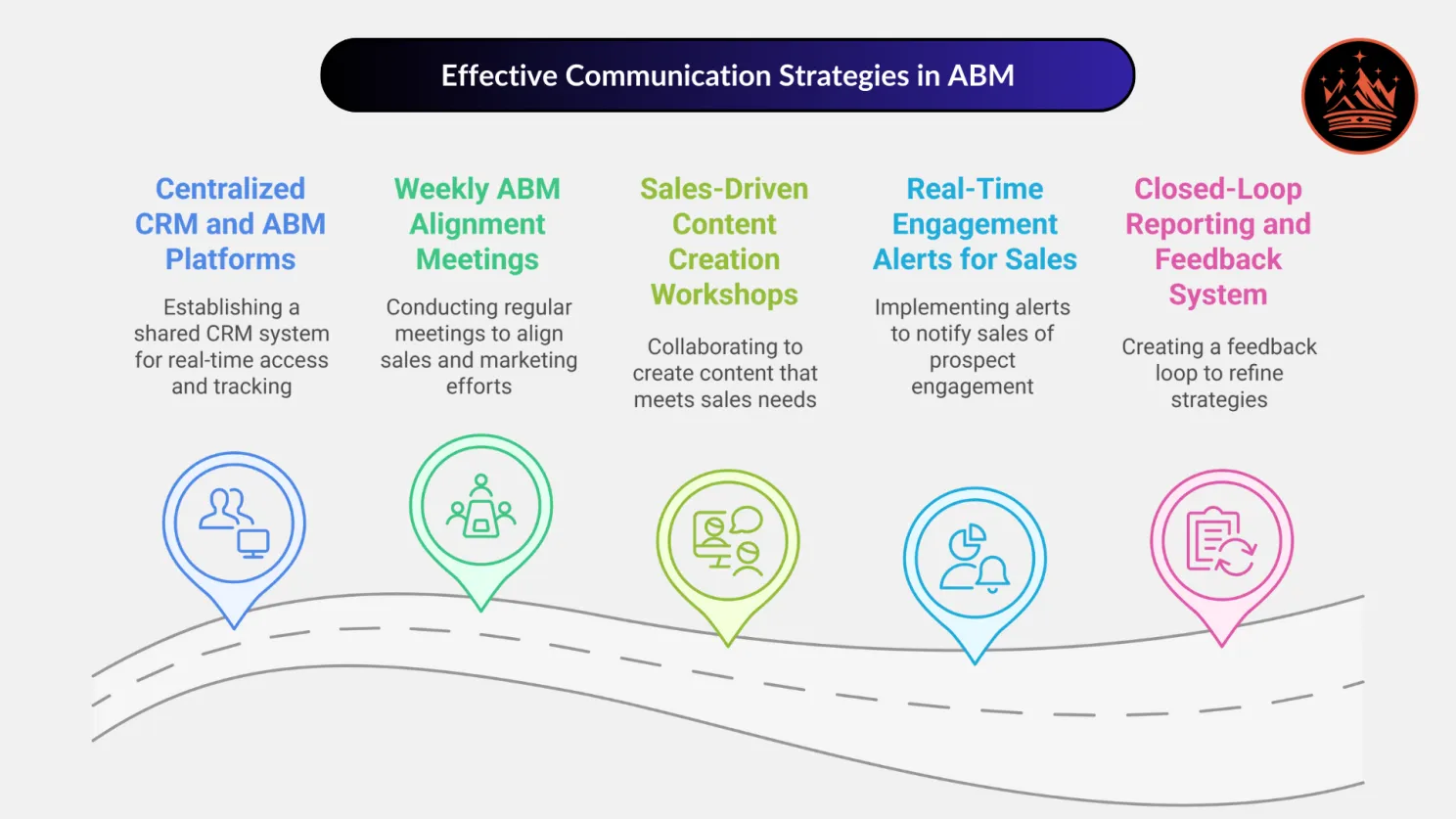
1. Centralized CRM and ABM Platforms
A shared CRM system is the foundation of communication between sales and marketing. It provides:
- Real-time access to account activity
- Engagement tracking for target accounts
- A single source of truth for pipeline movement
Best Practices:
- Ensure that both teams update the CRM with every meaningful interaction.
- Set up custom alerts when a high-value prospect takes action (e.g., downloads a case study or attends a webinar).
- Amplify the probability of success with ABM-specific platforms like 6sense, Demandbase , or Terminus (by DemandScience) for account-level intelligence.
2. Weekly ABM Alignment Meetings
While technology is crucial, nothing replaces direct communication.
ABM Weekly Stand-Ups Should Cover:
- Review of high-engagement accounts (which target accounts are responding to campaigns).
- Sales feedback on marketing assets (what’s working, what needs improvement).
- Upcoming campaign adjustments based on real-world insights.
- Pipeline discussions to identify any gaps or bottlenecks.
Best Practices:
- Keep meetings structured and action-oriented (avoid lengthy reporting without clear next steps).
- Include marketing, sales, and customer success teams to ensure a full-funnel approach.
3. Sales-Driven Content Creation Workshops
Marketing creates high-quality content, but is it what sales actually needs? Instead of marketing working in isolation, content should be co-developed with sales input.
How to Make it Work?
- Hold quarterly content workshops where sales shares common objections and customer concerns.
- Develop account-specific content playbooks that sales teams can use for different buyer personas.
- Create a shared content repository with real-world use cases, technical deep-dives, and ROI calculators.
Example:
A manufacturer of industrial automation software hosts a content workshop where sales shares pain points from prospects. Marketing uses this data to create a custom case study on reducing production downtime—leading to a higher response rate from key accounts.
4. Real-Time Engagement Alerts for Sales
One of the most effective ways to align sales and marketing is real-time engagement tracking.
How it Works?
- When a decision-maker at a target account downloads a white-paper, sales gets an instant alert.
- When an executive clicks on a LinkedIn Ad, the assigned sales rep is notified.
- When a prospect attends a webinar, sales gets a summary of their interactions with the content.
Why It’s Effective?
- Sales teams reach out at the moment of interest, improving response rates.
- Follow-ups are personalized based on specific engagement actions.
Example:
A company selling customized industrial boilers enables real-time alerts when prospects engage with ROI Calculators on their website. Sales Engineers follow up with pre-scheduled calls, leading to faster deal closures.
5. Closed-Loop Reporting and Feedback System
Without a structured feedback loop, ABM strategies can become stagnant.
How to Build a Continuous Feedback Loop?
- Track Campaign Performance Metrics: Which campaigns are generating high-quality leads? Which messaging angles resonate most?
- Sales Feedback Surveys (Monthly): What content formats are working best in sales conversations? Are target accounts engaging with your messaging?
- Marketing Adjustments Based on Sales Insights: If sales teams report that a certain industry vertical is highly engaged, marketing shifts focus to create industry-specific campaigns.
Example:
A supplier of automated material handling systems refines their LinkedIn advertising strategy after sales feedback reveals that logistics managers—rather than operations heads—are the most engaged audience.
Establishing a Feedback Loop Between Sales and Marketing
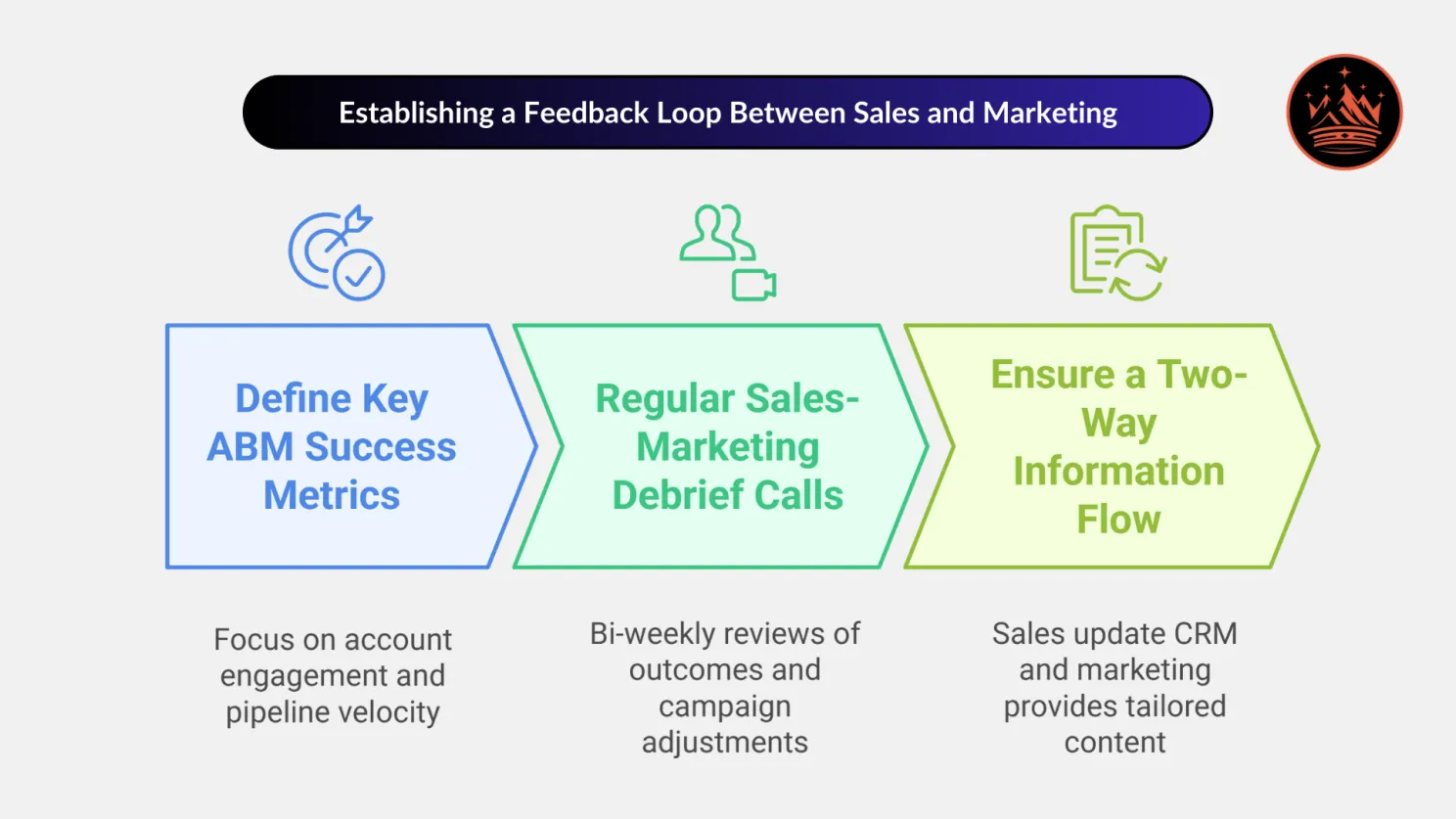
1. Define Key ABM Success Metrics Together
Instead of focusing on lead volume, track account engagement and pipeline velocity.
Example: How many accounts moved from “engaged” to “sales-qualified”? In how many weeks?
2. Regular Sales-Marketing Debrief Calls
Every two weeks, sales and marketing teams should review real-world outcomes and adjust campaigns accordingly.
3. Ensure a Two-Way Information Flow
- Sales should update account progress in CRM.
- Marketing should provide customized content for each stage of the sales cycle.
Real-World Example: How a Machinery Manufacturer Achieves Sales-Marketing Alignment?
The Challenge
A manufacturer of industrial mixing equipment struggles with:
- Marketing creating generic content that sales teams don’t use.
- Sales reps fail to follow up on engaged accounts at the right time.
- A lack of visibility into which campaigns are working.
The Solution
- Implement a shared ABM Dashboard that tracks target account interactions.
- Enable real-time engagement alerts for sales teams when prospects interact with content.
- Hold bi-weekly sales-marketing stand-ups to refine messaging based on real buyer interactions.
The Result
- Accelerated deal velocity due to timely sales follow-ups.
- Higher engagement rates from decision-makers.
- A more unified, data-driven approach to ABM execution.
Key Takeaways
- Sales and Marketing alignment in ABM starts with structured communication and shared technology.
- A centralized CRM and ABM platform prevent data silos and ensure that both teams have real-time account insights.
- Weekly stand-up meetings drive collaboration and keep both teams aligned on account progress.
- Sales-driven content creation ensures marketing assets are practical, relevant, and used effectively in sales conversations.
- A closed-loop feedback system ensures continuous optimization of ABM strategies, refining messaging and engagement approaches based on real-world data.
Sales and marketing must function as a single, data-driven unit in an ABM strategy. Effective communication ensures that marketing efforts are not wasted, sales outreach is more strategic, and account engagement is maximized.
As we move forward in this series, we will explore how to measure and optimize ABM success to ensure continuous improvement and maximum ROI. Stay tuned.
-1.png)
-1.png)