
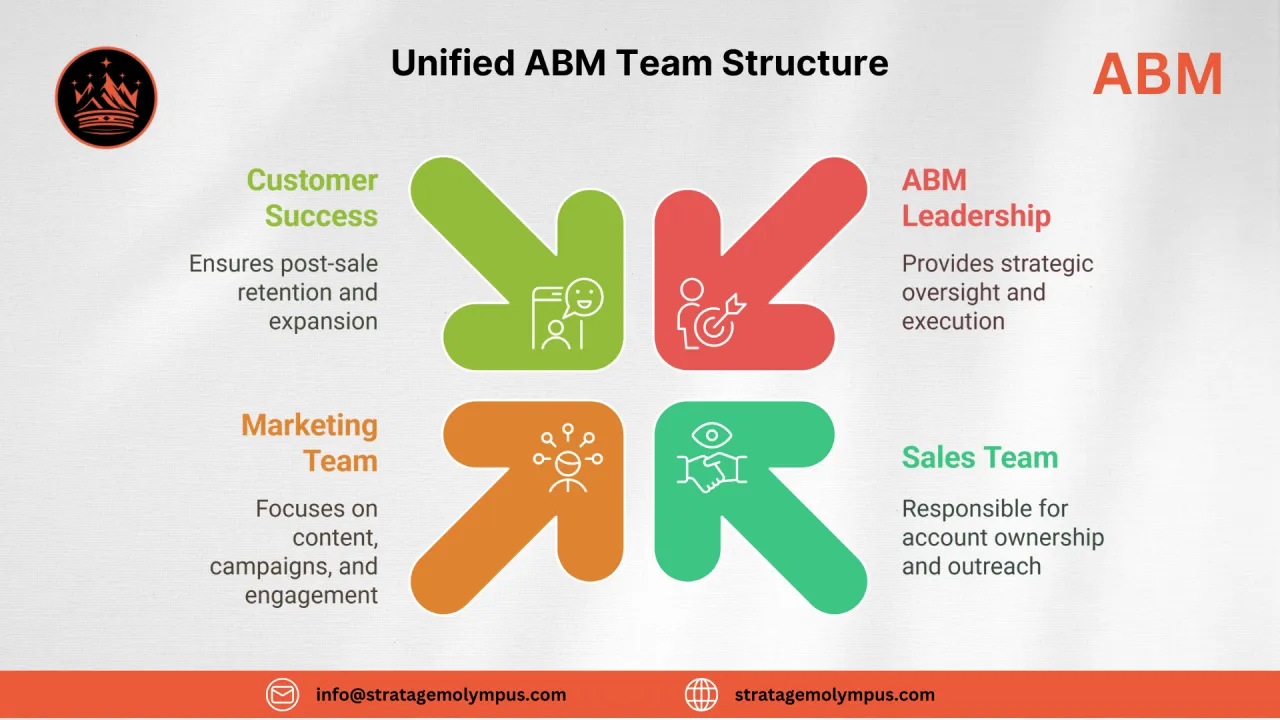
Account-Based Marketing (ABM) is not just a marketing initiative—it is a business growth strategy that requires seamless alignment between sales, marketing, and customer success teams. However, achieving this alignment is not automatic; it requires a well-structured ABM team with clearly defined roles and responsibilities.
For industrial engineering & manufacturing businesses, where sales cycles are long, decision-making is complex, and multiple stakeholders influence purchasing, a unified ABM team is essential to ensure sustained engagement and high-value conversions.
In this blog, we will explore:
- How to structure an ABM team for industrial engineering & manufacturing businesses
- Key roles and responsibilities within the ABM Team framework
- Best practices for ensuring a unified approach to ABM
Why a Unified ABM Team is Essential?
ABM success depends on collaboration across multiple functions. Unlike traditional marketing, where marketing teams generate leads and hand them off to sales, ABM is an orchestrated effort that requires a coordinated approach.
Challenges that a Unified ABM Team Solves
- Misalignment Between Sales & Marketing: Traditional B2B marketing often results in marketing creating generic leads that sales teams struggle to convert. ABM ensures that both teams are focused on high-value target accounts from the start.
- Inconsistent Messaging Across Touchpoints: Without a unified team, different stakeholders within a company may receive disjointed communications that create confusion. A structured ABM team ensures messaging consistency.
- Lack of Clear Ownership of Accounts: Industrial sales cycles require ongoing engagement with multiple stakeholders in a target company. Without a clearly defined ABM team, outreach efforts can be fragmented and ineffective.
How having a Unified ABM Team helps Industrial Engineering & Manufacturing Businesses?
- Ensures a highly coordinated and efficient approach to engaging key accounts.
- Facilitates continuous collaboration between marketing, sales, and customer success.
- Delivers a consistent experience to all decision-makers and influencers within a target account’s buying committee.
- Maximizes resources by focusing only on accounts that have real revenue potential.
How to Structure an ABM Team?
Core Functional Areas of an ABM Team
A well-structured ABM team includes key contributors from sales, marketing, customer success, and operations. While the team size and structure may vary based on company size and resources, the following functional areas are critical for success.
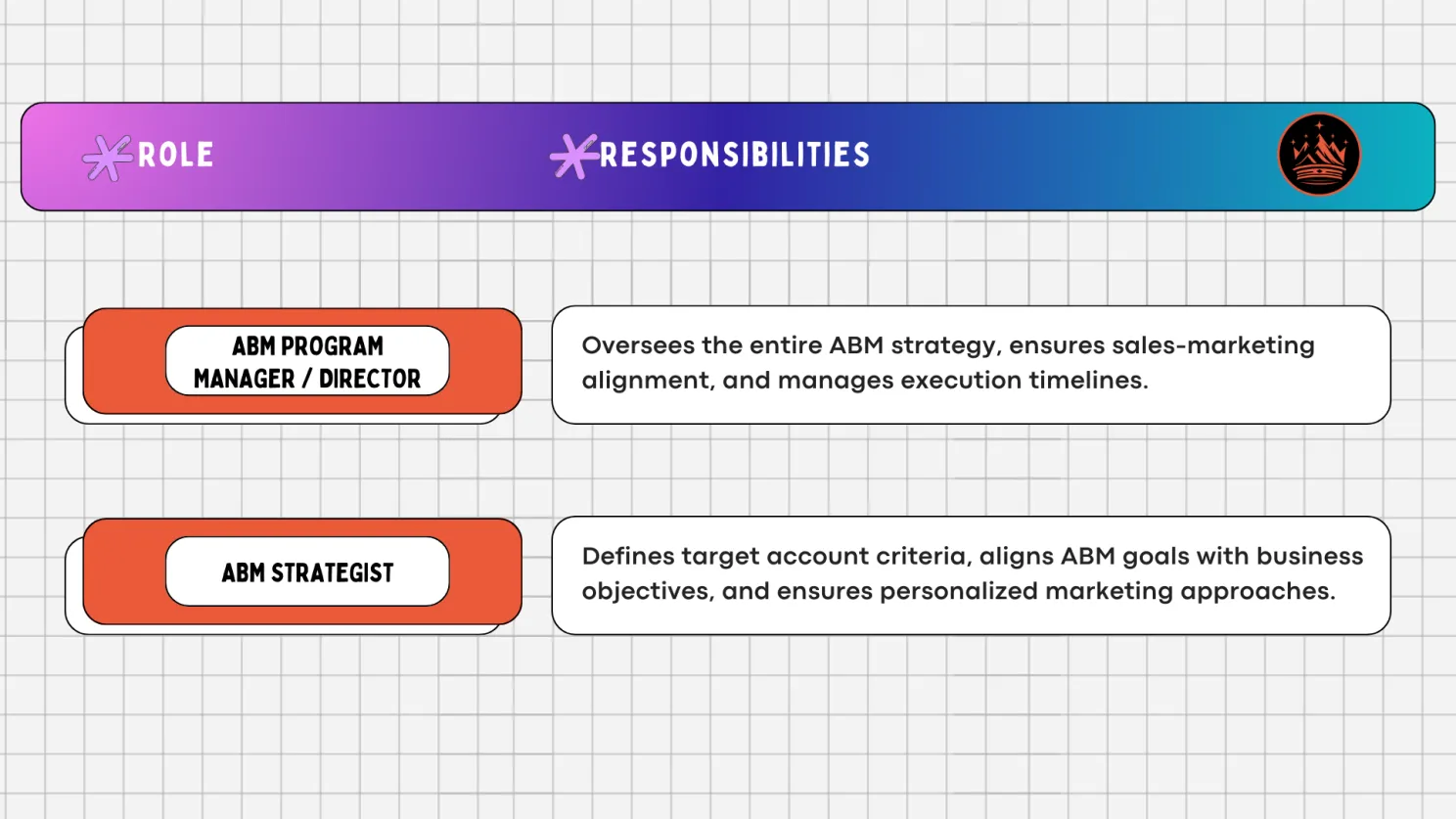
1. ABM Leadership (Strategy & Execution Oversight)
Responsible for setting the overall ABM strategy, defining success metrics, and ensuring cross-functional collaboration.
Key Roles:
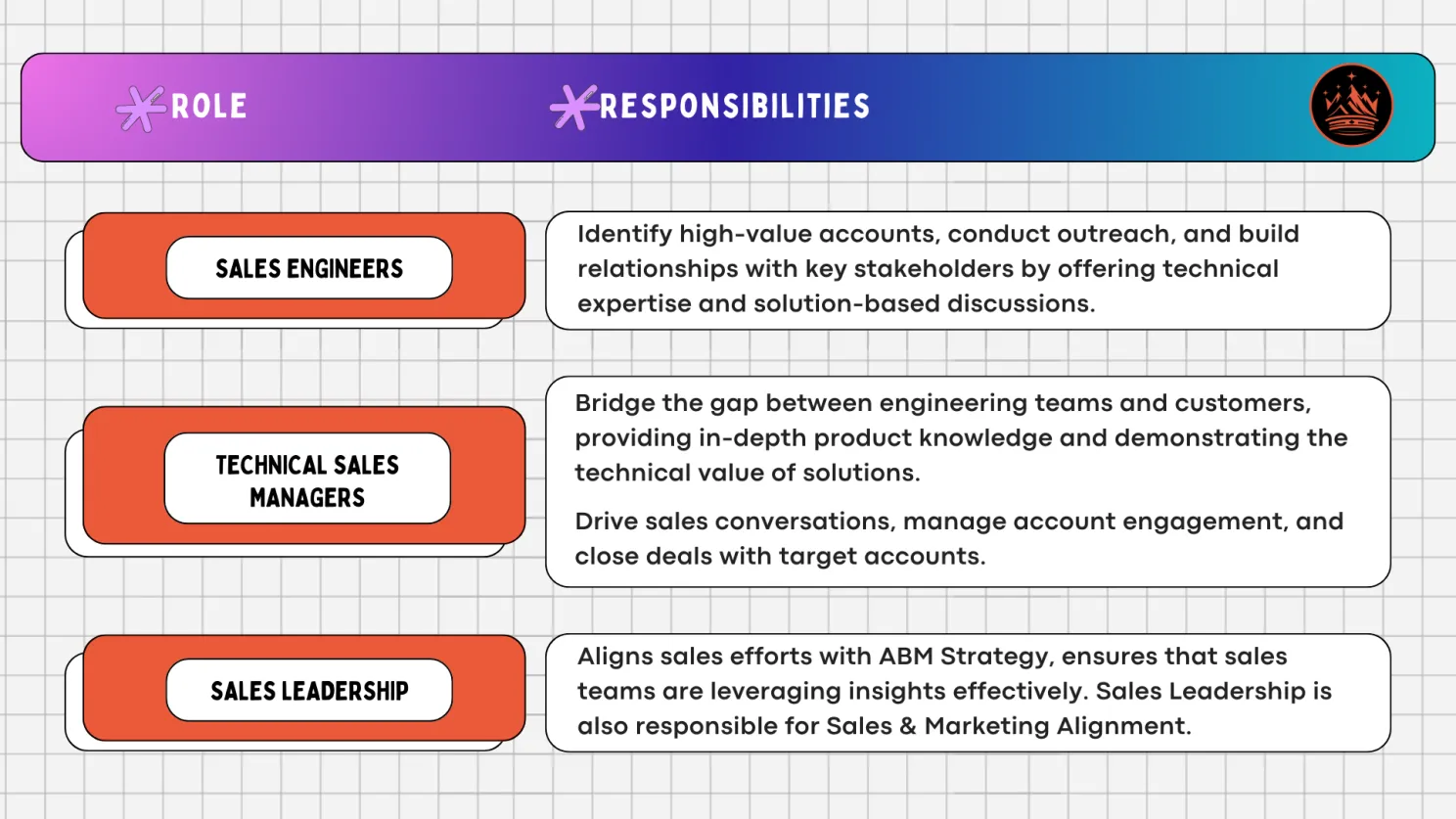
2. Sales Team (Account Ownership & Direct Outreach)
The sales team plays a crucial role in ABM, as they are responsible for engaging directly with key decision-makers and other buying committee members at target accounts.
Key Roles:
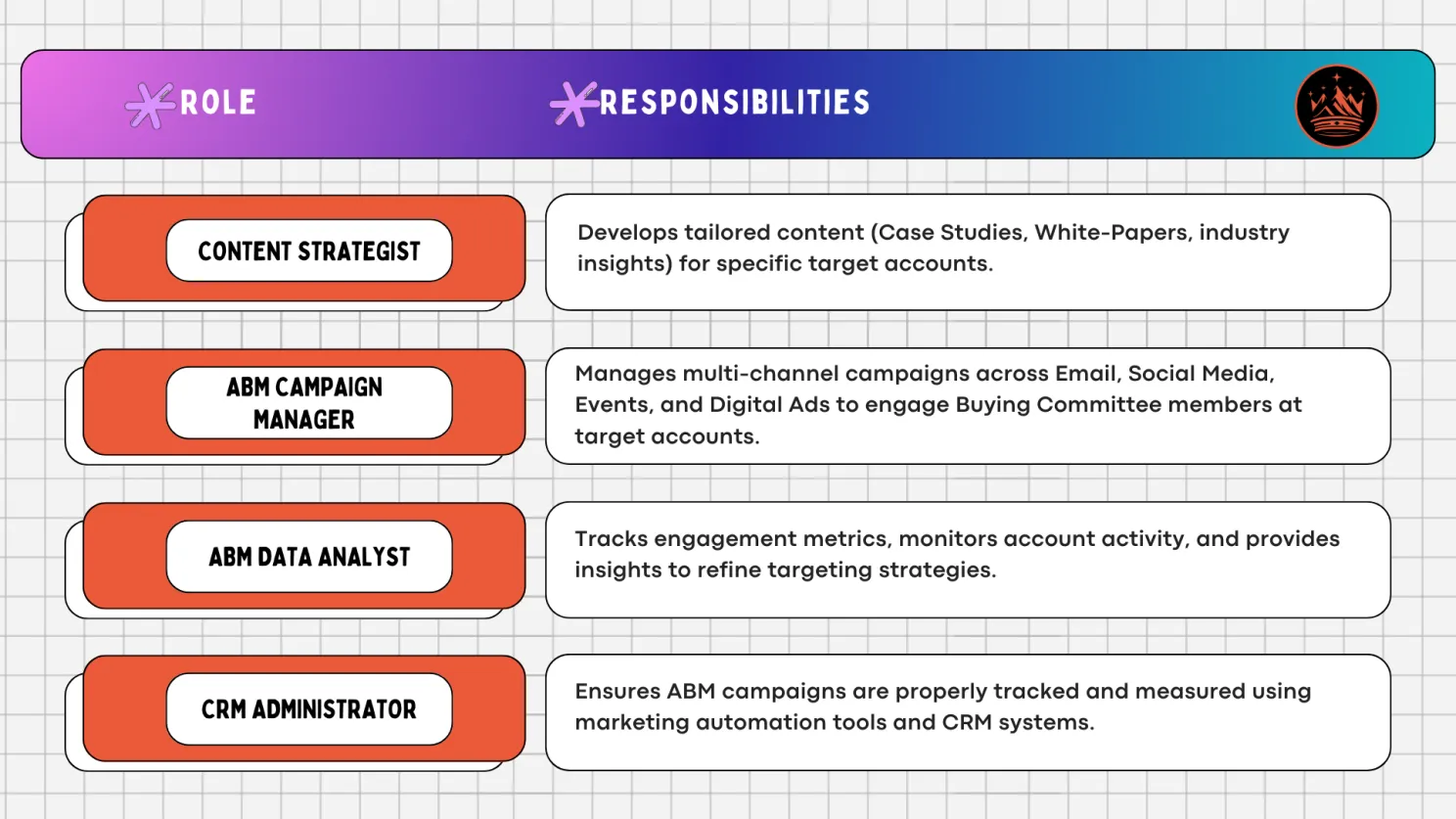
3. Marketing Team (Content, Campaigns & Engagement)
The marketing team creates and executes personalized campaigns that resonate with decision-makers in target accounts.
Key Roles:
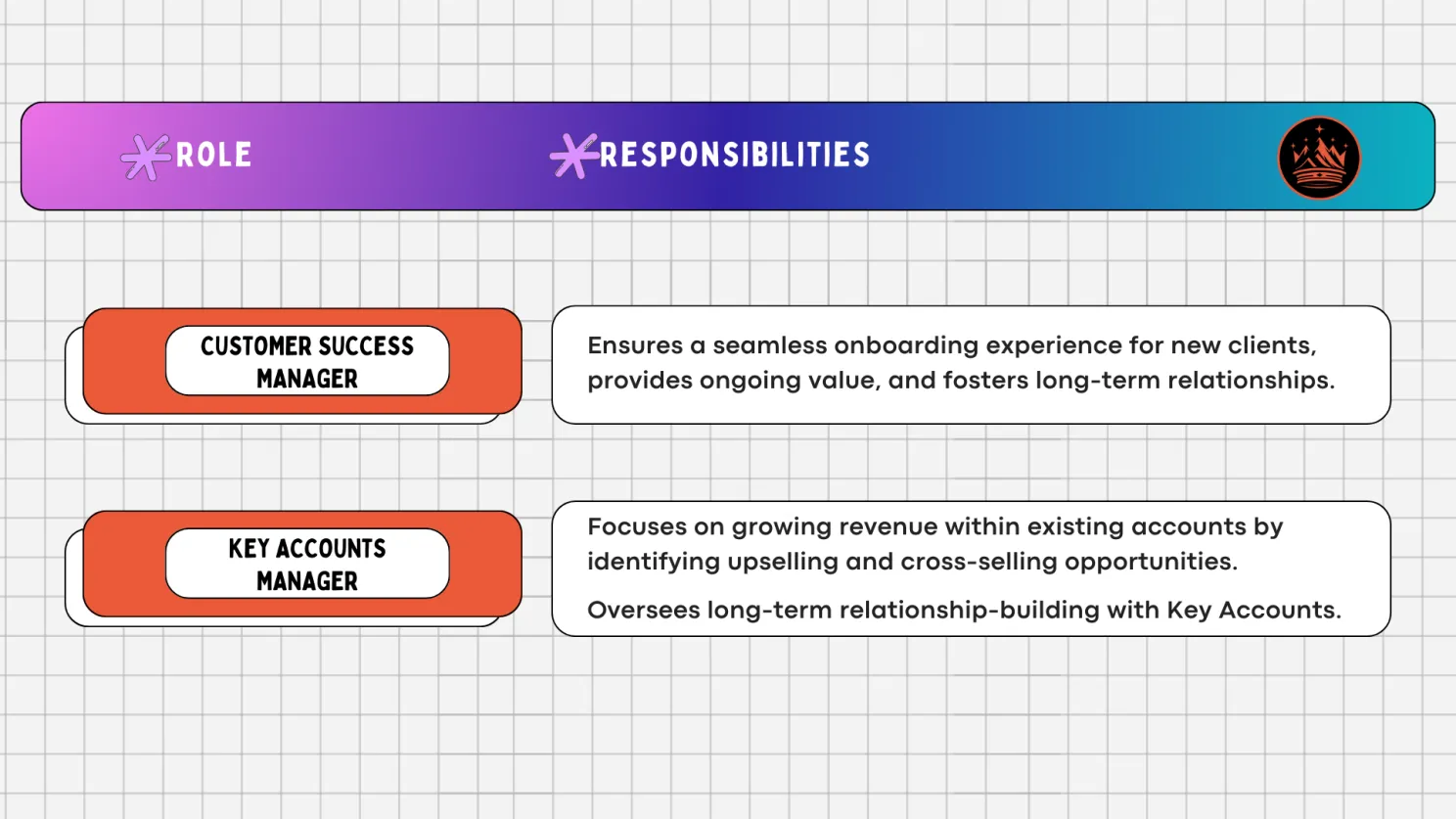
4. Customer Success & Account Management (Post-Sale Retention & Expansion)
While ABM primarily focuses on acquiring new customers, customer retention and account expansion are just as critical. Customer success teams ensure ongoing engagement and maximize account lifetime value.
Key Roles:
Best Practices for Creating a Unified ABM Team
1. Establish a Cross-Functional ABM Task Force
To prevent silos, create a dedicated ABM task force that includes representatives from sales, marketing, and customer success.
- Hold weekly alignment meetings to review account engagement, discuss challenges, and refine strategies.
- Encourage constant communication to ensure all teams are aligned on account status and progress.
2. Define Clear Roles & Responsibilities
Every team member should understand their role in the ABM strategy.
- Sales should own direct engagement with decision-makers.
- Marketing should develop highly personalized campaigns tailored to each account.
- Customer success should focus on retention and expansion of key accounts.
Clearly defining these responsibilities prevents overlap and ensures accountability.
3. Leverage Technology for Seamless Collaboration
Use technology to streamline communication, campaign execution, and data sharing.
Recommended ABM Tech Stack:
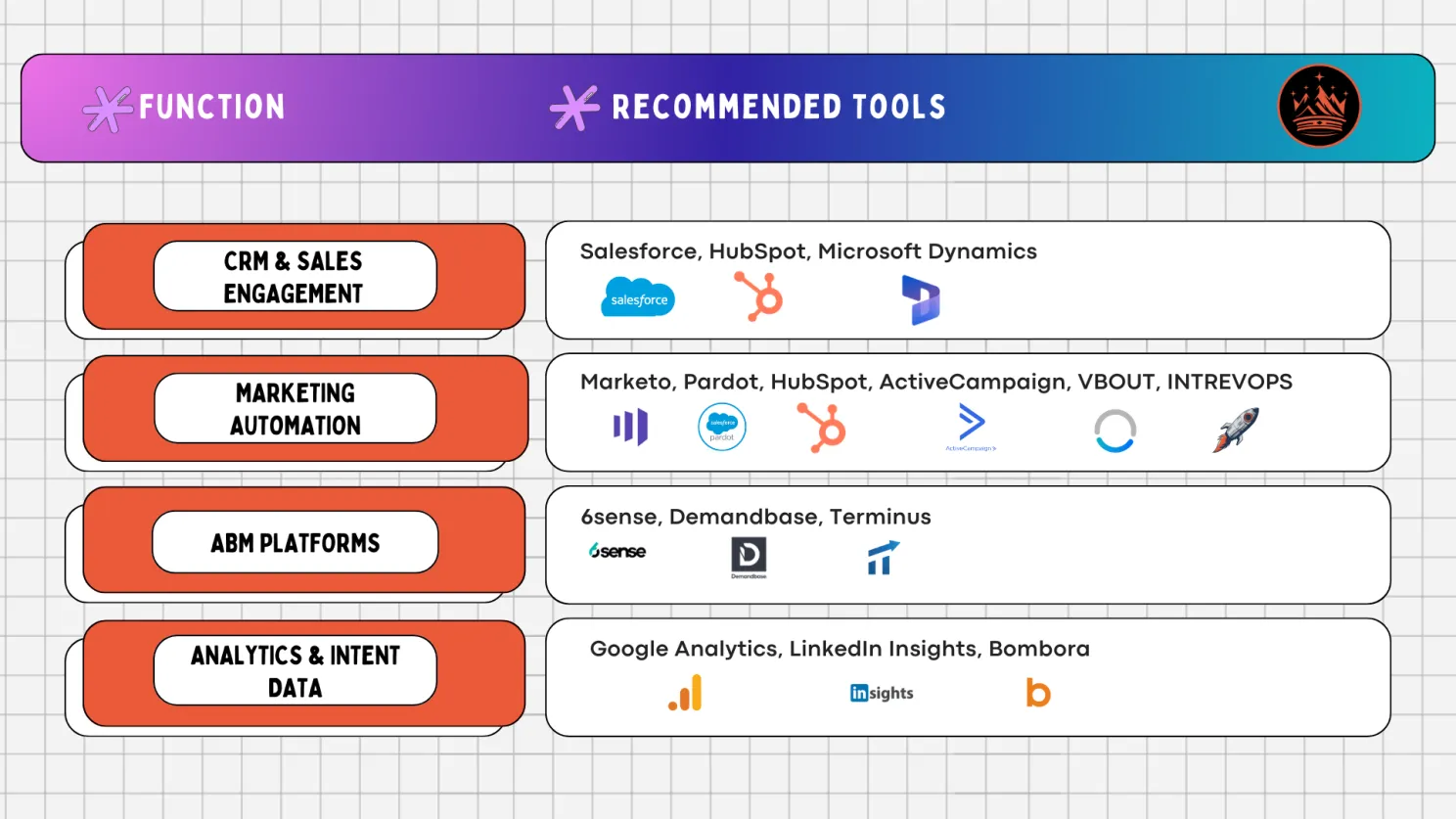
Ensure that sales and marketing teams are using the same tools to track account activity, monitor engagement, and share insights.
4. Focus on Sales & Marketing Alignment Metrics
Instead of measuring success with traditional lead-based metrics, track ABM-specific KPIs that align both teams.
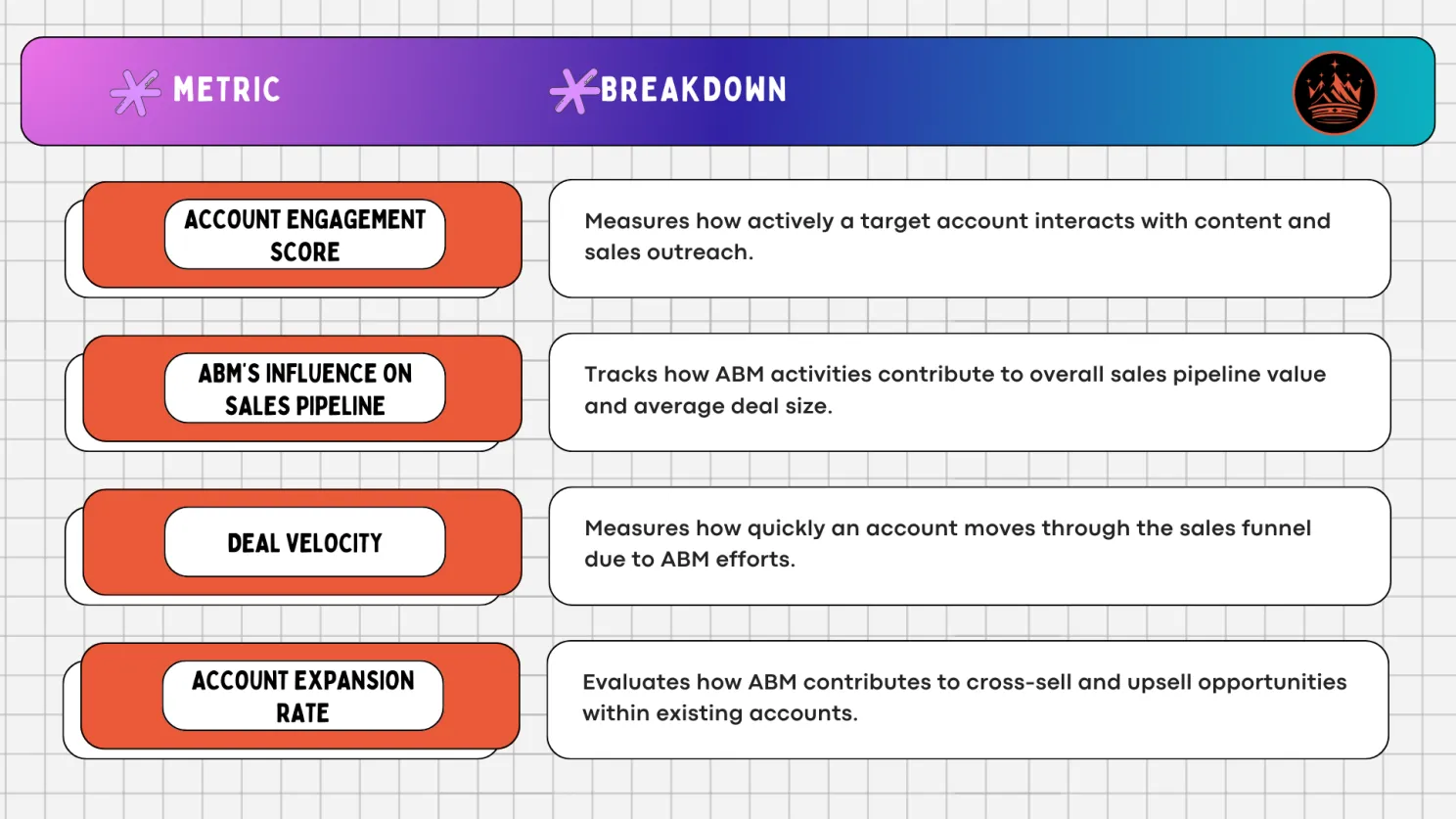
By focusing on shared KPIs, sales and marketing teams stay aligned on revenue-driven outcomes.
The Foundation of a High-Performing ABM Strategy
A successful ABM strategy is built on a unified team where sales, marketing, and customer success work as a single entity.
Key Takeaways:
- ABM is a cross-functional strategy—it cannot be driven by marketing alone.
- Clearly defining roles & responsibilities prevents confusion and ensures smooth execution.
- Technology plays a crucial role in enabling seamless collaboration.
- Sales and marketing must be measured on shared ABM-specific KPIs to drive alignment.
A well-structured ABM team not only accelerates deal velocity but also strengthens long-term customer relationships, ensuring that your business continues to win high-value accounts in the industrial manufacturing sector.
-1.png)
-1.png)